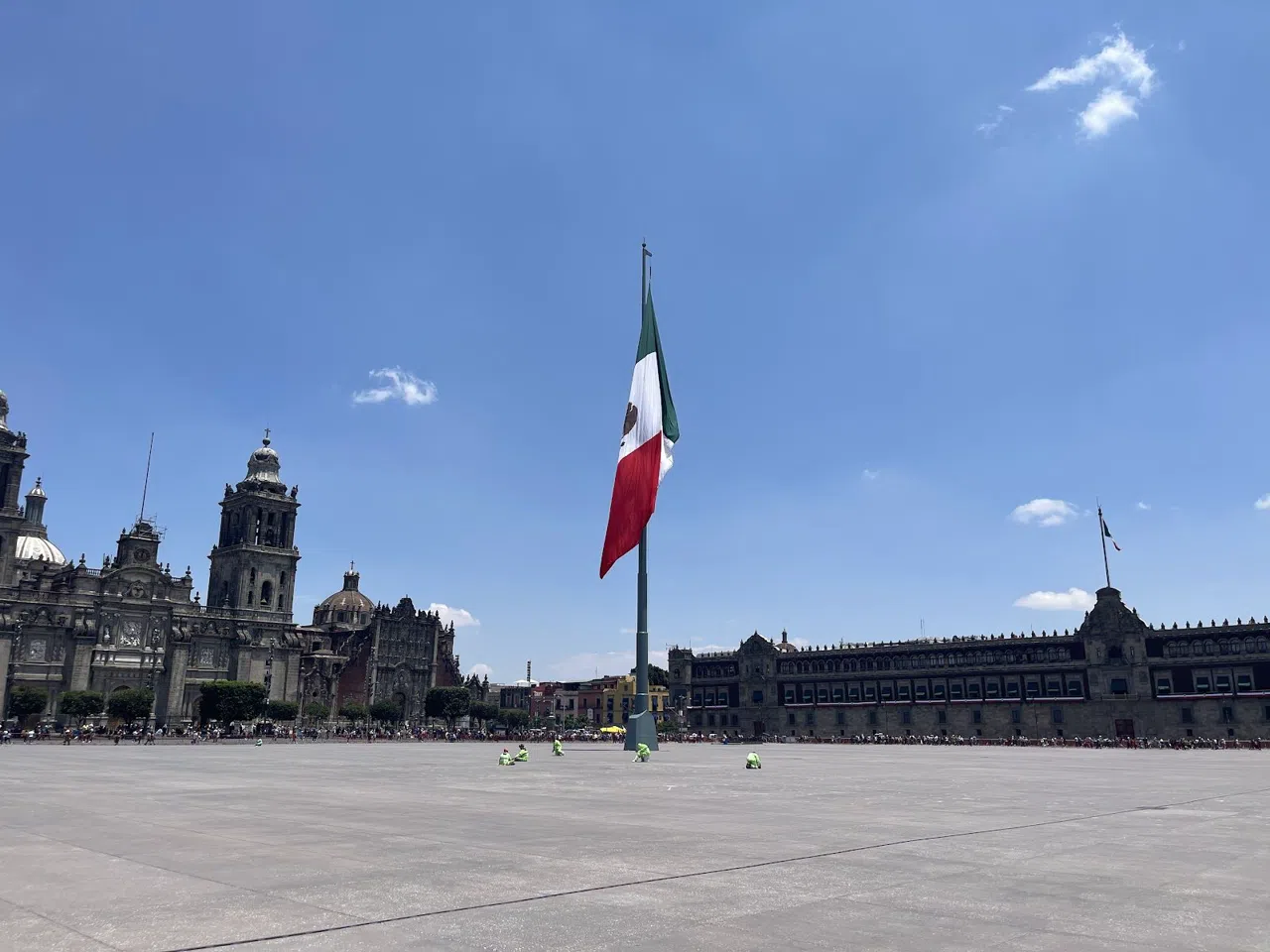
At seven in the morning the Centro Histórico smells of wet stone and warm bread, and by eleven it has turned to rendered fat and toasted chilli. By one it is beer and shellfish ice, and at midnight it is cinnamon sugar from a churro counter that has not closed since 1935. This is the only part of Mexico City where four centuries of the city's cooking sit inside one walkable grid, so the food here is the sightseeing rather than a break from it.
Why the food is the sightseeing
Centro Histórico (the Zócalo and Calle Madero are its spine) is a UNESCO-listed grid of colonial blocks, and it costs nothing to walk. What makes it unusual among historic centres is density: cantinas trading since the 1890s, bakeries from the 1920s, a market the city's cooks actually shop in, a kerbside taco counter in the Michelin guide and two hotel rooftops looking straight at the cathedral, all within about fifteen minutes' walk of each other. You can see the architecture and eat the city on the same loop without once getting into a car.
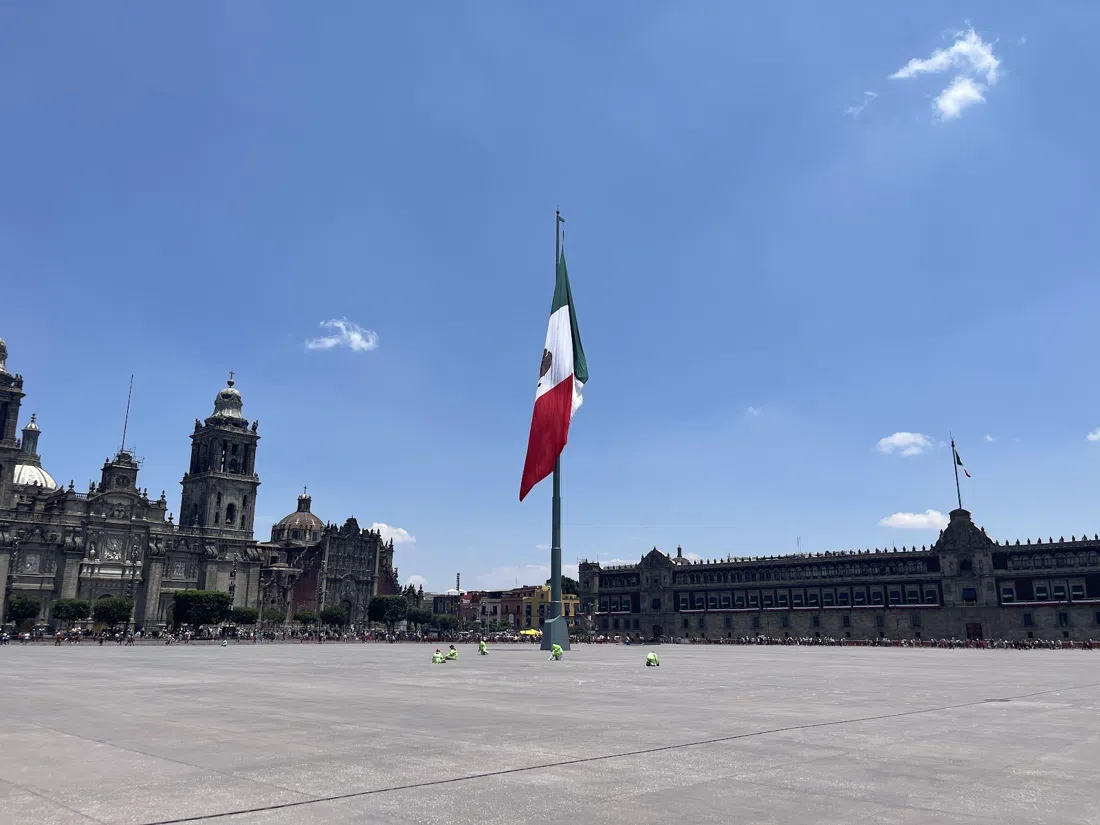
A self-guided eat-and-drink day here runs roughly MXN 400-900 per person (about USD 22-50) if you graze across counters and markets, and climbs past MXN 2,000 the moment you add a rooftop dinner and a cover charge. For wider planning (museums, day trips, which districts to sleep in) the Mexico City guide covers the rest of the city; this piece stays inside the old grid.
Start with a sit-down breakfast
El Cardenal (Centro Histórico, minutes from the Zócalo) has been serving since 1969 and is the benchmark breakfast down here: chilaquiles verdes, nata (the thick skin lifted off scalded cream) spread onto pan dulce, and chocolate frothed at the table with a molinillo so it arrives with a head on it. Expect MXN 350-650 per person. It opens Mon-Sat from 8am and Sun from 9am, and it is reliably full by mid-morning; Saturday waits run past forty minutes, so book, or get there before 10am if you are six or more. It takes groups and reservations, which makes it one of the few places in this article that suits a planned party.
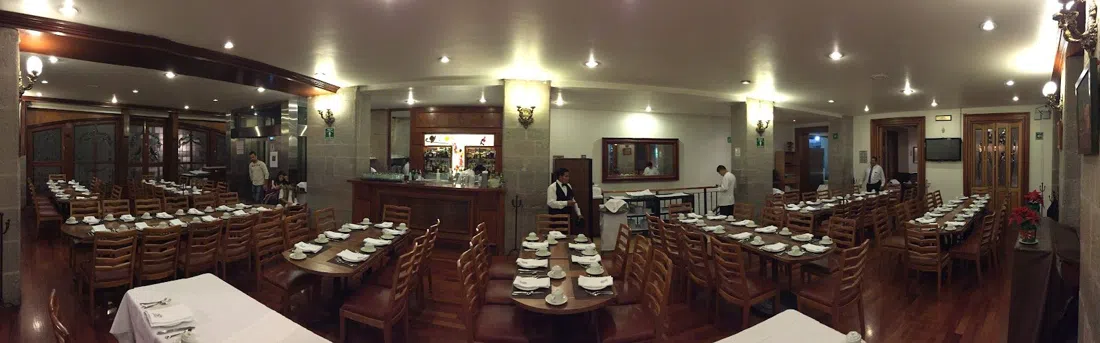
Everything else you want to eat in the Centro is small, standing or liquid, so the day works better if the first meal is the sit-down one.
The market where the cooks shop
Mercado de San Juan (Centro Histórico, Ernesto Pugibet 21) is not a neighbourhood market with mops and avocados. It is the city's specialist and import hall, where restaurant kitchens buy their fish, game, cheese and rarities, and where the vendors expect you to taste before you buy: a sliver of cheese, a spoon of something cured, handed across the counter without ceremony. A full grazing visit costs around MXN 300-400 per person.
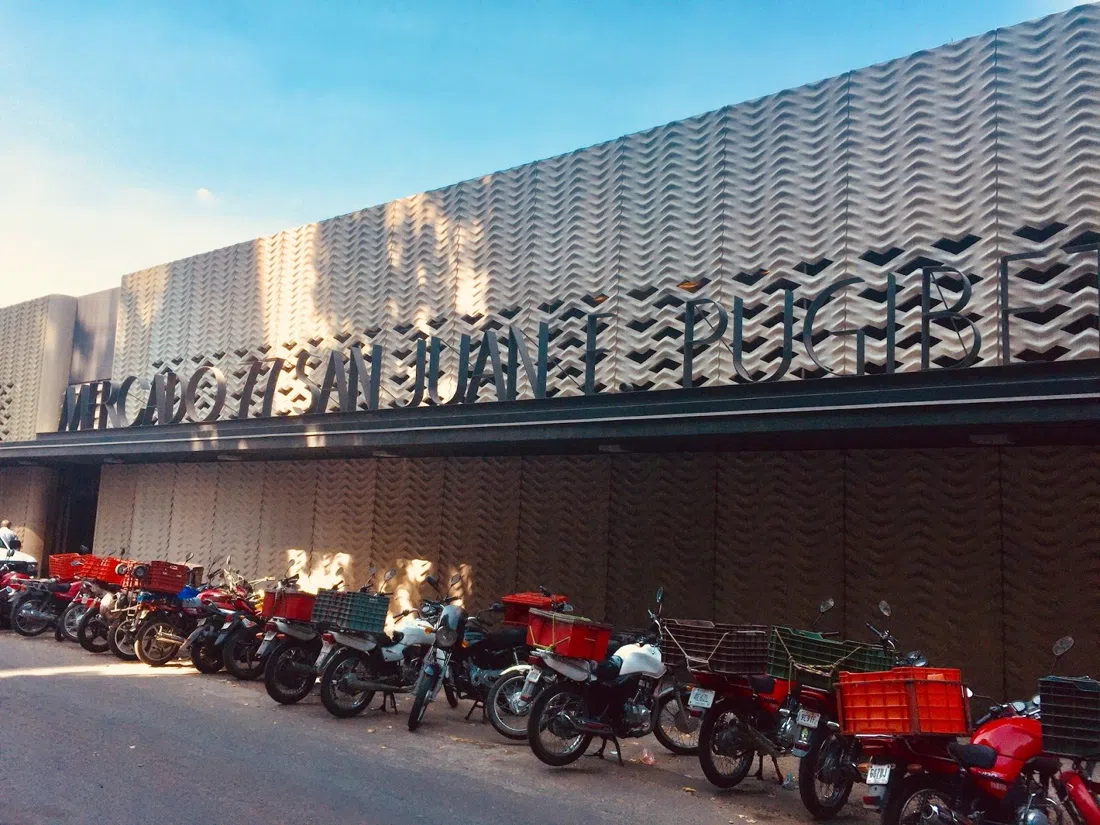
It opens Mon-Sat 9am-6pm and Sunday until 5pm, but the window that matters is Tuesday to Friday, 10am to 1pm, when the seafood is freshest and the vendors have time to talk, which is most of the value. The aisles are tight. Four people move fine; a party above six should split and regroup at the end.
Counters, kerbs and the standing trade
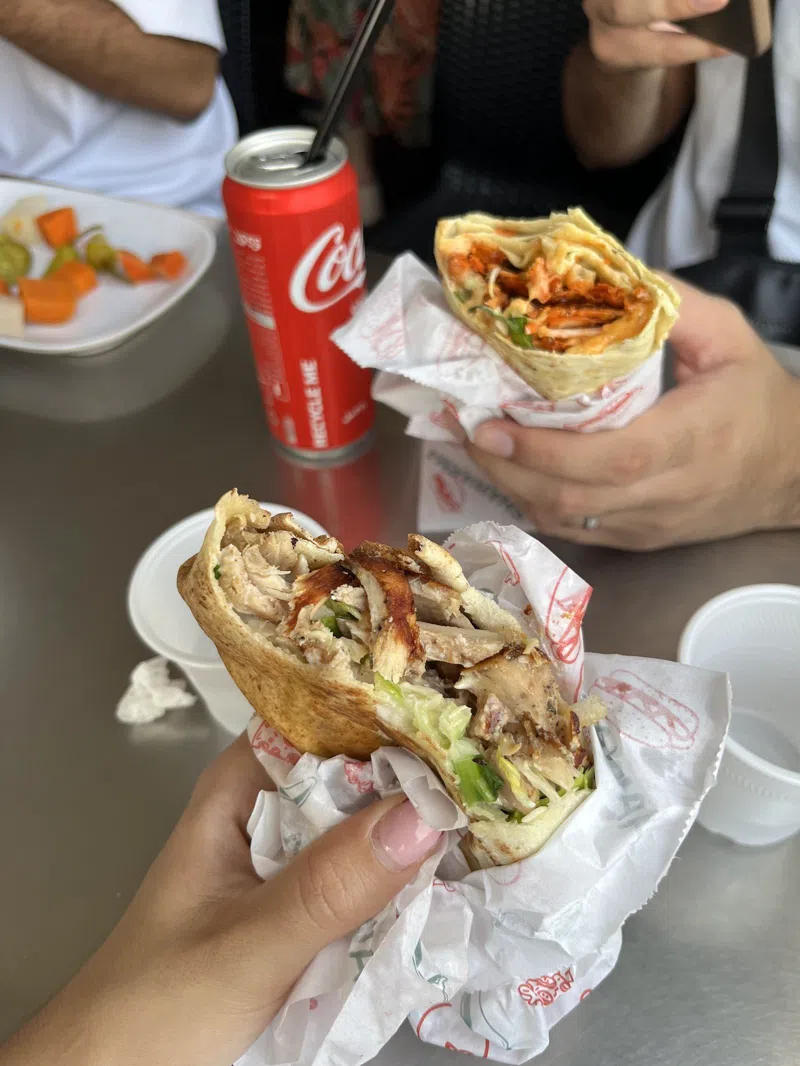
Taquería Los Cocuyos (Centro Histórico, a few steps off Madero) has worked the same corner since 1980 and carries a Bib Gourmand in the 2026 Michelin guide. There are no tables and no reservations, just a counter, a kerb, and a cauldron of slow-cooked cuts worked by the same hands all shift. Order suadero first, the cut that shows you what the pot is doing, and treat the offal as an optional second round rather than a test you have to pass. Tacos run MXN 25-35 each, cash only. It trades around the clock, which is why it absorbs the post-cantina crowd at 2am. More than four of you will end up spread along the pavement, so either split up or order in shifts.
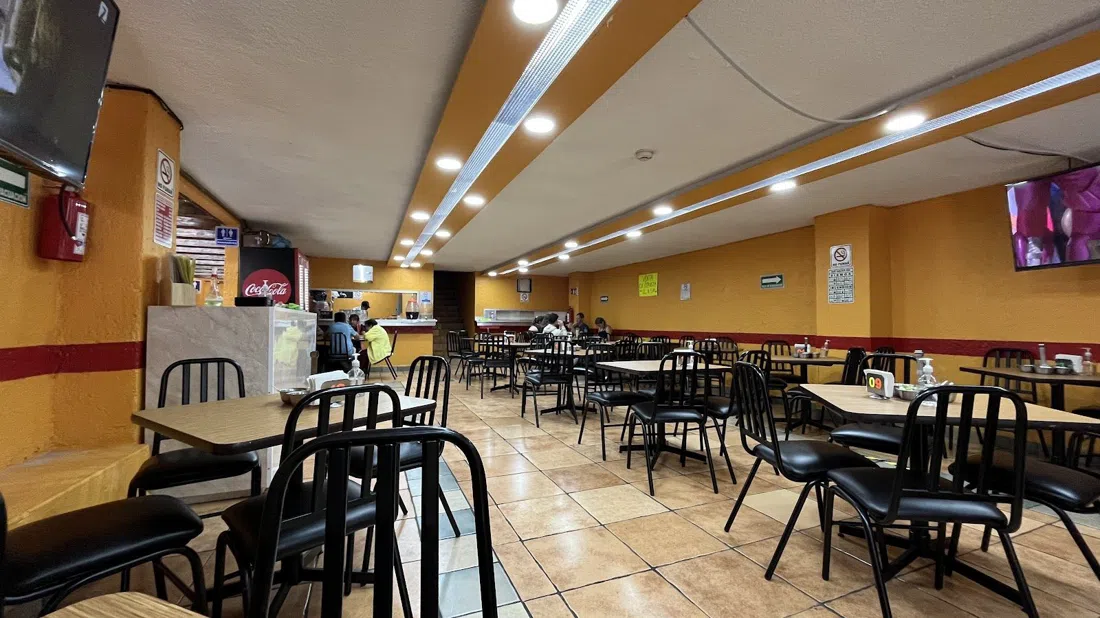
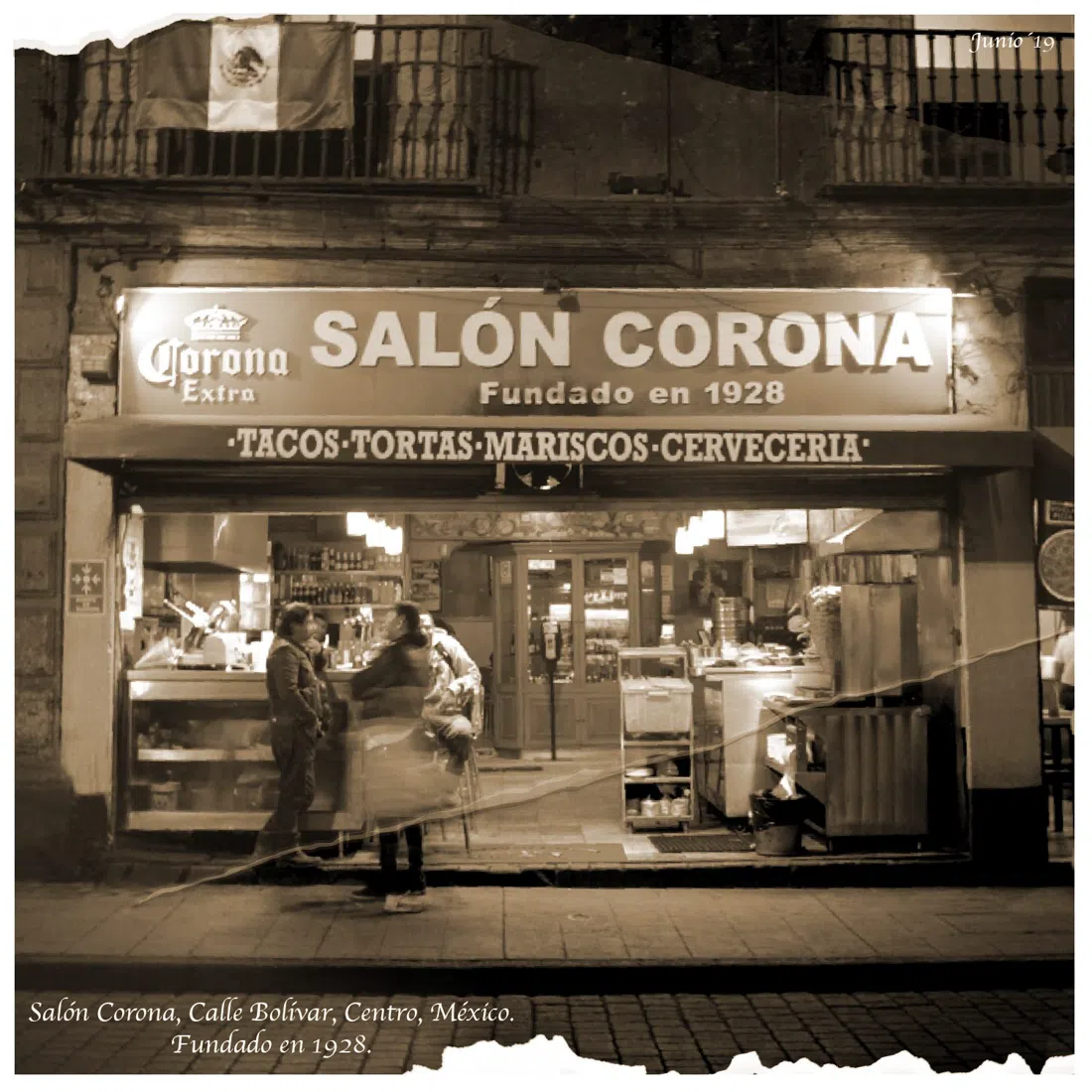
Salón Corona (Centro Histórico, the original Bolívar branch is the one to use) has been pouring since 1928 and is the cheapest reliable sit-down in the old grid: draught beer in frosted tarros, octopus tortas, and quesadillas griddled until the cheese crisps at the edges. MXN 150-300 per person. Big shared tables, fast turnover, walk-ins only and no door policy, which makes it the easiest place in this article to take a loud group of eight. It runs until 1am on Fridays and Saturdays.
Bread, churros and chocolate
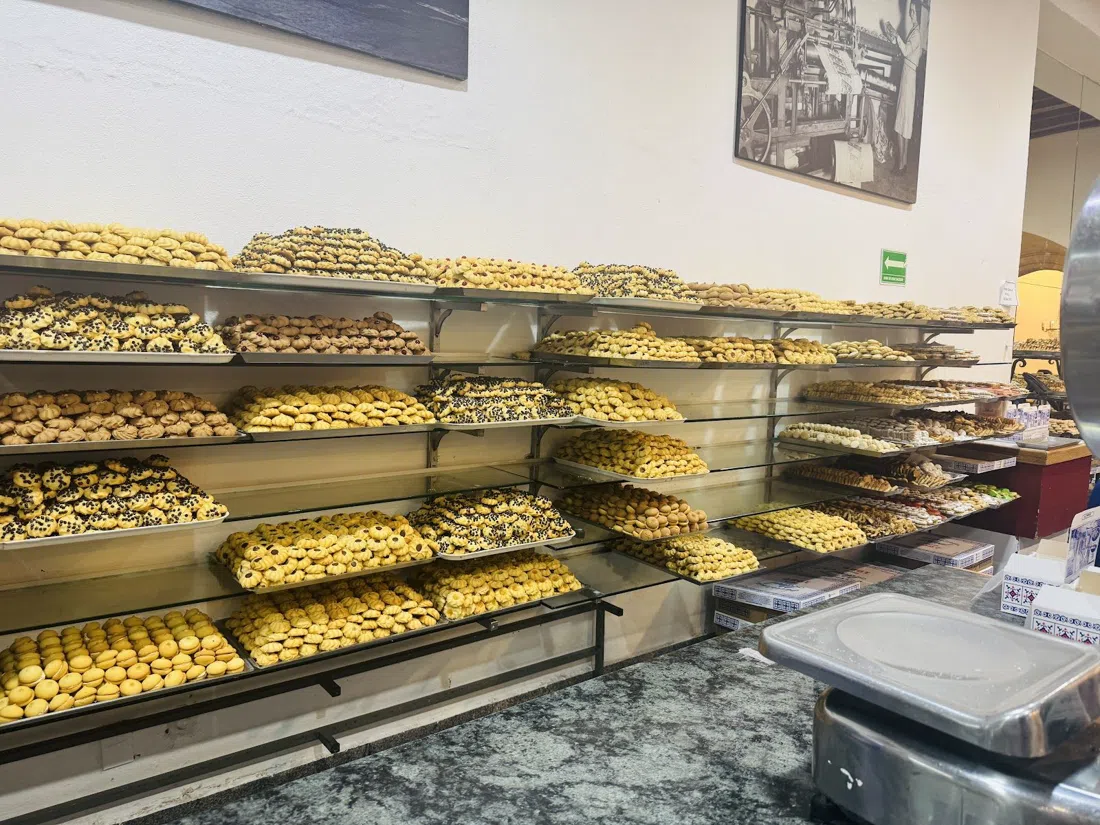
Pastelería Ideal (Centro Histórico, inside the former San Francisco convent complex) was founded in 1927 and turns out tens of thousands of pieces a day. You take a metal tray and a pair of tongs, work the racks yourself, and pay at the end: MXN 10-40 a piece. No booking exists and no number of people is a problem. Go up to the small cake museum on the second floor, tiered showpieces nobody is going to eat, which most visitors walk straight past.
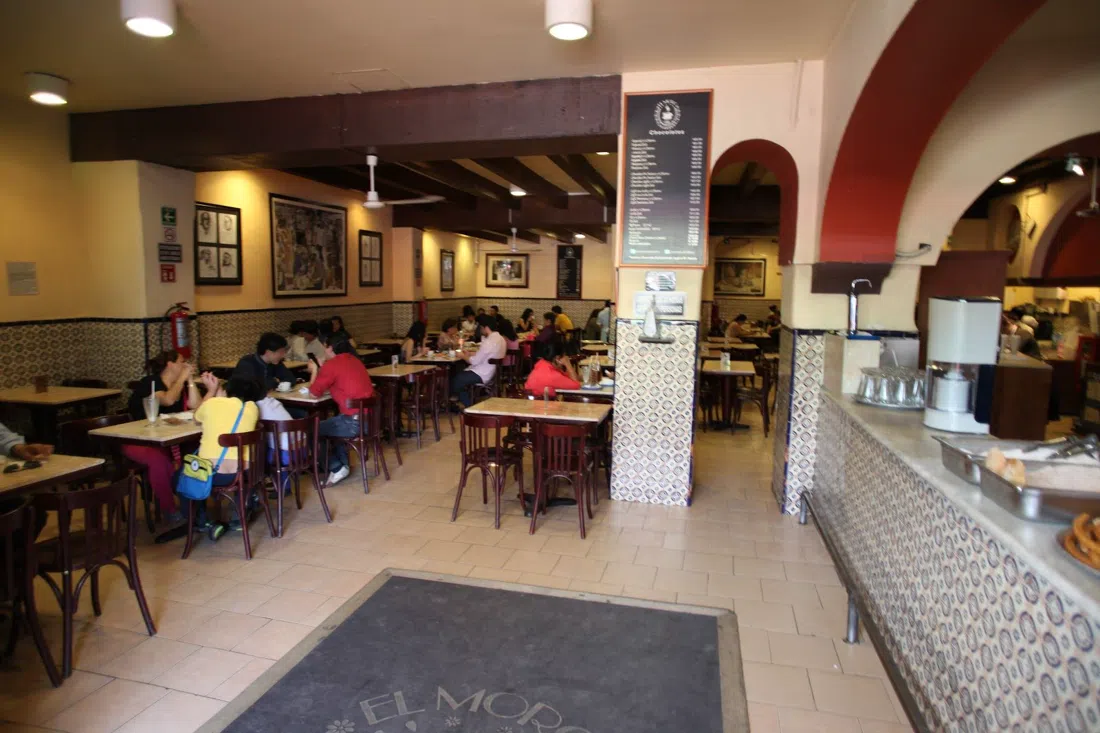
Churrería El Moro (Centro Histórico, opposite the old San Juan de Letrán metro entrance) is the 1935 original and open 24 hours. The default order is four churros, extruded and fried to order, with a cup of thick cacao chocolate. MXN 90-180. There is a counter and a few small tables, no reservations, and the queue builds at night, which is also when locals actually turn up, so a large group should expect to stand, or let the chain's other branches take the overflow.
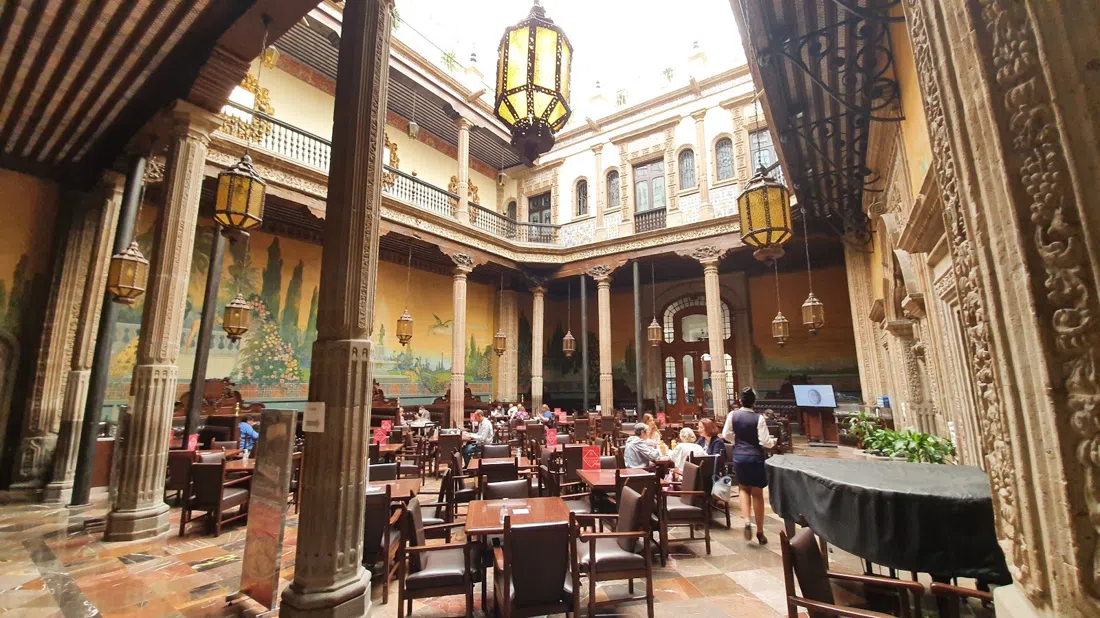
Sanborns de los Azulejos (Centro Histórico, on Calle Madero) is the pragmatic option: a café-restaurant installed in a tiled sixteenth-century palace, open daily 7am-1am, walk-in friendly and large enough to swallow a mixed group of twelve without a reservation. Eat lightly, a chocolate or a breakfast, because the facade, the covered patio and the Orozco mural over the staircase are the reason to come. You are allowed to walk in and look without ordering anything. MXN 200-450 if you do eat.
The long lunch rooms
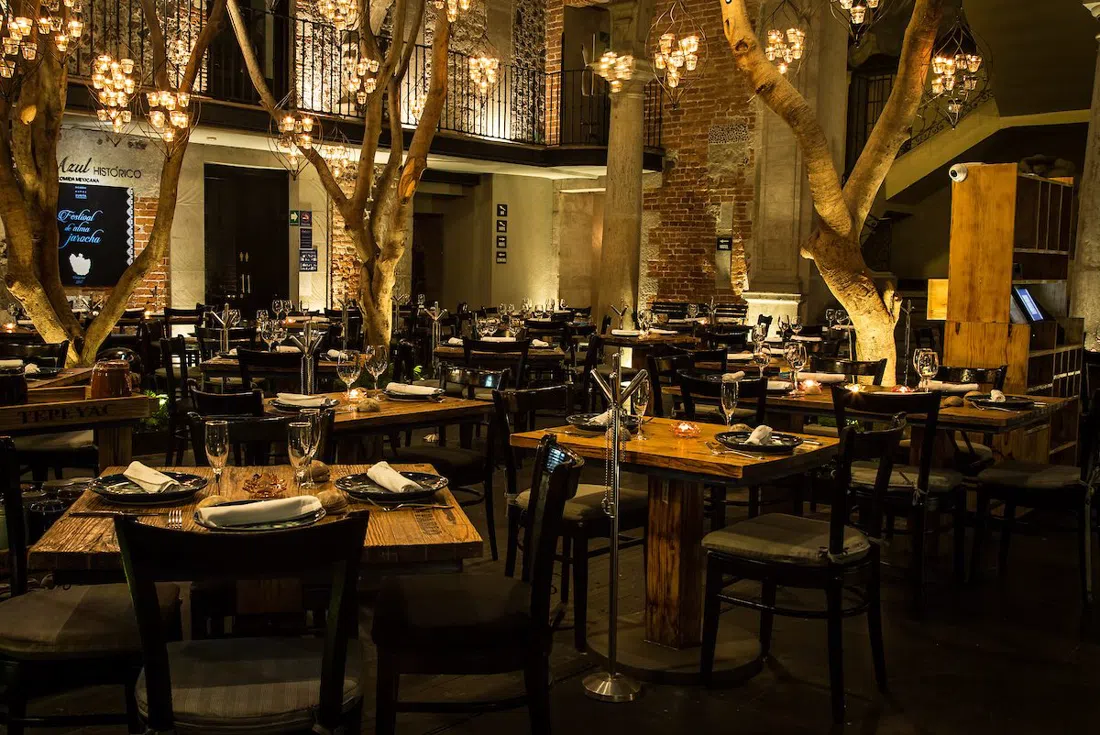
Azul Histórico (Centro Histórico, in a courtyard off Madero) is Ricardo Muñoz Zurita's kitchen, and it is research-led in a literal sense: he has spent decades documenting regional cooking, and the menus rotate through that work, so you get cochinita pibil, a long-cooked black mole, dishes that appear for a season and then go. It sits under grown trees in the best courtyard in the Centro, so say "courtyard" when you reserve. MXN 600-1,200 per person. Breakfast Wed-Sun 9am-noon, lunch and dinner daily 1-11pm; it takes group bookings and private events.
Café de Tacuba (Centro Histórico, on Calle Tacuba) has been open since 1912 and has barely changed room, tilework or repertoire: enchiladas, tamales, mole poblano, live trios and estudiantina every day. Mains MXN 350-430, desserts from MXN 58. It is touristy, and it is still the clearest window into how the Centro ate before the revolution. Reservations Mon-Fri by phone or online; weekends are walk-in; there are private rooms and a terrace if you are organising something for a group.
Rooftops above the cathedral
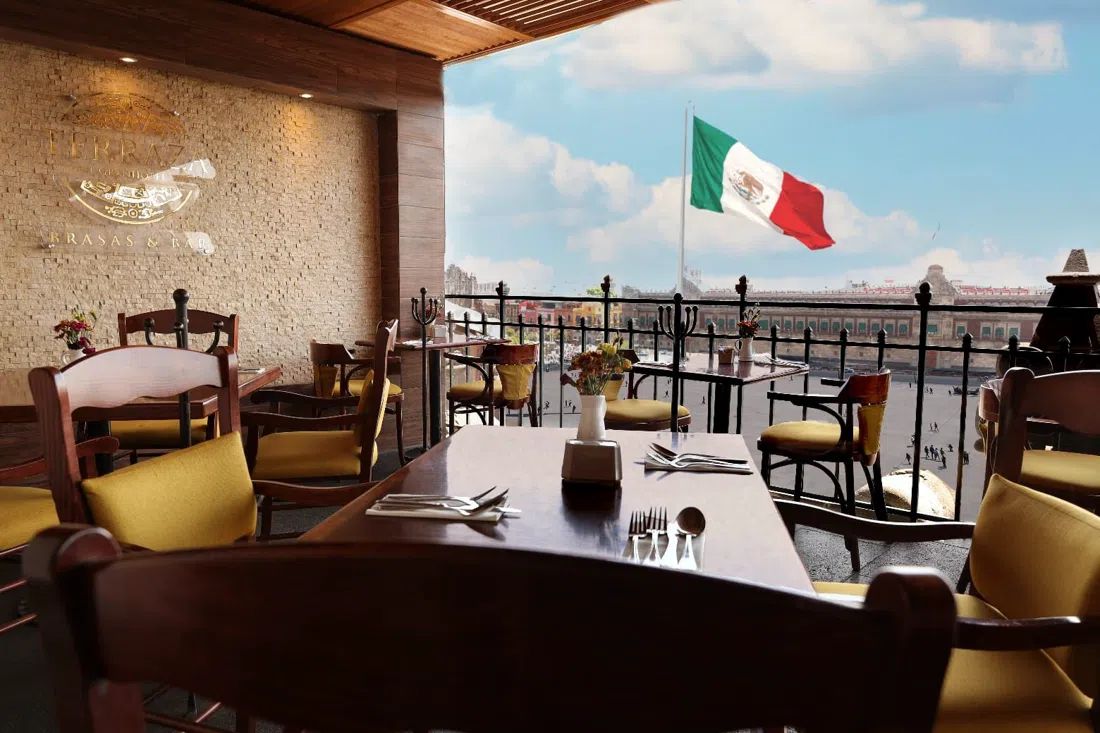
Balcón del Zócalo (Centro Histórico, atop the Hotel Zócalo Central) is where chef Pepe Salinas cooks, and it is the one rooftop here where the food matches the view, the cathedral close enough to read the stonework. Open daily noon-11pm, MXN 900-1,900 per person and more for the tasting menu. Reservations are essential, dress is casual, and you must request a terrace table or you will be seated inside. Groups go through the hotel concierge.
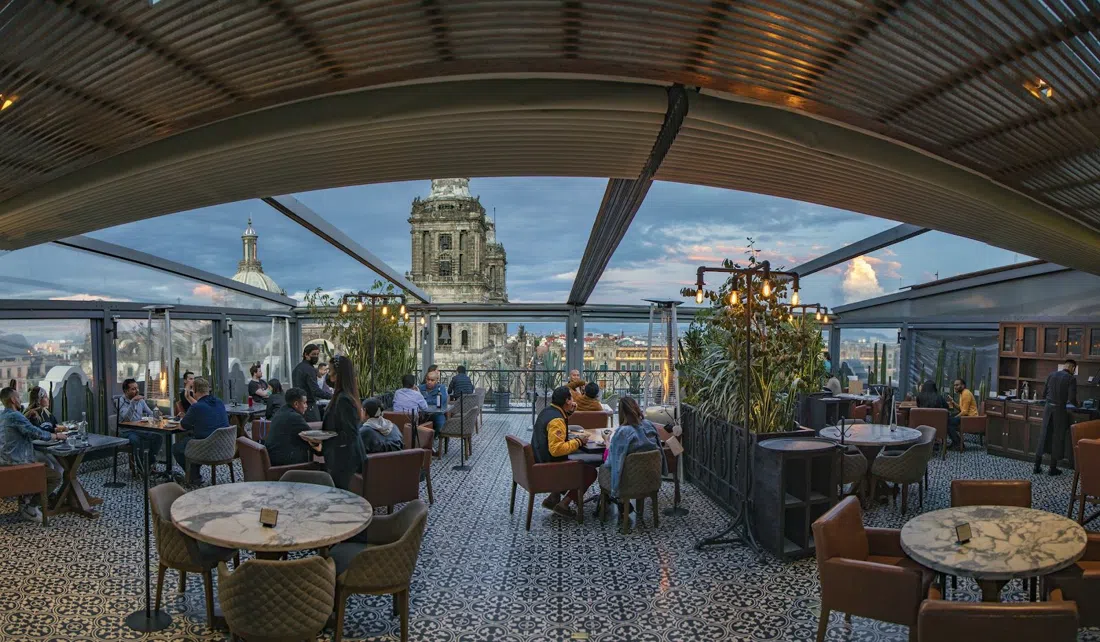
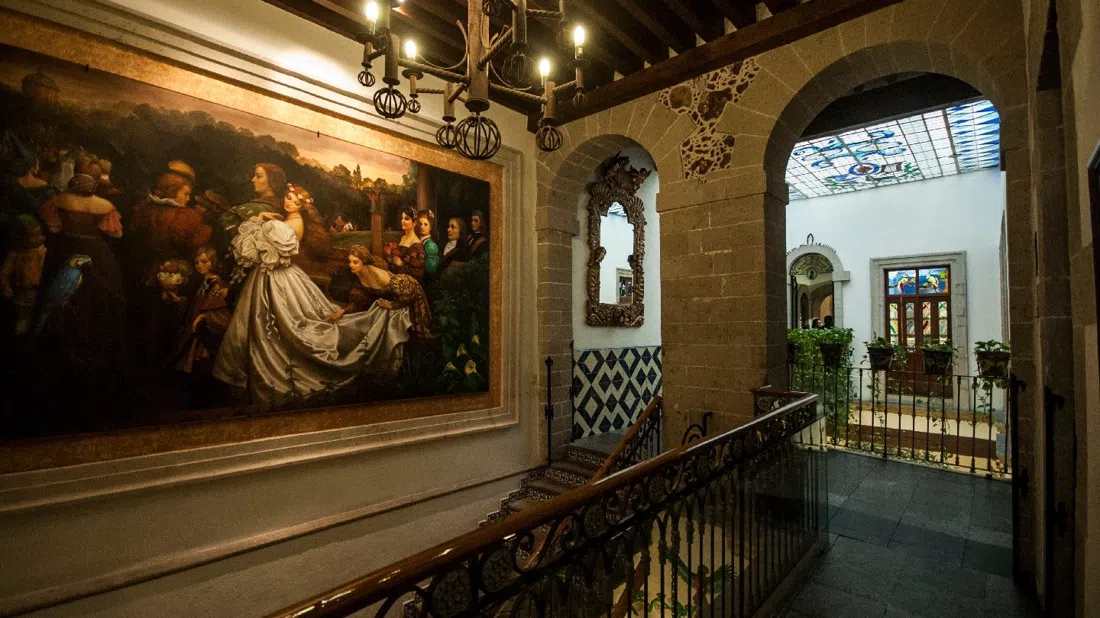
La Terraza, Gran Hotel Ciudad de México (Centro Histórico, a minute from the Zócalo) is the other balcony, and the trade-off is reversed: the Mexican menu is solid rather than remarkable, but the stained-glass lobby ceiling below it is one of the finest rooms in the city. Breakfast from 7am, lunch and dinner to 11pm; MXN 500-1,100, with the weekday breakfast buffet the best-value slot of the day. Ask explicitly for a terrace-edge table when you book or you get an interior one with no view at all. It handles groups and events.
Cantina, pulque and mezcal
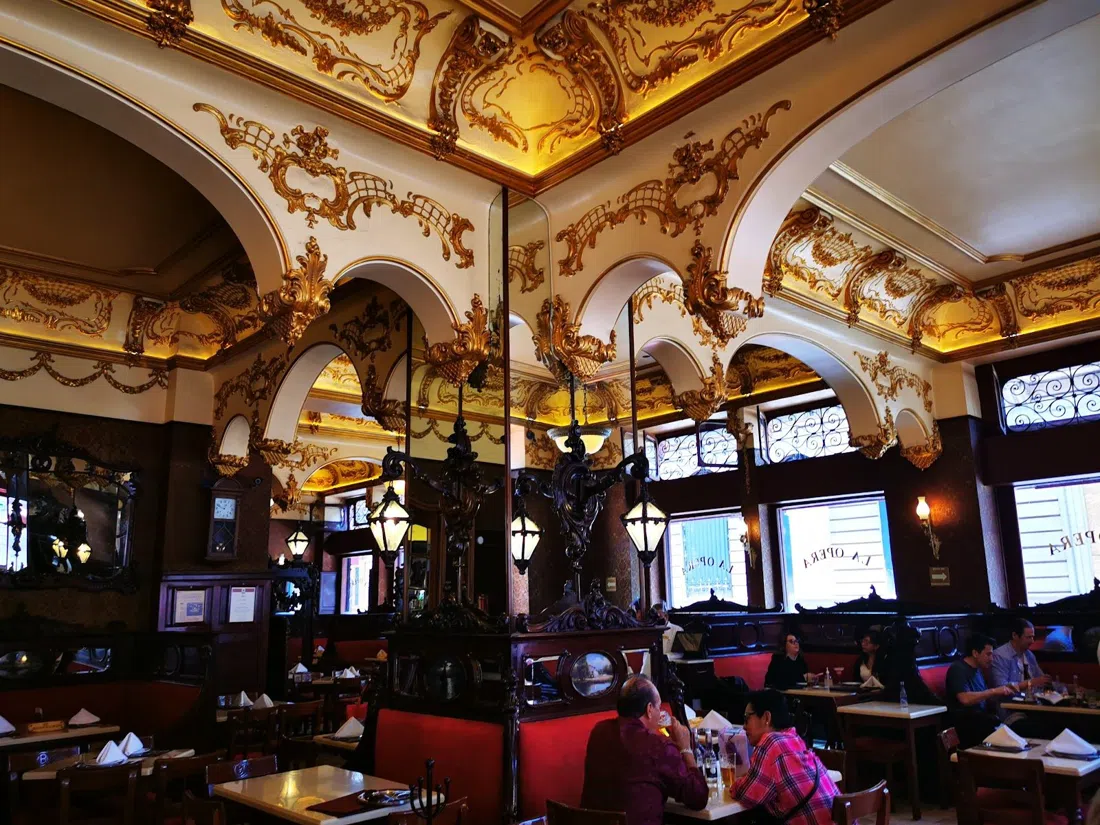
Cantina La Ópera (Centro Histórico, a block north of Madero) has occupied this site since 1895, trading Mon-Sat from 1pm to midnight, with a short Sunday that ends at 6pm, so an evening party should come Mon-Sat. Come for the carved room, the tequila and the bullet hole in the ceiling attributed to Pancho Villa in 1914, not for ambitious cooking. MXN 250-550 per person with botanas. The booths take groups; phone ahead for six or more.
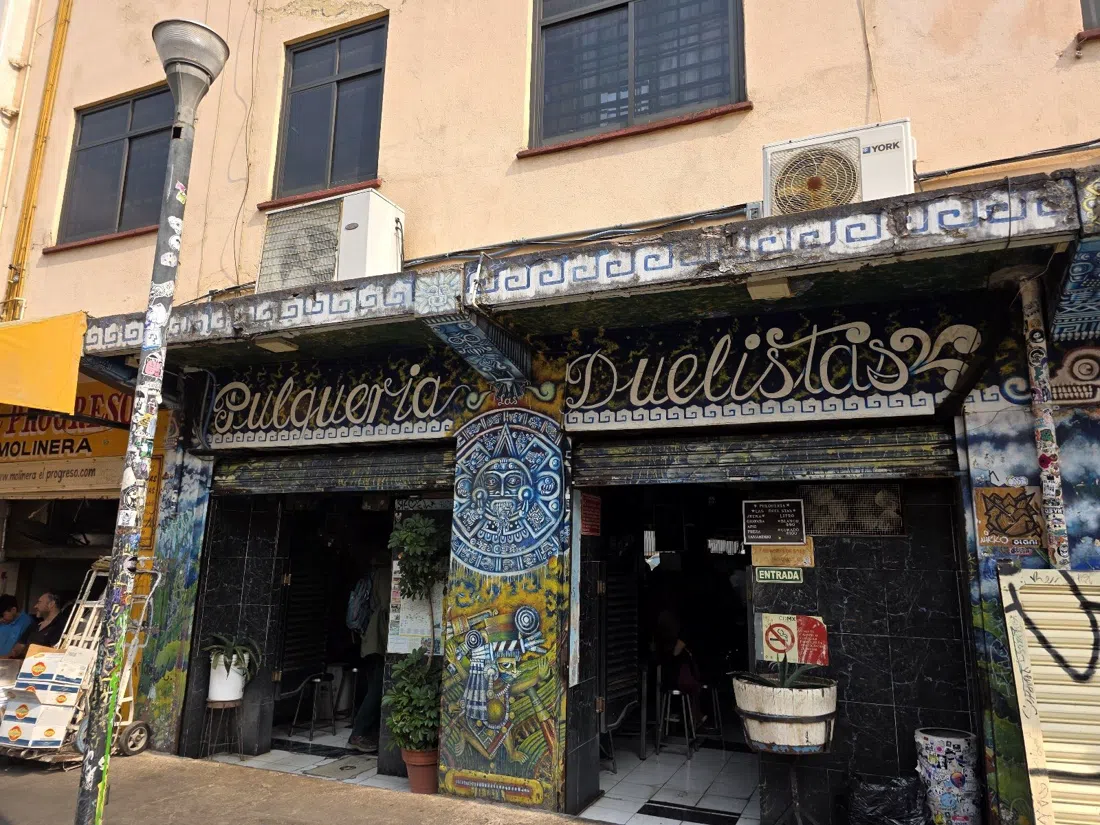
Pulquería Las Duelistas (Centro Histórico, Aranda 28) has been trading since 1912 and keeps around forty-five curado recipes, with apio, avena and guayaba poured most days and more at weekends. Pulque is fermented agave sap, viscous and faintly sour, and the texture divides people on the first mouthful, so order one and share it before committing. MXN 40-90 a serving, cash only, Mon-Sat 10am-9pm. The room is very small: fine for four or five, and a party of ten simply fills it.
Bósforo (Centro Histórico, on the quieter western streets) is the serious agave bar and deliberately unsigned, with no name on the door, dim inside, open Tue-Sat from 6pm and late at the weekend. The pours are small-producer mezcals and the staff can tell you who distilled each one and how, which is the reason to be here; there are hoja santa quesadillas to eat. Around MXN 250 average spend. No reservations, and it is packed after 9pm, so arrive before 8pm if there are four of you, and accept that a larger group will not sit together.
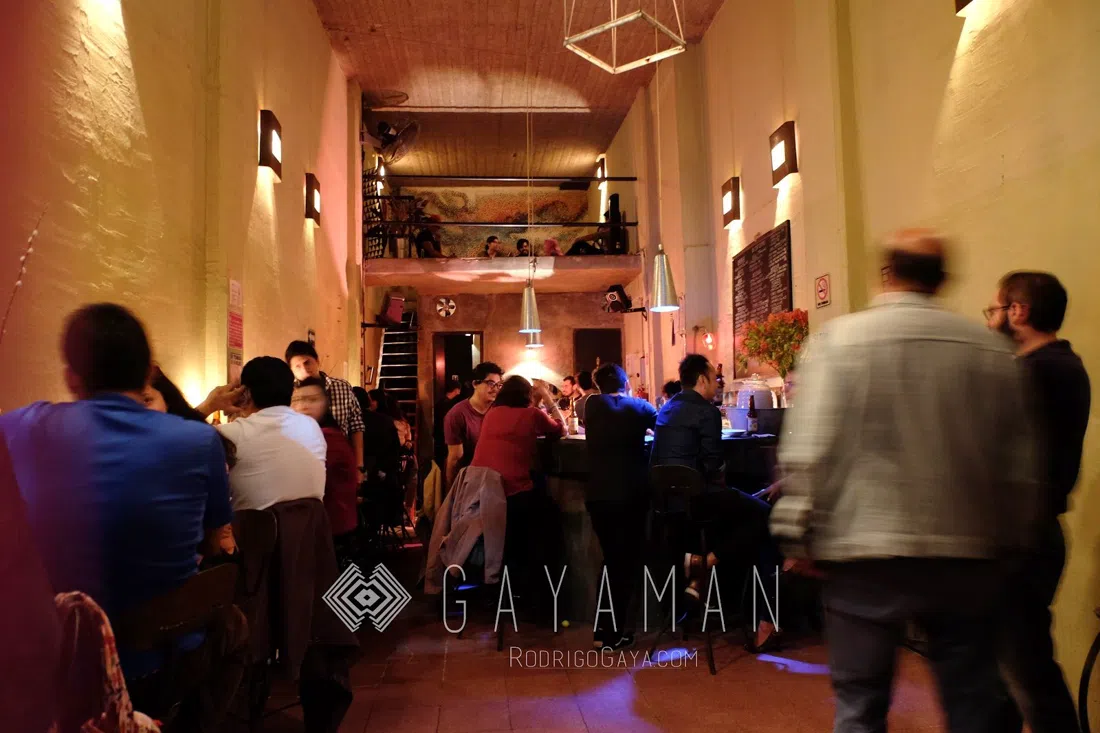
A basement worth sitting still for
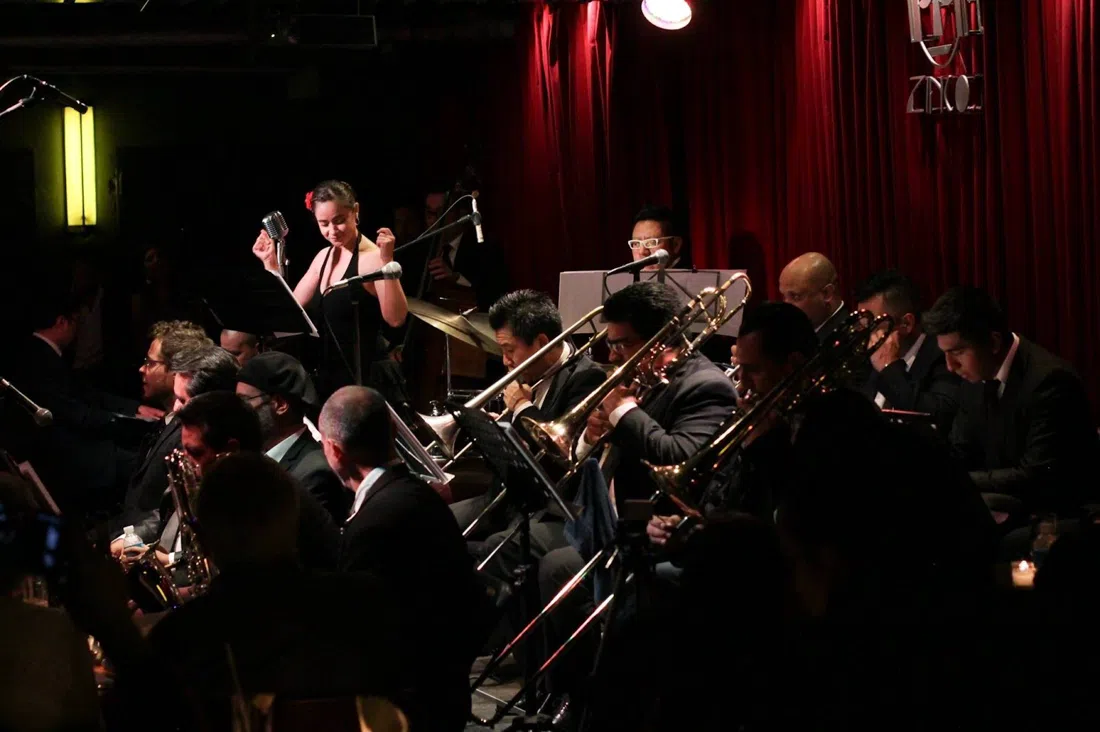
Zinco Jazz Club (Centro Histórico, in a former Banco de México vault) is the one night out down here that is about listening rather than drinking. The vault's proportions give it acoustics most purpose-built rooms never reach, the cocktails are made properly, and the 2026 gig calendar is published in advance. Open Wed-Sat from 9pm, cover around MXN 300 plus drinks. Capacity is limited, so book: online reservations take parties up to 10, and anything larger goes through their WhatsApp.
How long a full eating day takes
Plan on eight to ten hours for the full arc: breakfast at 8am, market by 10, tacos and a torta over lunch, bakery and chocolate mid-afternoon, cantina at six, mezcal at eight, jazz at nine. Nothing in that list is more than fifteen minutes' walk from the cathedral, so the time goes on eating and queueing, not transit.
If you only have half a day, cut it to four hours and three stops: one sit-down meal, one counter, one drink. The commonest mistake is booking a big lunch and a big dinner on the same day, which leaves no appetite for the counters, and the counters are the part you came for.
Queues, doors and when to book
Four places here need booking ahead: the rooftops, the courtyard restaurant and the jazz basement. Everything else is walk-in, and you should expect to queue rather than read it as bad planning. The churro counter at 11pm and the taco kerb at 2am are busy because that is when the city eats.
Door policy is barely a thing in the Centro; dress is casual everywhere, including the rooftops. Group size is the real constraint. Large parties work at the beer hall, the tiled palace café, the 1912 restaurant and the breakfast institution. They do not work at the taco stand, the pulquería or the mezcal bar, where the rooms are small enough that ten people arriving together changes the room for everyone in it. Split into fours and you will have a better night.
Walking it yourself versus a guided day
Walking the Centro costs nothing and the food is cheap enough that a self-guided day lands at MXN 400-900 per person. A guided option exists if you would rather someone else do the ordering and the sequencing: the walks assemble at the Zócalo or at the Bellas Artes end of Madero, they run seven days a week, and the bookable options attached to this page start from 115 USD per person and hold 2,498 traveller reviews between them.
That is roughly four to eight times a self-guided day, so be clear about what you are buying: Spanish-language ordering at counters where nobody speaks English, the judgement to skip what is tired, and permission to eat offal you would otherwise walk past. If you are a confident eater with a map and a bit of Spanish, do it yourself. If it is your first day in the city, or you are shy about street food, or you want someone to explain what is in the pot, the guided version pays for itself in stops you would never have made. The best-reviewed of them is rated 4.9 out of 5 from 1,380 reviews.
Best time to go
Tuesday to Friday is the strong window. The market is at its best Tue-Fri between 10am and 1pm, the cantina keeps full hours Mon-Sat, the mezcal bar only opens Tue-Sat, and the jazz club only runs Wed-Sat, so stack a Wednesday or Thursday and everything in this article is open at once.
Sunday is the weak day: the cantina shuts at 6pm, the pulquería and the market's best hours are gone, and the Zócalo fills with families and street performers, which is lovely to look at and slow to walk through. Saturday is the busiest for breakfast.
Within the day, mornings are cool and quiet and the light on the cathedral is best before 10am. Early afternoon is when the Centro is most crowded with office workers and tour groups. In the rainy months the downpour tends to arrive late afternoon and lasts an hour, a useful excuse to be inside a bakery or a cantina rather than on a rooftop. The late slot, 10pm to 2am, is when the churro counter and the taco kerb belong to locals rather than visitors, and it is the most interesting hour of the whole day.
Is it worth it
Yes, and more straightforwardly than most historic centres. The 1895 cantina, the 1927 bakery and the 1935 churro counter are monuments themselves, still trading, still cooking the same things, with no admission fee between you and them. The honest caveats: nothing here is undiscovered, the rooftops charge view prices, and the 1912 restaurant is full of visitors. None of that makes any of it worse food.
It suits almost everyone. Solo eaters do well at counters, couples get the courtyard and the mezcal bar, and groups get the beer hall and the tiled palace. It suits you least if you need tables, air conditioning and quiet, or if standing on a pavement with a plate is not your idea of dinner.
Practical notes before you go
The metro drops you inside the grid: Zócalo station on Line 2 for the cathedral end, Bellas Artes for Madero's western end, San Juan de Letrán for the churro counter and the market. The fare is a few pesos. Walking is faster than driving almost everywhere inside the Centro. Take an app car rather than hailing one for late-night returns.
Bring cash. The taco stand, the pulquería, the market vendors and the bakery are cash-first or cash-only; the restaurants, rooftops and the jazz club take cards. Keep small notes, because nobody at a kerbside counter wants a 500. Tip 10-15% where there is table service.
The city sits above 2,200 metres and alcohol behaves accordingly. Pace the tequila and the mezcal, and drink water between rounds.
On budget: counters and bakeries only, MXN 400-900 per person for a full day. Add one proper sit-down meal and it is MXN 1,000-1,600. A rooftop dinner plus a jazz cover takes a couple past MXN 2,500 each.
Staying inside the grid is what makes the late-night slot possible, since walking home from a 1am churro beats a cross-town ride. The Centro now has converted colonial houses and international chains, the Novotel among them, with the Zócalo and Alameda ends the two obvious anchors; compare rates and exact walking distances on the Mexico City hotel search.