Mexico City neighbourhood guide
Centro Histórico, Mexico City: where the capital began and still won’t sit still
A walk through Mexico City’s oldest district, where Aztec stone, baroque grandeur, muralism, tacos and late-night cantinas all crowd the same few blocks.
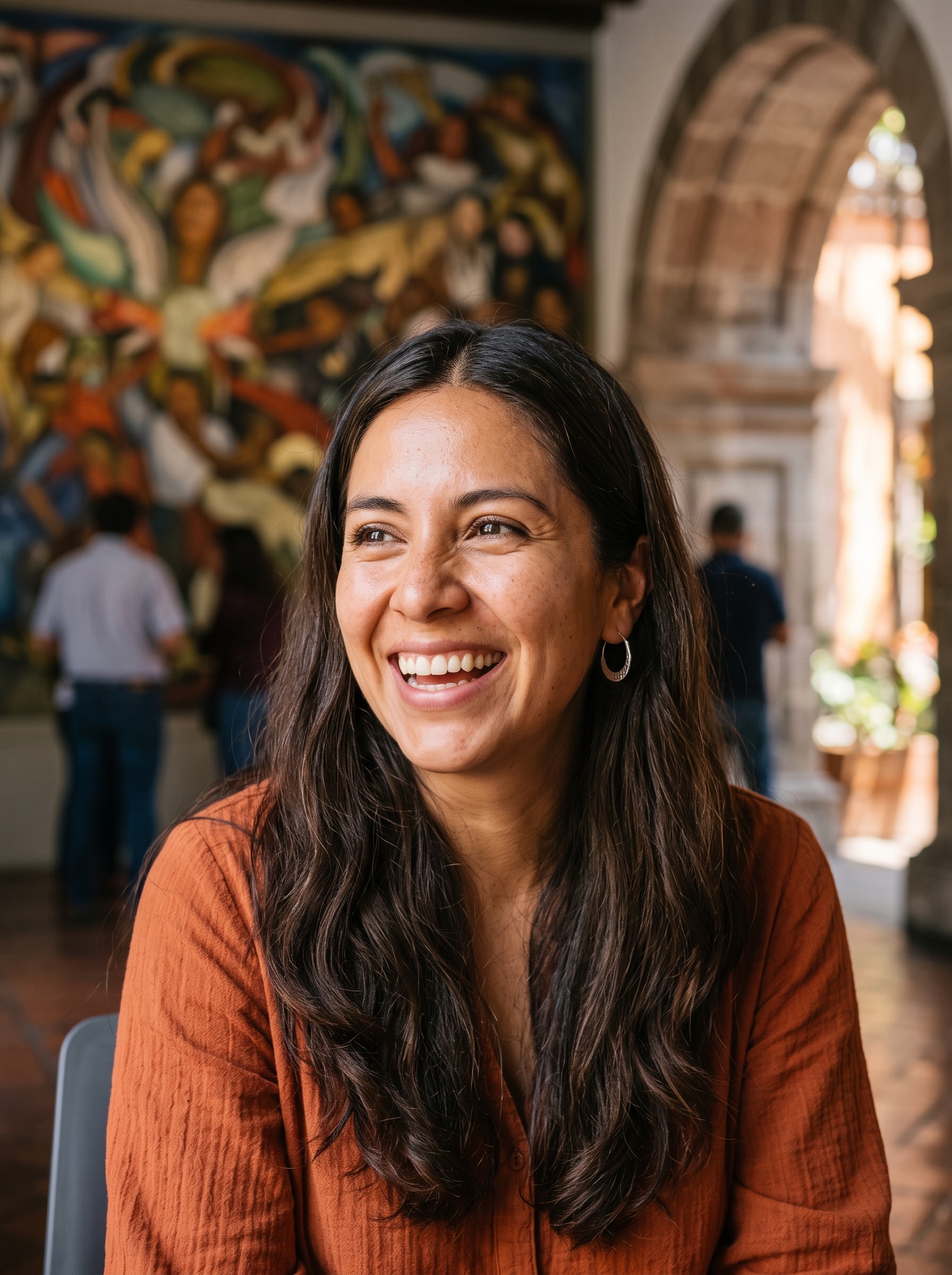
Stand in the Zócalo and the city stops pretending to be one thing. Under the flag and the traffic and the tourists with their phones held high, you are on top of Tenochtitlan; a block behind the cathedral, the Templo Mayor lies open to the sky, and the paving under your feet was once a lake causeway. Few neighbourhoods anywhere carry seven centuries so brazenly, and fewer still let a taquero shave suadero two streets over at three in the morning. Centro Histórico is not polished. That is the point.
What Centro Histórico is known for
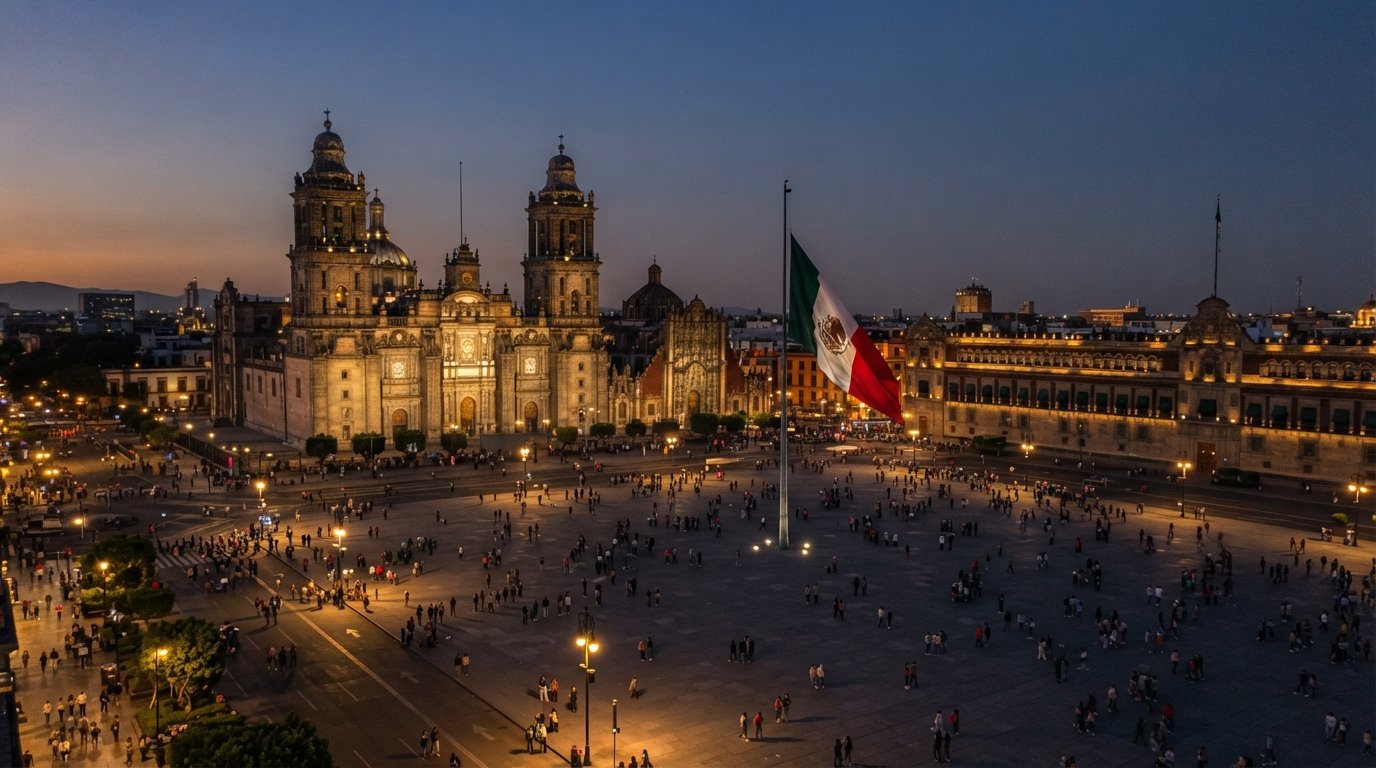
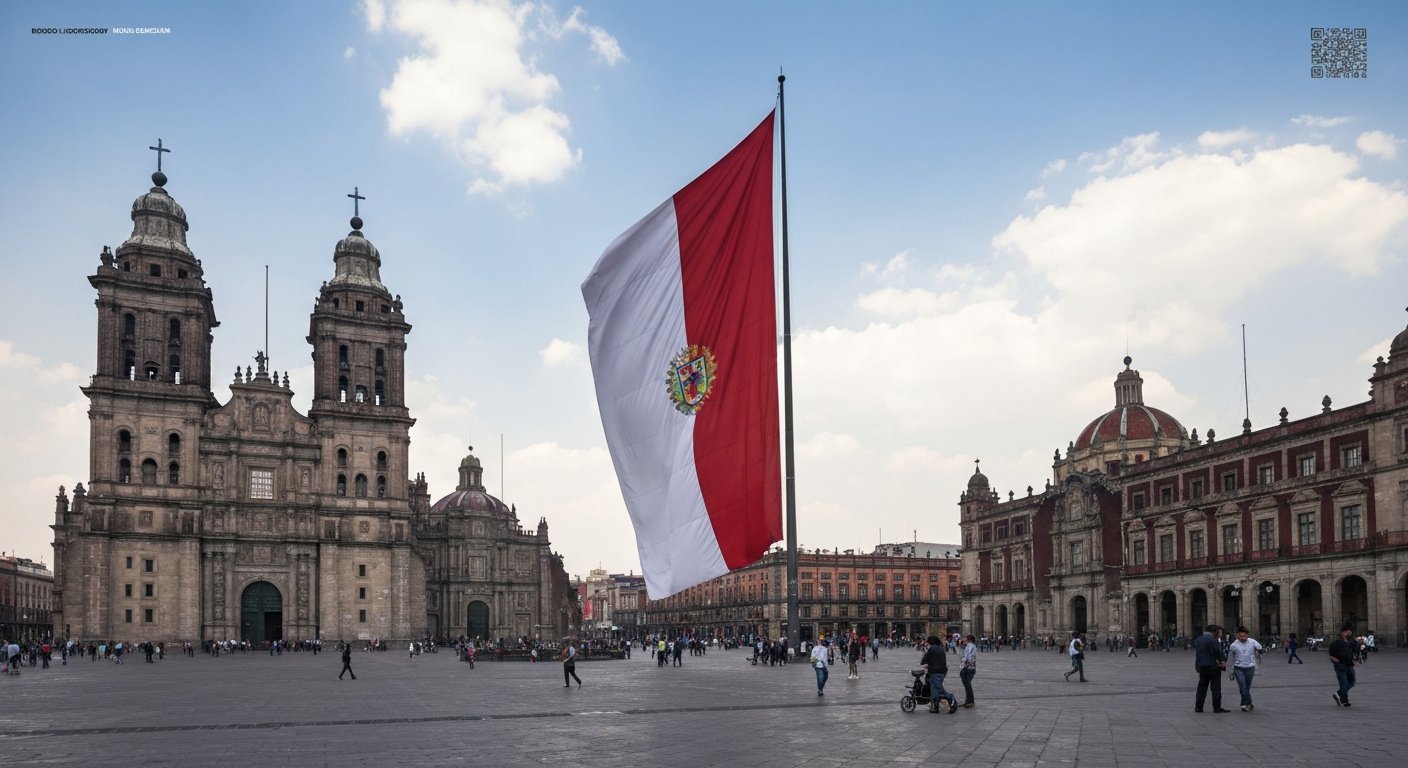
This is the ceremonial core of the country, and it behaves like one. The Zócalo — formally Plaza de la Constitución — is one of the largest city squares in the world, a hard, ceremonial plane flanked by the Metropolitan Cathedral and the Palacio Nacional. The cathedral is the oldest and largest in the Americas, and it looks every bit its age: visibly tilting as it settles into the soft lakebed, as if the ground itself has been making a long, patient complaint for centuries. Across the square, the palace keeps the national story on its walls, with Diego Rivera’s murals climbing the second-floor stairwell in a sweep of Mexican history. Entry is free, though you’ll need ID and the patience to queue like everyone else.
Behind the cathedral, the Templo Mayor changes the register completely. One minute you are in a square of flags and office workers; the next, you are looking at the exposed temple platforms of Aztec Tenochtitlan, rediscovered in 1978 when electrical workers hit a carved stone disc. That little act of modern urban incompetence did more for archaeology than a hundred speeches. The site opens Tuesday to Sunday from 9am to 5pm, costs around 100 pesos, and is free on Sundays for residents. The museum’s great stone monolith of Coyolxauhqui is worth the detour on its own, but the real drama is in the juxtaposition: the old city laid bare beside the present one, neither quite able to ignore the other.
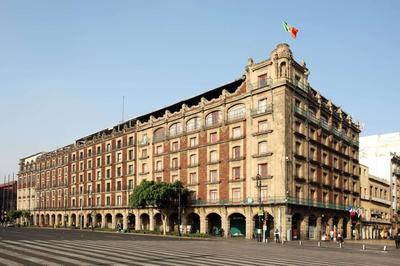
A few blocks west, the Palacio de Bellas Artes gives the district its most theatrical silhouette. It is Art Nouveau and Deco at once, topped by a stained-glass Tiffany curtain and wrapped in murals by Rivera, Siqueiros, Orozco and Tamayo. It opens Tuesday to Sunday and costs roughly 75 pesos, with free entry on Sundays; the Ballet Folklórico performs here on Sundays and Wednesdays. If you want the classic postcard view, cross to the old Sears building and ride up to the café terrace. It is free to enter, the coffee is cheap, and the palace sits in front of you like a stage set that somehow survived the century.
Where to eat & drink
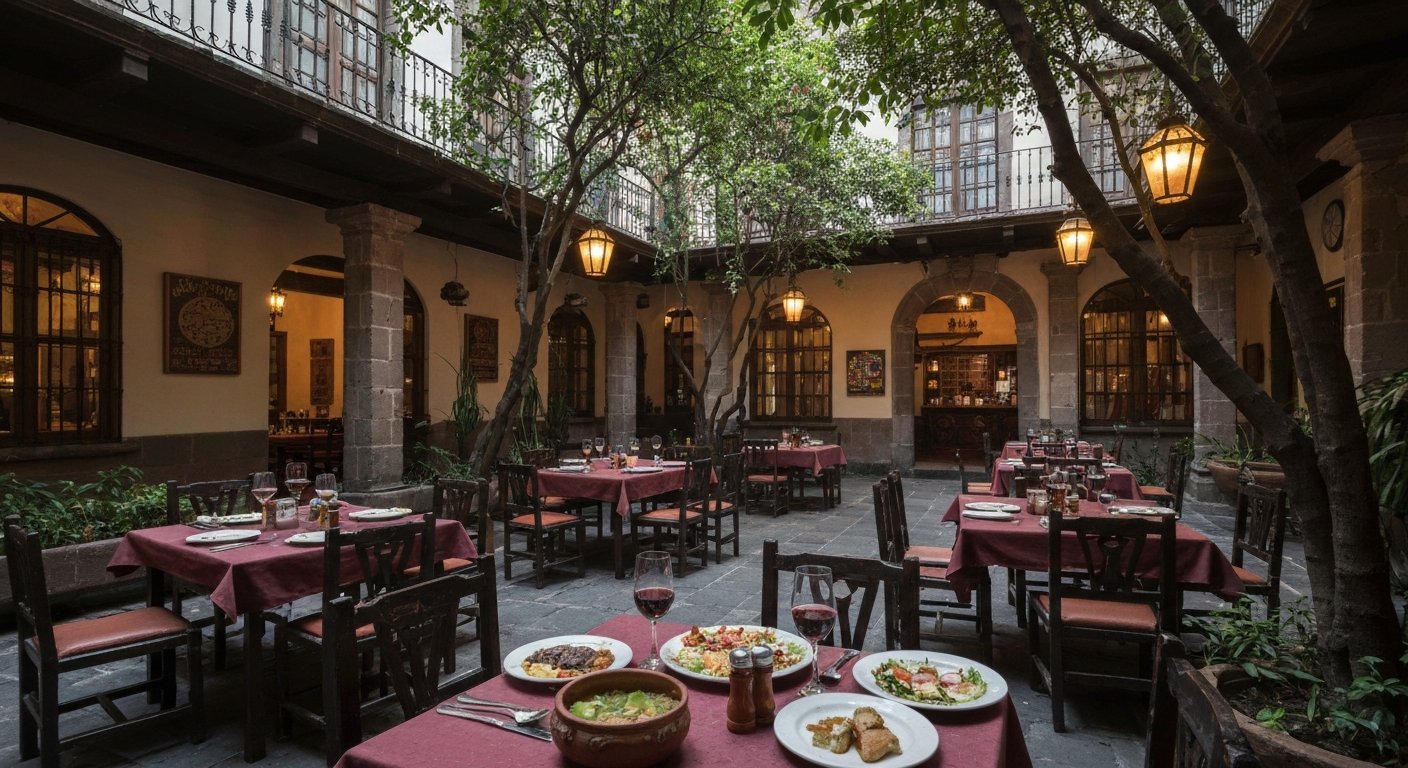
Centro eats the way it does everything else: with range, noise and no apology. One block can give you a lantern-lit courtyard and a taco stand with a line that looks like a small legal proceeding. For lunch that feels like a proper pause, Azul Histórico in the Downtown Mexico hotel at Isabel la Católica 30 is the elegant answer. Chef Ricardo Muñoz Zurita cooks traditional Mexican food in a tree-filled courtyard, and the menu leans confidently toward Yucatecan and coastal dishes — panuchos de cochinita, mole, the kind of food that remembers where it came from without dressing it up for tourists.
Breakfast, if you are doing the neighbourhood correctly, belongs to El Cardenal on Palma 23. It has been an institution since the late 1960s, and it behaves like one: warm concha, a spoon of nata, house hot chocolate, then eggs with escamoles or chilaquiles if you want to stay longer than your schedule intended. There is no need to reinvent breakfast when the old version is this good.
Café de Tacuba on Tacuba 28 is the sort of place that survives by becoming part of the furniture and then refusing to leave. Open since 1912 in a former palatial home, it trades heavily on atmosphere — tiled walls, waitresses in traditional dress, a bolero trio — but the mole enchiladas and pozole are not there just to decorate the room. They hold their own.
For something more contemporary, Limosneros on Allende 3 brings modern Mexican into a colonial stone room, with Mexican wines and mezcal doing the supporting work. It is a useful reminder that the Centro is not a museum set to a food programme. People still eat here like they mean it.
Street-level, though, the essential stop is Los Cocuyos on Bolívar, the 24-hour taco stand that Anthony Bourdain made famous. Go late, when the city has thinned out and the griddle is still working. Order the slow-braised suadero or the campechano and watch the choreography of the stand: quick hands, brief instructions, no romance except the kind that comes from a perfectly run taco operation.
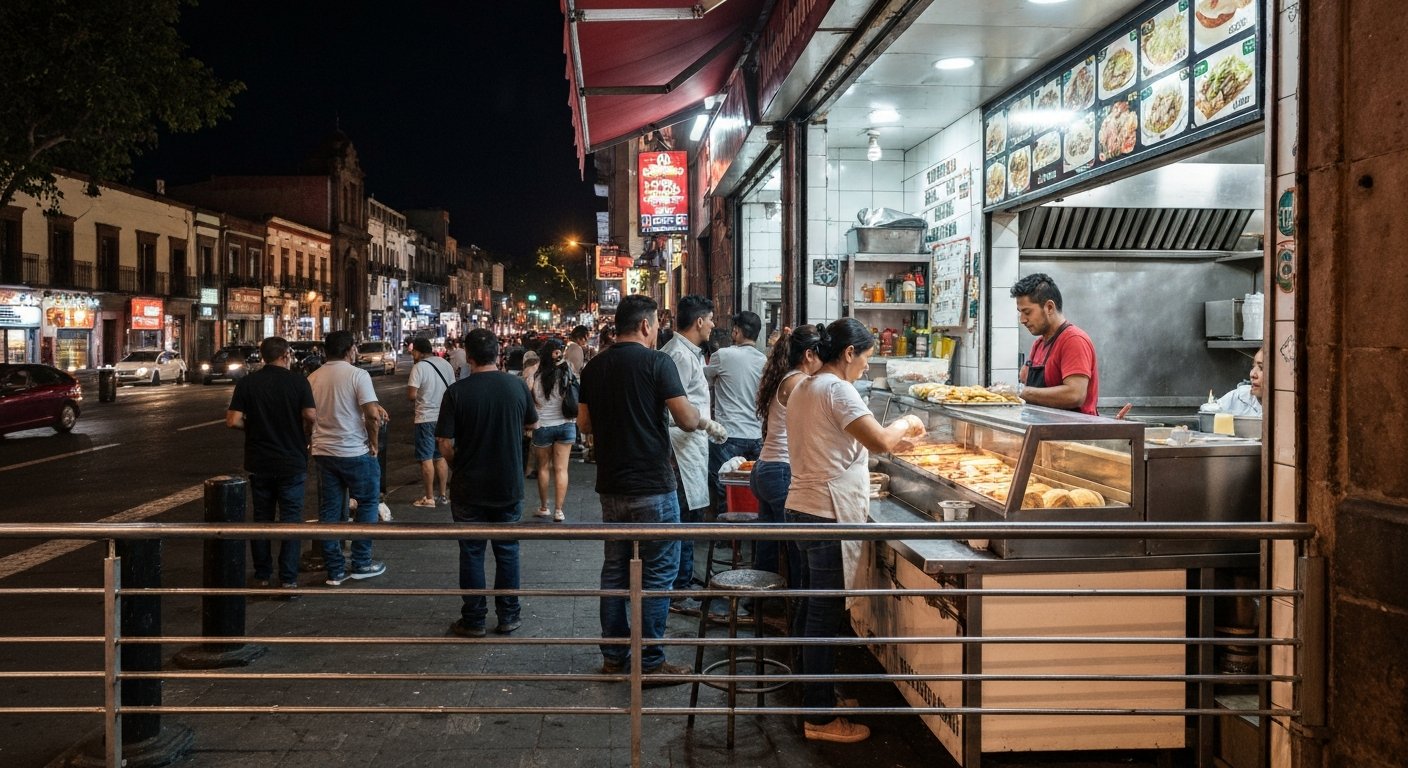
Finish with churros and thick hot chocolate at El Moro on Eje Central, the original churrería that has been going since 1935 and stays open around the clock. It is not subtle. That is exactly why it works.
Going out
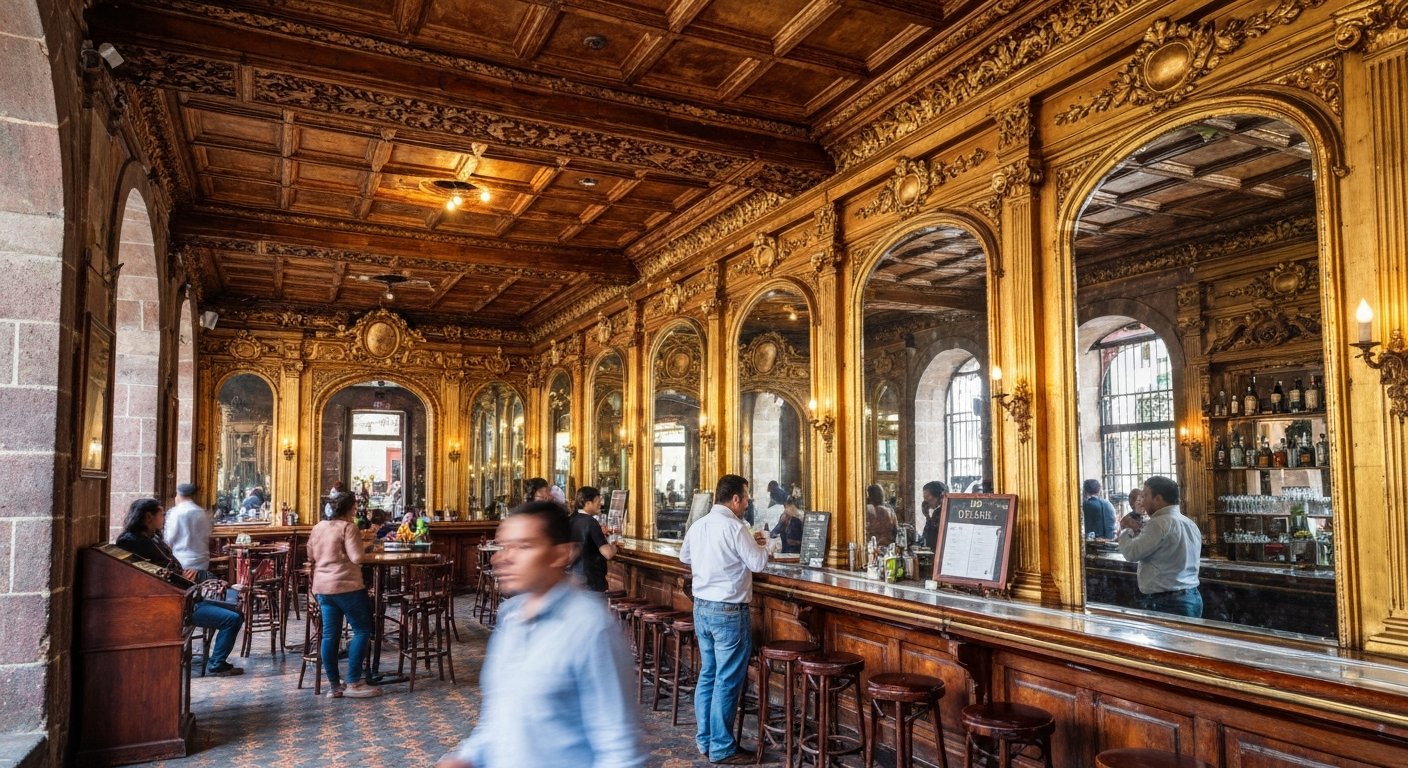
At night, the Centro does not become glamorous; it becomes legible in a different way. The offices empty, the tourist core around Madero and Bellas Artes stays lively, and the old drinking dens keep doing what they have always done. The grande dame is Bar La Ópera on 5 de Mayo 10, a cantina from the 1870s with gilded French-baroque interiors, carved wood, a string trio in the corner and the famous bullet said to be lodged in the ceiling by Pancho Villa. Order tequila or a caballito and the tortilla soup, and let the room do the rest.
If La Ópera is the grand old uncle, Salón Corona on Bolívar 24 is the cousin who shows up in a football shirt and knows where the cheap beer is. It has been going since 1928, and it remains gloriously unpretentious: cold draft beer, tacos, tortas, a buzzing elbow-to-elbow crowd, and the sort of energy that gets louder on match days for no particularly noble reason.
For mezcal, Bósforo on Luis Moya 31 is the cult favourite. It is dark, curtained, and serious about its list, with bottles sourced from Oaxaca, Guerrero, Michoacán and beyond. The music is eclectic, the room is small, and the blue-corn quesadillas are there for the practical matter of staying upright.
When you want your drink with a view, go up. La Terraza on the fifth floor of the Gran Hotel Ciudad de México looks straight onto the cathedral and the giant flag, while Balcón del Zócalo atop the Zócalo Central hotel, at 5 de Mayo 61, gives you the same square from a slightly more polished angle. Sunset is the moment. The city turns copper, the square goes theatrical, and even the pigeons seem to know they are in a good shot.
Things to do
Start at the Zócalo and work outward, because that is how the neighbourhood makes sense. Step inside the Metropolitan Cathedral and feel the tilt under your feet; it is one thing to read that the building sinks into the old lakebed, another to stand inside it and watch the floor and columns tell the same story in slow motion. Cross to the Palacio Nacional for Rivera’s murals of the whole arc of Mexican history. They are free to see, and they remind you that the country has always loved a wall with a point of view.
Loop behind the cathedral to the Templo Mayor, where the excavated Aztec temple platforms sit open to the sky and the museum holds the Coyolxauhqui monolith. The whole site is a lesson in layered cities: one civilisation built over another, then another, then a modern capital trying to keep its balance on top.
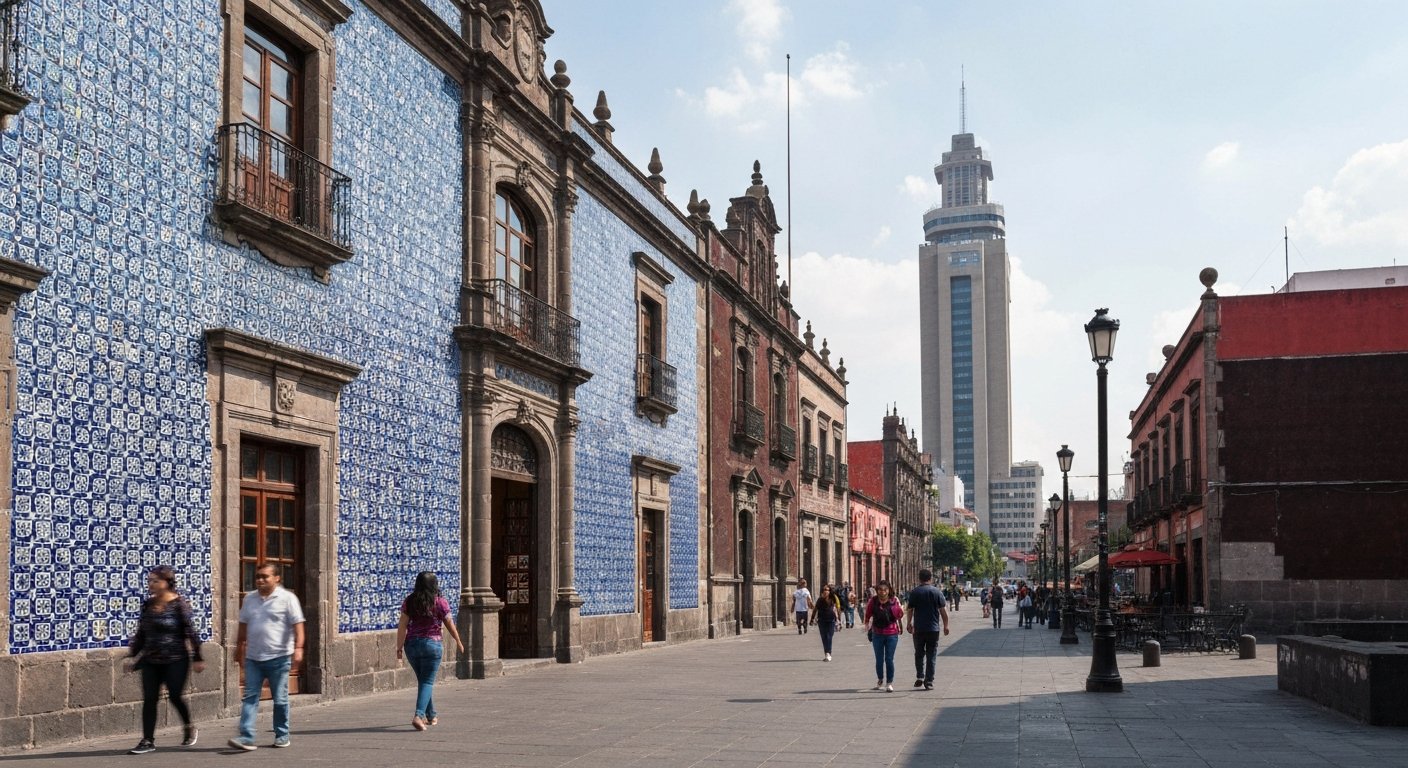
Walk the pedestrianised Calle Madero and let the crowd carry you. It is the neighbourhood’s spine, a river of people from morning until late, and it gives you the full Centro in one go: office workers, pilgrims, tourists, vendors, and the occasional person who seems to have been walking with purpose since 1998. Pass the blue-tiled Casa de los Azulejos and keep going to the Torre Latinoamericana, whose observation deck gives the clearest 360-degree read of the city’s scale. On a clear day, it is worth the ascent. Mexico City only really explains itself when you can see how far it spreads.
The Palacio de Bellas Artes is both mural gallery and grand theatre, and it remains one of the few buildings in the city that can still make a crowd fall quiet for a second. Culture-hoppers should also make time for the Museo Nacional de Arte (MUNAL), with its sweeping collection of Mexican art in a palatial Beaux-Arts building on a quiet plaza, and the murals of Antiguo Colegio de San Ildefonso, birthplace of the Mexican muralist movement. If you come on Sunday, the district feels almost festive, with many state museums free for residents and a little more air in the streets.
Don’t miss in Centro Histórico
The Zócalo and the Metropolitan Cathedral
Templo Mayor archaeological site
Palacio de Bellas Artes
Shopping & markets
Shopping in the Centro is less about boutiques than about obsession. Whole blocks here seem to specialise in one thing and one thing only: lighting, party supplies, wedding gowns, sportswear, sheet music. It is the city’s great argument for the niche. For visitors, the essential stop is the Mercado de Artesanías La Ciudadela on the southwest edge near Metro Balderas. More than 300 stalls sit under one roof, gathering work from Oaxaca, Chiapas, Guerrero, Michoacán and Puebla: alebrijes, Talavera ceramics, hand-loomed textiles, silver, huipiles. It is open daily and free to enter, with prices that can start at a few hundred pesos for small pieces and climb into the thousands for fine rugs and carved alebrijes. Haggling is expected, but do it politely; this is a market, not a wrestling match.
On Madero itself, the Casa de los Azulejos is more sight than shop, though worth stepping into for the blue-and-white Talavera shell alone. And if you want the raw, sprawling market experience, the vast Mercado de la Merced to the east is the city’s great produce and comida market. Go with care, ideally on a guided food walk. It sits toward the rougher end of the district, which is a polite way of saying it is not the place to wander off in search of a mood board.
Where to stay in Centro Histórico
Staying in the Centro means waking up steps from the Zócalo and the big sights. That is the appeal: you trade a leafy, residential base for the privilege of opening your curtains to actual history. It is unbeatable for a sightseeing-first trip and less ideal if you want after-dark buzz outside your door. The design pick is Círculo Mexicano on República de Guatemala 20, a restored 19th-century building turned 25-room, Shaker-minimalist boutique hotel with a rooftop pool, terrace and cathedral views. It also stands on the birthplace of photographer Manuel Álvarez Bravo, which feels exactly the sort of detail this district likes to keep in reserve.
Around the corner, Downtown Mexico occupies a 17th-century palace on Isabel la Católica, with a rooftop bar and Azul Histórico in its courtyard. Both put you on the quieter western streets, which is the right move. The tourist core around Madero, Bellas Artes and the Zócalo is safe and lively by day, while blocks east toward La Merced are best avoided after dark. Expect to walk everywhere, and expect to hear church bells, delivery trucks and the city starting up before you do.
Where to stay here
Hotels in Centro Histórico
Our best-rated stays in this neighbourhood. Prices are approximate “from” rates — confirmed at the provider when you continue. We may earn a commission if you book through our partners, at no extra cost to you.
 In this area
 In this area
 In this area
 In this area
 In this area
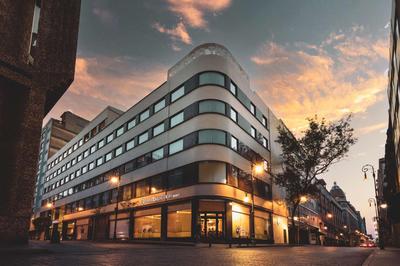 In this area
NH Collection México City Centro Histórico
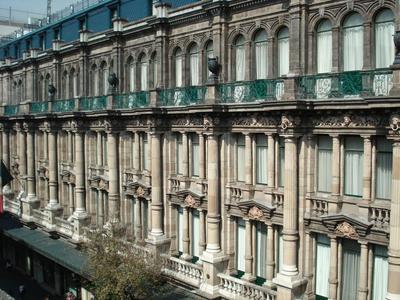 In this area
Gran Hotel Ciudad de México Zócalo View
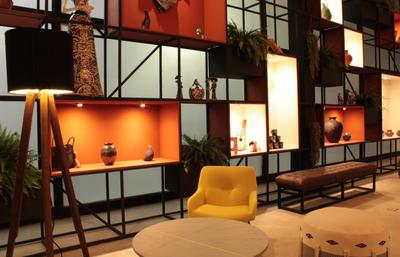 In this area
Hotel Fontan Reforma Centro Historico
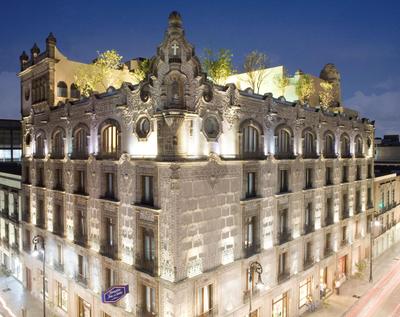 In this area
Hampton Inn & Suites Mexico City - Centro Historico
 In this area
 In this area
 In this area
Hotel MX garibaldi CDMX, Trademark Collection by Wyndham
Getting around
The Centro is made for walking. The Zócalo, Madero, Bellas Artes and the Alameda Central are all within a ten-minute stroll of one another, and with the traffic and short distances, on foot is usually faster than any vehicle. This is one of those rare districts where the map tells the truth: things really are close, provided you are willing to cross streets like a local and not like a cautious suburban inheritance.
On the Metro, Line 2 (blue) is your friend. Zócalo station exits straight onto the main square, while Allende and Bellas Artes are a stop or two along. Balderas, on Lines 1 and 3, drops you beside the Ciudadela market. Fares are a flat few pesos. After dark, keep to the well-lit Madero–Zócalo–Bellas Artes corridor and take an Uber or Didi for anything east of Pino Suárez or late at night. If you are heading to the airport, the AICM is only about 5–7 km east — roughly 20–30 minutes by cab in light traffic, or a cheap Metro ride via a change at Pantitlán if you are travelling light.
Centro Histórico is ideal if your priority is sightseeing. You wake up within walking distance of the cathedral, the Templo Mayor, Bellas Artes and Rivera’s murals, and you can cover the neighbourhood’s greatest hits without ever feeling like you are commuting to your own holiday. The trade-off is that it quietens once the offices close, so if you want a leafier base with more bars and cafés at your door, Roma Norte or Condesa make a stronger case. Many travellers do both: a couple of nights here for the history, then a move for the rest.
By day, the tourist circuit around the Zócalo, Madero and Bellas Artes is well-policed, crowded and safe, with the usual big-city discipline around pickpockets in the busiest streets and markets. At night, stay on the lit main streets, avoid the blocks east toward La Merced and Tepito, and use Uber or Didi rather than wandering long distances after dark. Don’t flash jewellery or big wads of cash. The Centro rewards attention, not bravado.
Good to know
Centro Histórico — your questions
Is Centro Histórico a good area to stay in Mexico City?
Yes, if your trip is built around sightseeing. You’ll be within walking distance of the Zócalo, the cathedral, the Templo Mayor, Bellas Artes and Rivera’s murals. The downside is that the district quietens once the offices close, so if you want a leafier, livelier evening base, Roma Norte or Condesa usually suit better. Many travellers split their stay.
Is Centro Histórico safe?
By day, the main tourist circuit — the Zócalo, pedestrianised Madero and the area around Bellas Artes — is busy, well-policed and generally safe, with normal big-city care for pickpockets. At night, stay on the lit Madero–Zócalo–Bellas Artes corridor, avoid the blocks east toward La Merced and Tepito, and use Uber or Didi for longer hops after dark.
What should I not miss in Centro Histórico?
The essential trio is the Zócalo, the Templo Mayor behind the cathedral, and the Palacio de Bellas Artes. Add Rivera’s murals in the Palacio Nacional, a taco run to Los Cocuyos, a tequila at Bar La Ópera, and a sunset drink on a Zócalo rooftop such as La Terraza at the Gran Hotel.
What is Centro Histórico best for?
History, architecture, murals, old cantinas and market food. It is not the place for a calm residential feel or a dense club scene, but for walking between major sights and eating very well, it is hard to beat.
Gallery