Mexico City doesn't keep its revolution behind glass. It painted the whole story onto the walls of a nation's power — a presidential staircase, a ministry's courtyards, an opera house lobby — and left it there for anyone with a valid ID and a free morning to walk in and read it like a book. Diego Rivera spent three decades doing this, one commission at a time, and the city he covered in plaster and pigment is still, without exaggeration, one of the largest open collections of public art anywhere. Finding it means accepting that a mural, unlike a painting, doesn't travel — you go to where the wall is, on the wall's terms, not yours.
The Historic Centre: Where the Revolution Was Painted on Purpose
Start where Rivera did his most political work, because the Centro Histórico is where the government put him to use.
Palacio Nacional (Centro Histórico), the seat of Mexican executive power since the colonial era, holds Rivera's most reproduced work: the staircase murals collectively known as The History of Mexico, an epic that runs from the Aztec world through the Conquest, the colony, the Reform, and the Revolution in a single sweeping composition. It's the mural every art history survey reprints, and in 2026 it is the hardest of the sites in this guide to actually see. Because the Palacio still functions as government offices, access has been pulled back to Fridays only, with limited daily capacity, advance registration, and photo ID required at the door. That single weekly window should be the anchor of the whole itinerary, not an afterthought — check the current schedule shortly before you travel, since it shifts with the building's own politics, and build everything else in this guide around whichever Friday you can secure.
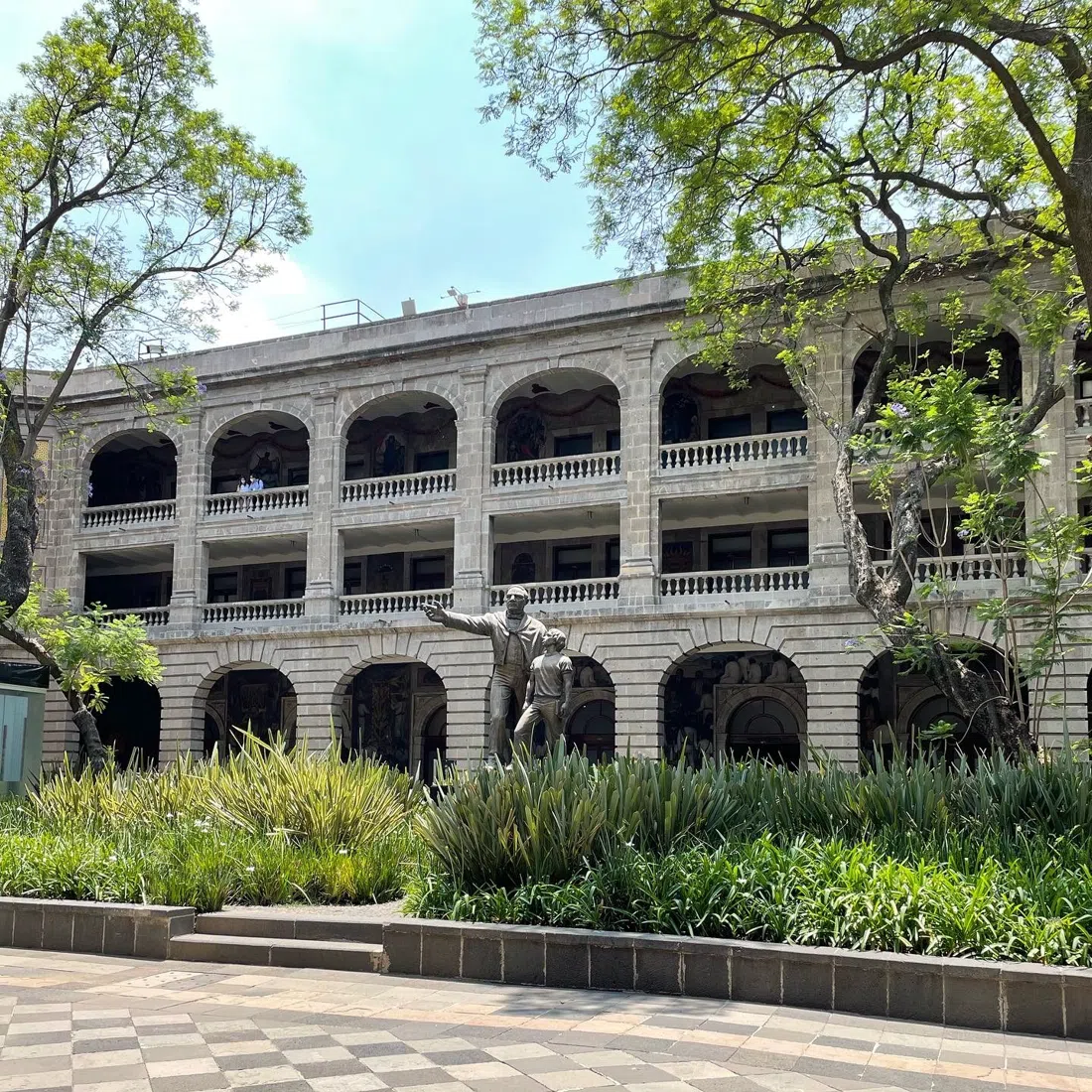
A short walk away, on Calle Argentina, is the mural cycle Rivera himself considered his most complete: the Secretaría de Educación Pública (Centro Histórico) patios. Two courtyards, three storeys, 235 individual panels — his largest single commission, painted between 1923 and 1928, tracing Mexican labour, festivals, and class struggle in a program so vast that most first-time visitors need a good ninety minutes just to walk it slowly. The lower level moves through work — weaving, mining, sugar cutting, ironwork — while the upper floors turn toward folk celebration and revolutionary allegory, so the building itself reads top to bottom like an argument being built. What makes it worth prioritising over better-known stops is how little pressure it puts on a visit: there's no booking system, no timed slot, just one photo ID per group at an entrance easy enough to miss if you're not looking for it. Tour buses largely skip it, which means a group of ten can move through the courtyards without the shuffle-and-wait rhythm that governs the Palacio Nacional.
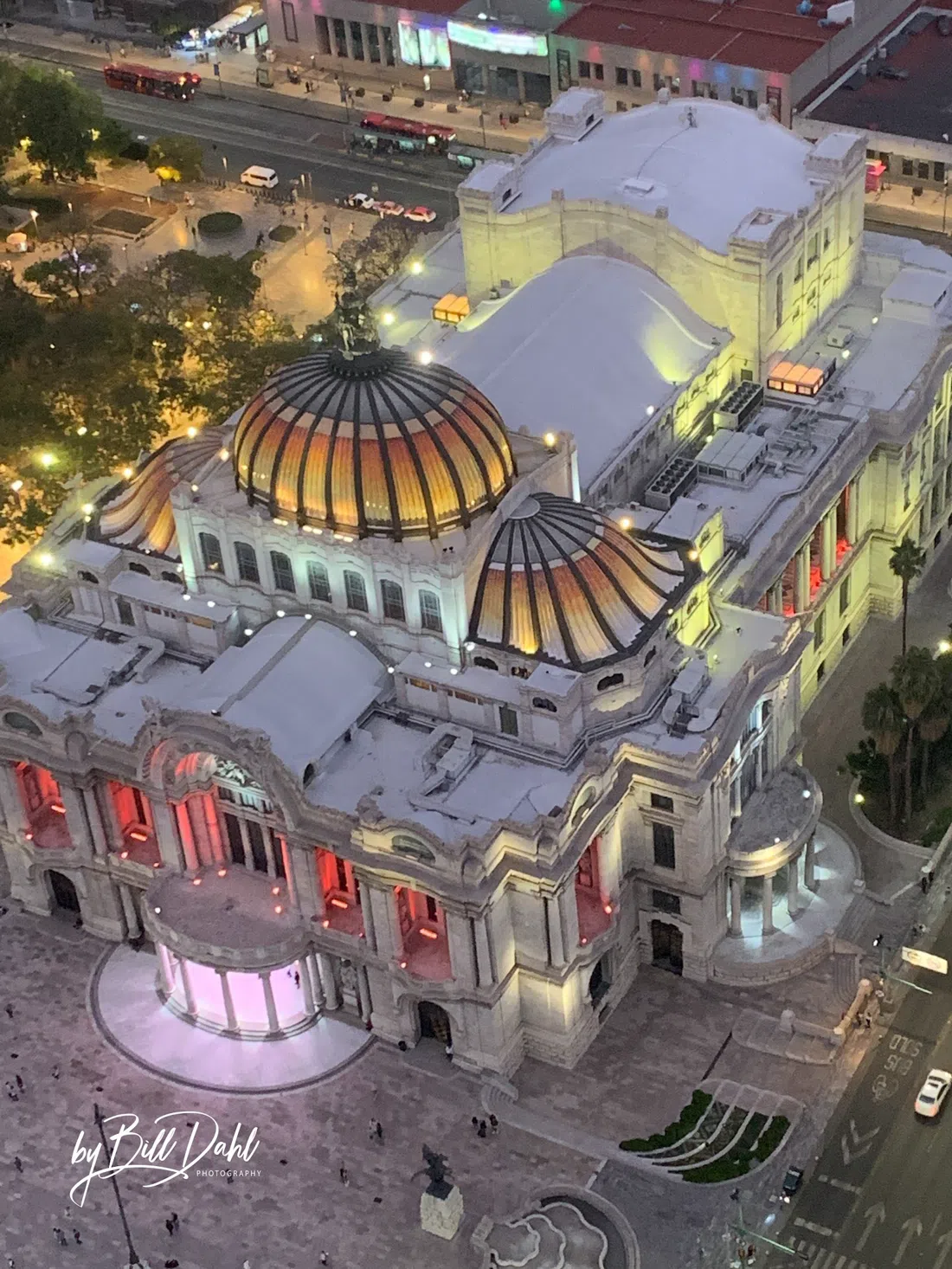
For scale and a proper museum experience, go to Palacio de Bellas Artes (Centro Histórico), the marble-and-glass performing arts palace a few blocks further west. This is where Rivera repainted, in 1934, the mural Nelson Rockefeller had destroyed three years earlier at his New York building for the crime of including a portrait of Lenin — Man, Controller of the Universe, bigger and no less unapologetic the second time around, hanging now alongside major works by Siqueiros and Tamayo in the same building. Bellas Artes is built for group flow in a way none of Rivera's government murals are: timed slots are recommended for larger tours, guided visits are widely available, and the whole operation runs on a museum's normal rhythm — except Mondays, when it's closed. It's also the one site on this list where the mural is only part of the draw; the building's own Art Nouveau exterior and Art Deco interior, and whatever is playing at the adjoining theatre that evening, make it easy to build a whole afternoon around a single address. Entry runs roughly 75–90 MXN (around US$4–5) for foreign visitors.
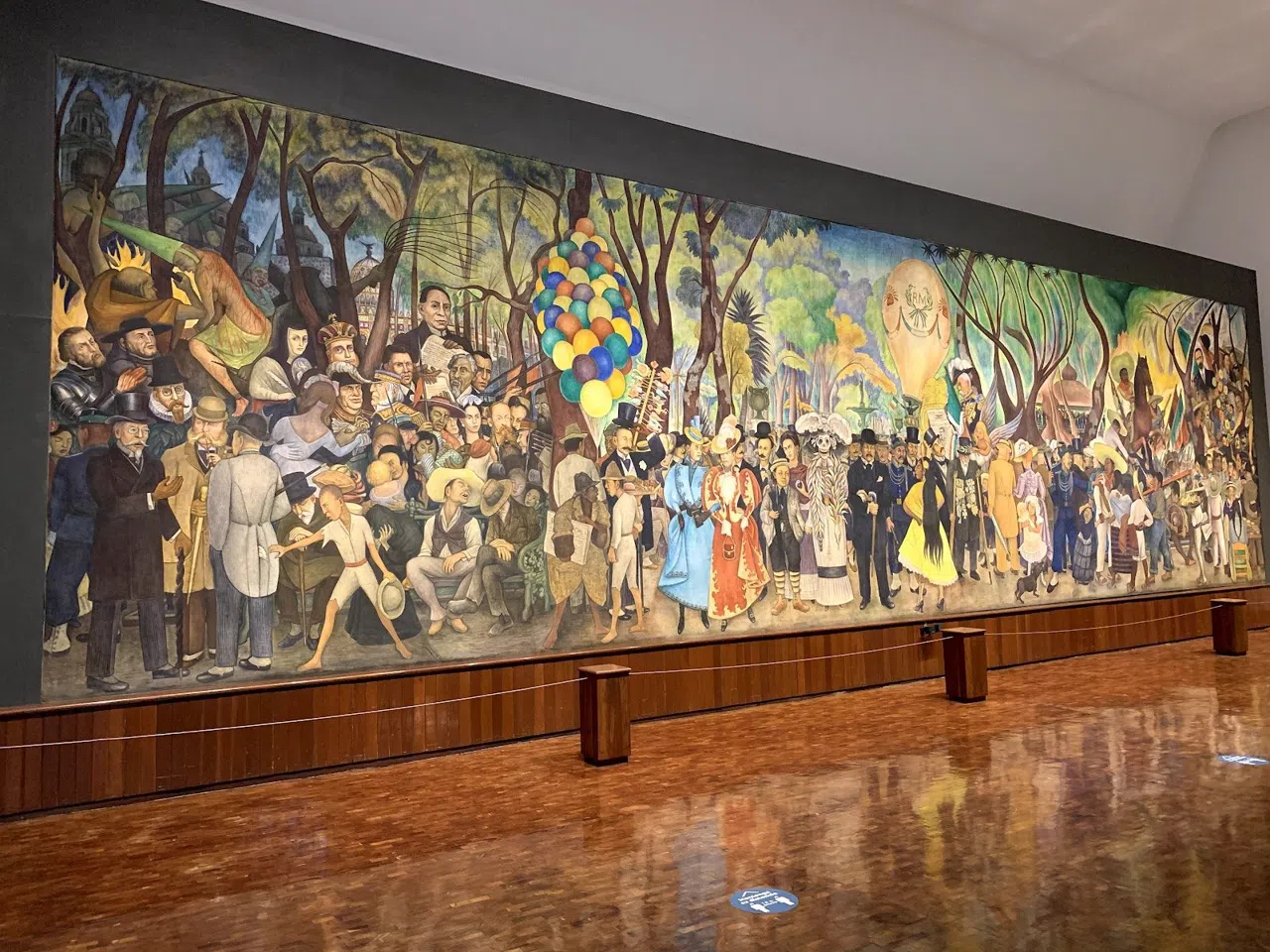
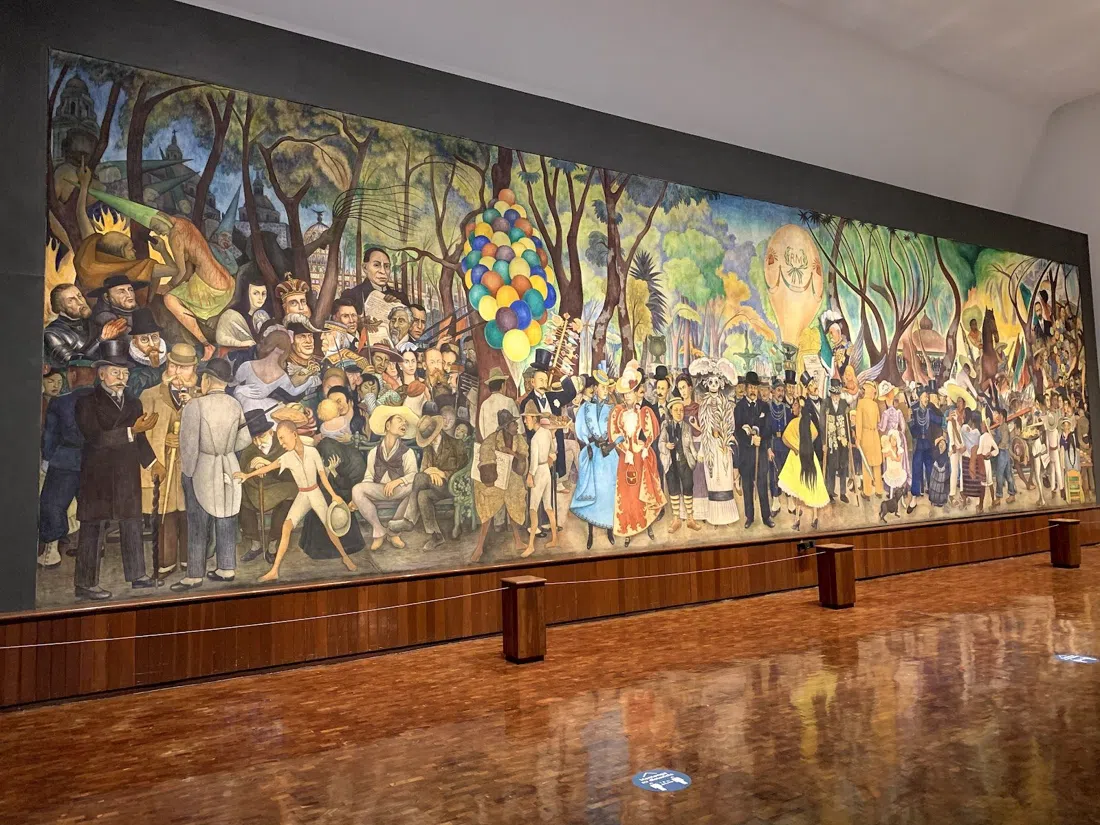
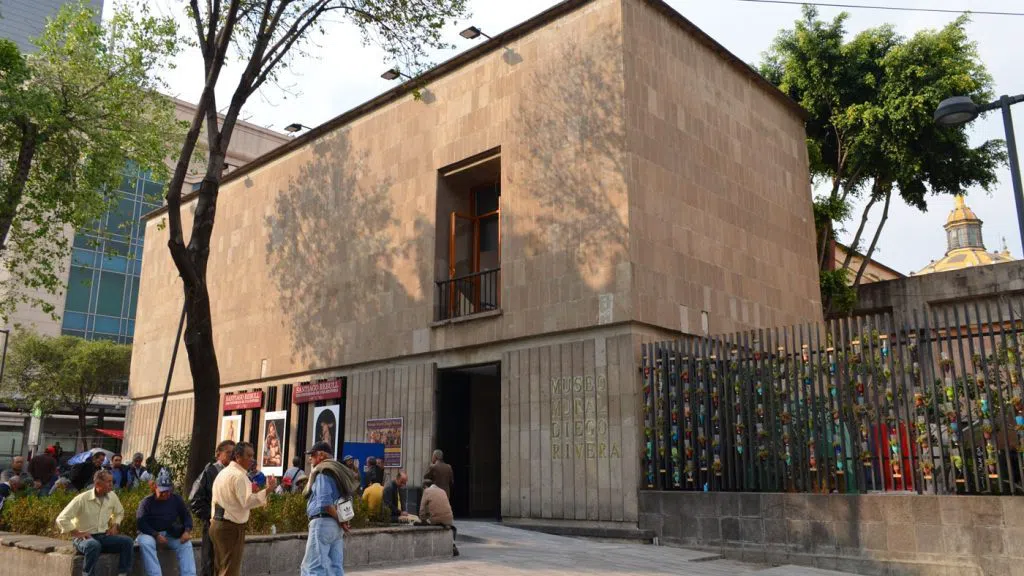
One more stop belongs in this cluster, a few minutes on foot from Bellas Artes: the Museo Mural Diego Rivera (Centro Histórico), a single-purpose museum built around one mural — Dream of a Sunday Afternoon in Alameda Central, Rivera's crowded, self-mythologising panorama of four centuries of Mexican history staged as a Sunday stroll through the park across the street. The mural used to hang in the Hotel del Prado; the 1985 earthquake brought the hotel down, and the mural was extracted intact and rehoused here rather than trusted to another building. It's a small venue, but that scale works in a group's favour — there's nowhere to get lost, and the cash-only ticket booth moves quickly. Entry is about 45 MXN (US$2–3), free on Sundays.
Where It Started: San Ildefonso
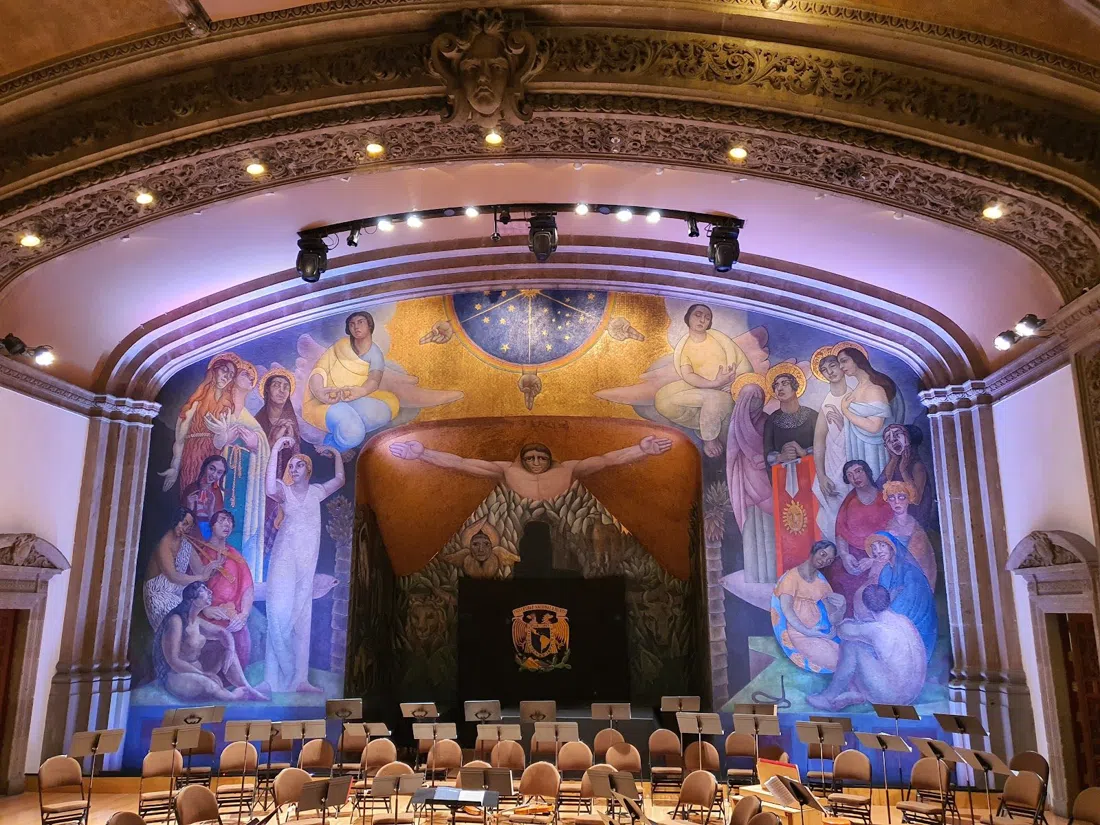
Everything above happened because of what came first, a few streets over. The Antiguo Colegio de San Ildefonso (Centro Histórico), a former Jesuit college turned cultural centre, holds the Anfiteatro Simón Bolívar — the wall where Mexican muralism was born in 1922, before Rivera had touched the Palacio Nacional or the SEP. It's easy to treat San Ildefonso as optional once you've seen the bigger names, and that would be a mistake of sequencing: this is the pilot project, the one that persuaded the government to trust painters with its walls in the first place. Timed guided-visit slots run several times a day, Tuesday through Sunday, and the building takes groups comfortably. Tickets run roughly 70–100 MXN (US$4–5).
South to San Ángel and Coyoacán: Rivera at Home
The public commissions tell you what Rivera wanted the state to believe about itself. San Ángel and Coyoacán, in the city's south, tell you what he built for himself.
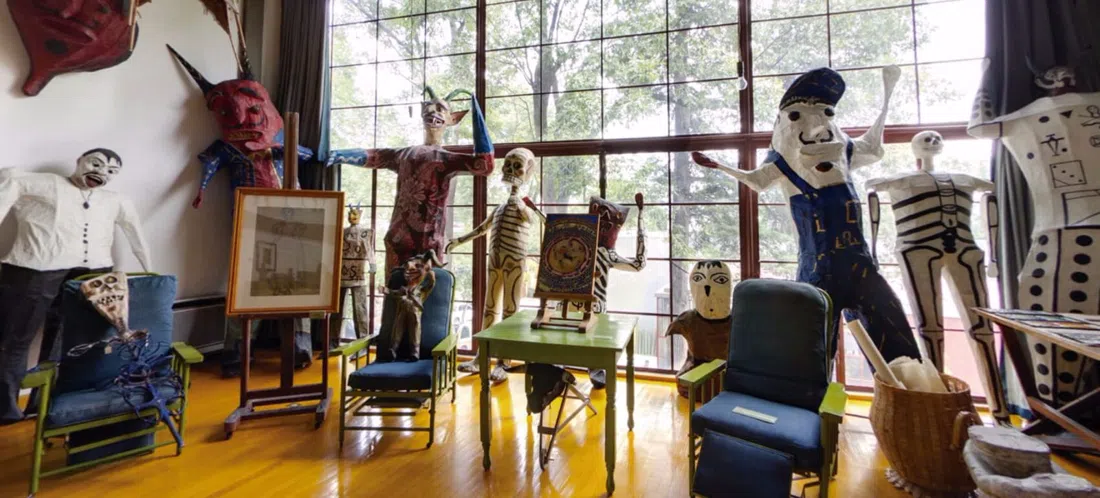
The Museo Casa Estudio Diego Rivera y Frida Kahlo (San Ángel) is a pair of functionalist studio-houses designed by Juan O'Gorman, connected by a narrow rooftop bridge — Rivera's on one side, Kahlo's on the other, close enough to see into each other's windows and far enough to keep separate lives. There's no mural here; the point of the visit is architectural and biographical, the working studio behind the public wall. It's a genuinely small house-museum, fine for moderate-sized groups, but larger tours should plan to split at the door rather than try to move twenty people through one room at a time. Entry is 45 MXN (about US$2.50).
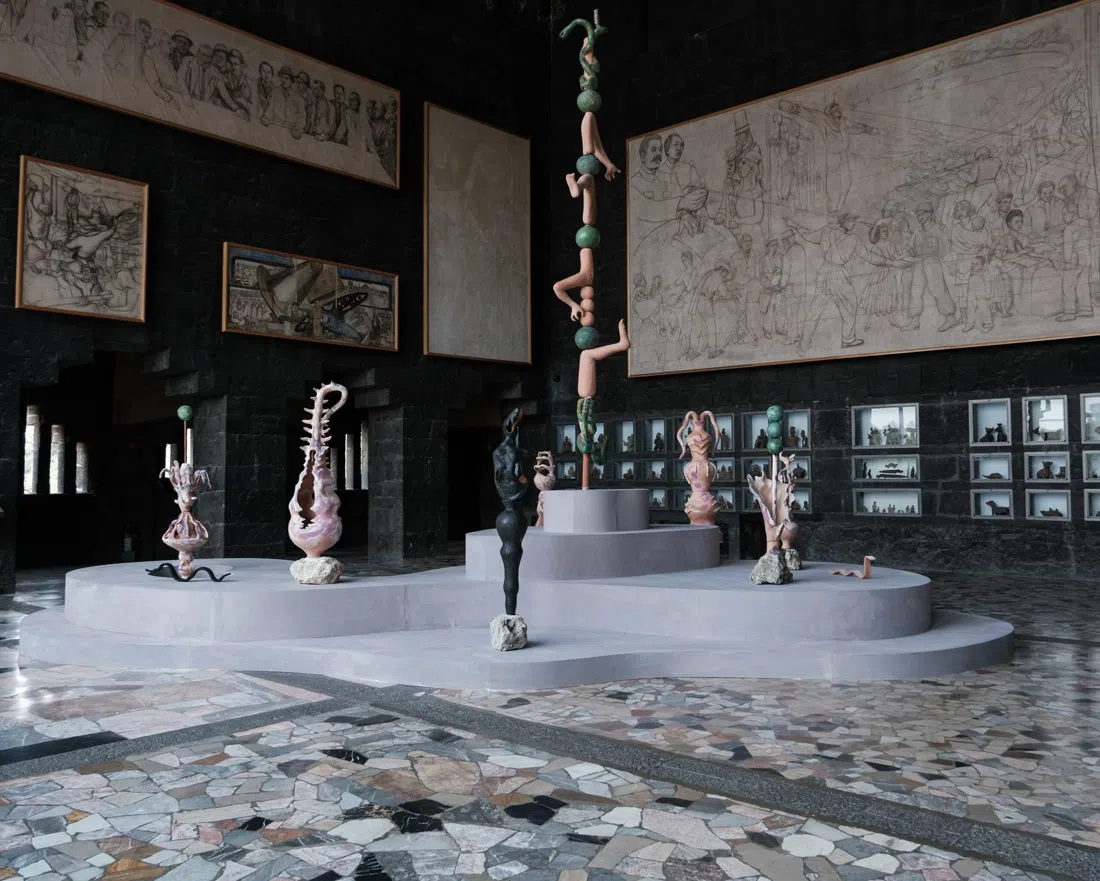
Further south, in Coyoacán, is the strangest and most personal of Rivera's projects: Museo Anahuacalli (Coyoacán), a temple-like structure built from black volcanic rock that Rivera designed himself to house his own collection of pre-Hispanic art. It isn't a fresco — there's no wall to read here the way there is at the SEP — but it's the clearest statement of what Rivera believed murals were for: a bridge back to an Indigenous past the Conquest tried to erase. Groups are welcome, and larger parties should book timed tickets online in advance; on weekends a shuttle connects Anahuacalli to the Frida Kahlo Museum, making it easy to pair the two without a taxi. Entry runs 120–150 MXN (about US$7).
The University Rivera Never Finished
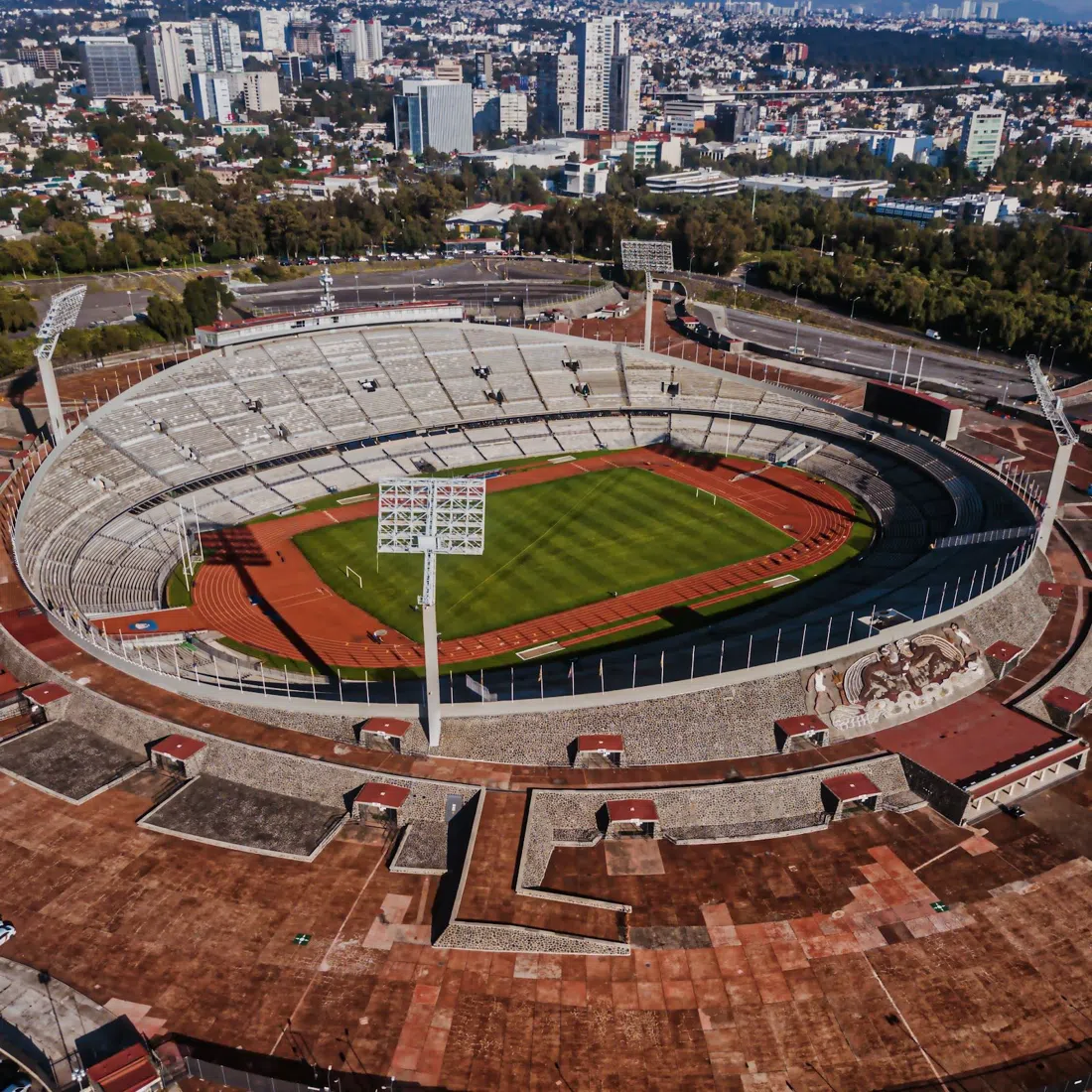
South again, and further out: the Estadio Olímpico Universitario (Ciudad Universitaria, UNAM), where Rivera's plan was to wrap the entire stadium in a continuous relief mural celebrating sport and the Mexican people. His health gave out before the plan did, and what stands today is a single finished wall — a fragment of something meant to be total, which makes it, oddly, one of the more moving stops on this list precisely because it's incomplete. It costs nothing and needs no booking: it's outdoor, unticketed, and open at any hour to groups of any size. The stadium sits inside Ciudad Universitaria, UNAM's UNESCO World Heritage campus, so it pairs naturally with the murals inside the university's Rectory building if there's a spare hour in the day.
Off the Trail: A Hospital Lobby and a Country Chapel
Two last sites reward readers willing to go slightly out of their way, and neither is aimed at a tour bus.
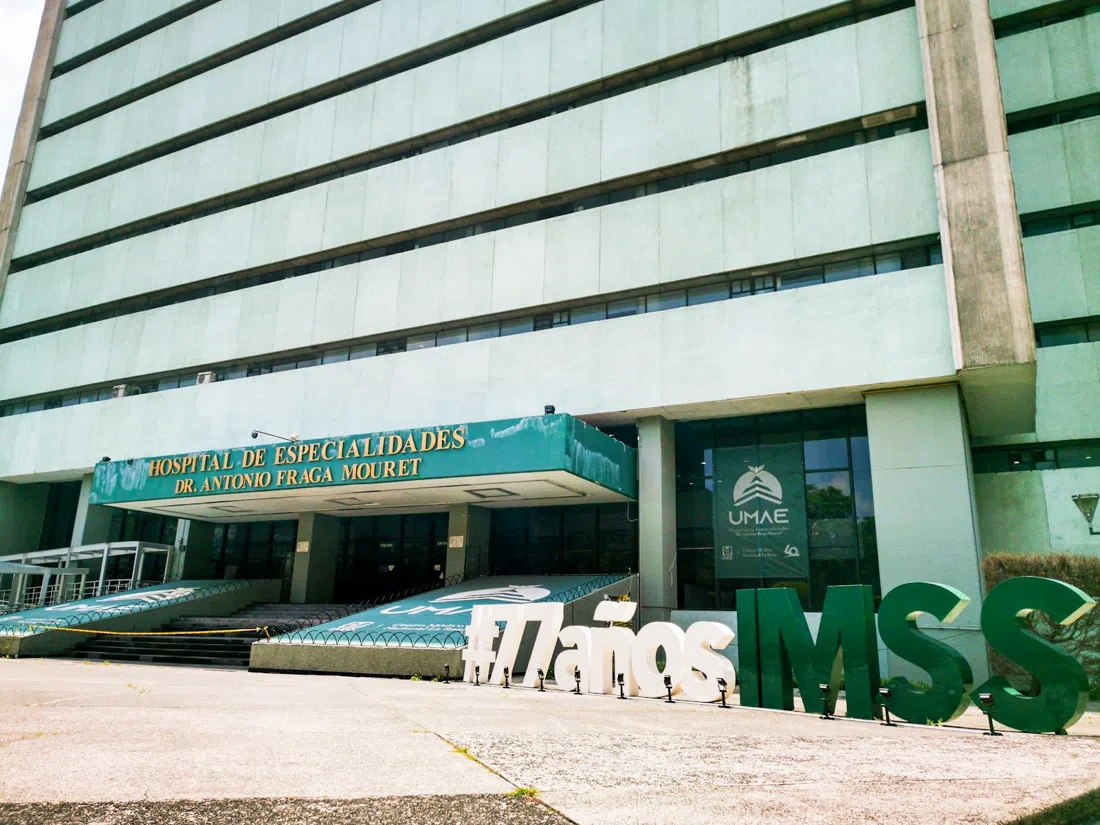
Centro Médico Nacional La Raza (north of the centre) is a functioning public hospital run by IMSS, and its lobby holds El Pueblo en Demanda de Salud, Rivera's final mural, finished the year before he died in 1957. Finding a major Rivera inside a working hospital corridor is genuinely disorienting the first time, and that's part of what makes the detour worth it for readers who don't need every stop to be a monument. Because it's an active medical facility and not a tourist site, the smoothest way in is through one of the scheduled mural walks run by the Sala de Arte Público Siqueiros, or by checking in with hospital security and identifying yourself plainly as a cultural visitor. It's free, but it asks for more patience and courtesy than anywhere else on this list — this is a lobby people are moving through on the worst day of their week, not an exhibit built for foot traffic, and a group that treats it that way tends to be waved through without friction.
Further out still — technically not in the capital at all — is the Capilla Riveriana at the Universidad Autónoma Chapingo (Texcoco), roughly 45 minutes from the centre. Rivera considered the Chapingo cycle among his most complete work, a chapel-turned-gallery of frankly sensual frescoes on fertility, land, and labour, and it reopened in mid-2025 after earthquake restoration closed it for repair. Visits have to be booked in advance by email at [email protected] — there's no walk-up option — which makes it best suited to small groups treating it as a deliberate half-day trip rather than a stop squeezed between two others. Flag the distance honestly to anyone planning a tight itinerary: this is a day trip, not a detour — but for anyone tracing Rivera's full arc rather than just the highlights, it's arguably the most rewarding stop on the list precisely because so few visitors make it out there.
Planning the Murals Trail: Transport, Cash, Timing, Budget
Most of this guide sits within a twenty-minute walk of the Zócalo — Palacio Nacional, the SEP, Bellas Artes, San Ildefonso, and the Museo Mural Diego Rivera can all be covered on foot in a single unhurried day, provided that day happens to be a Friday and the Palacio Nacional registration has gone through. San Ángel, Coyoacán, and the UNAM stadium form a second, southern day, best linked by taxi or ride-hailing app rather than metro, since the distances between them are short but awkward on foot. La Raza and Chapingo are separate half-days each and shouldn't be bolted onto either of the other two.
Carry cash. Several of these sites — the Museo Mural Diego Rivera especially — run cash-only ticket booths, and small museum card-acceptance gaps in Mexico City haven't fully closed in 2026. Budget lightly: nothing on this list charges more than about 150 MXN, and several of the most important stops — Palacio Nacional, the SEP, the UNAM stadium, La Raza — are free. A full week's version of this trail, entries included, comes in well under US$50 per person.
Timing is the real constraint, not money. The Palacio Nacional's Friday-only window should be booked and confirmed before anything else on the itinerary is set, and Chapingo's email-only booking needs to go out days, not hours, in advance. Everything else — Bellas Artes aside, which closes Mondays — can flex around those two fixed points. For a stay built around this trail, a base in or near the Centro Histórico cuts the most travel time; see the Mexico City hotel search for options within walking distance of the Palacio Nacional and Bellas Artes, and the full Mexico City guide for what to pair the murals with beyond this list.