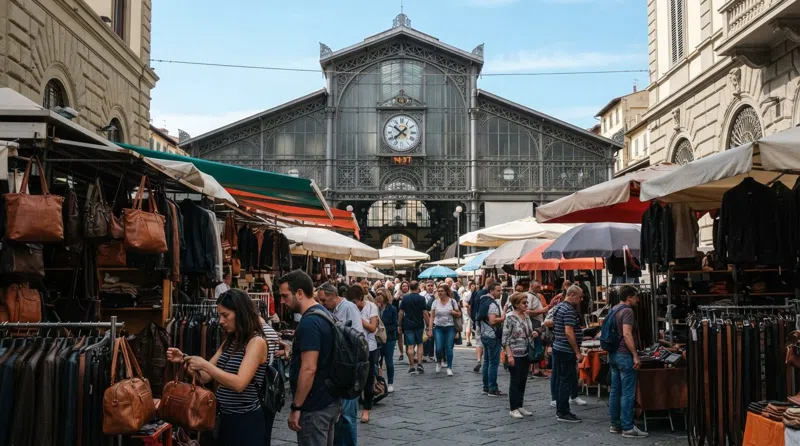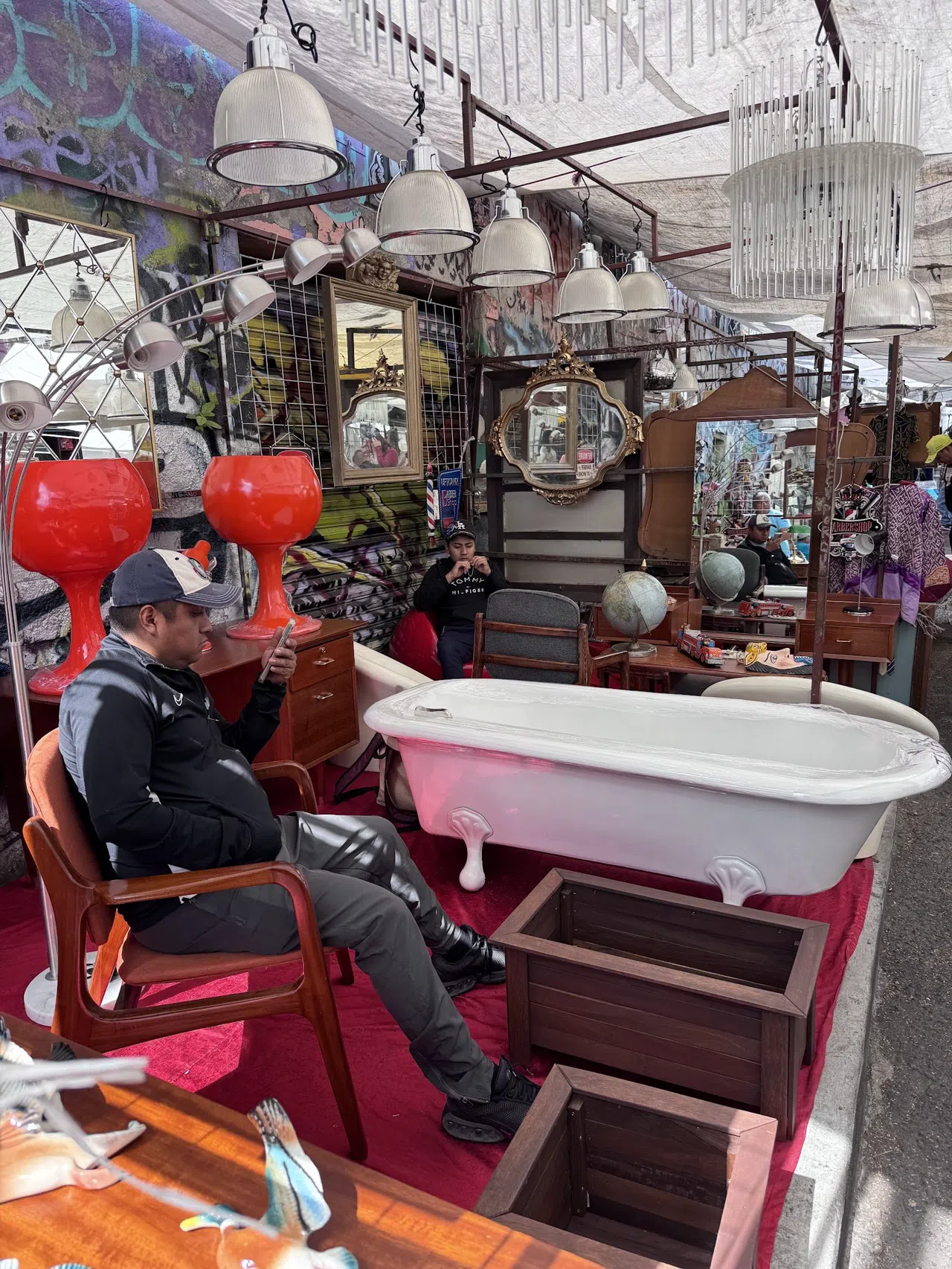

By eight on a Sunday morning, the vendors of Lagunilla are already laying cloth over folding tables, and by nine the narrow streets north of Mexico City's Centro Histórico have become a river of brass, glass and painted wood that has flowed here, more or less unbroken, since 1957. This is not a market dressed up for visitors — it is where the city's dealers, restorers and obsessive collectors do their actual buying, and the tourists who show up early enough get to watch, and occasionally join in.
Sunday's Main Event: La Lagunilla
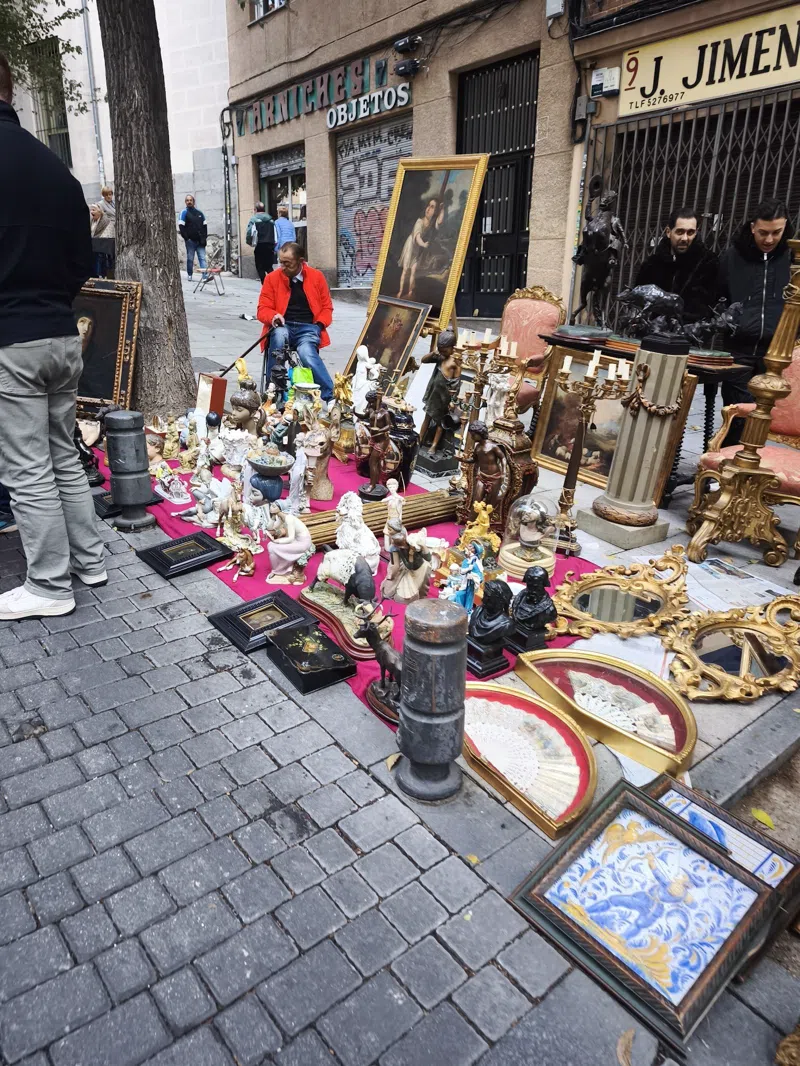
La Lagunilla Sunday Antiques Market (the Lagunilla barrio, just north of the Centro Histórico) has been running since 1957, and it still feels like what it is: the city's real antiques trade laid out on folding tables and blankets, not a performance staged for out-of-towners. Streets that carry produce and clothing stalls the rest of the week fill, every Sunday, with dealers selling colonial-era furniture, religious icons, vintage cameras, hand-tinted photographs, typewriters and drawers of loose hardware that restorers pick through by the fistful. Prices range from a few pesos for a chipped medallion to thousands of pesos for a genuine armoire — everything is cash, and everything is negotiable; arriving with an opening offer well under the asking price is expected, not rude.
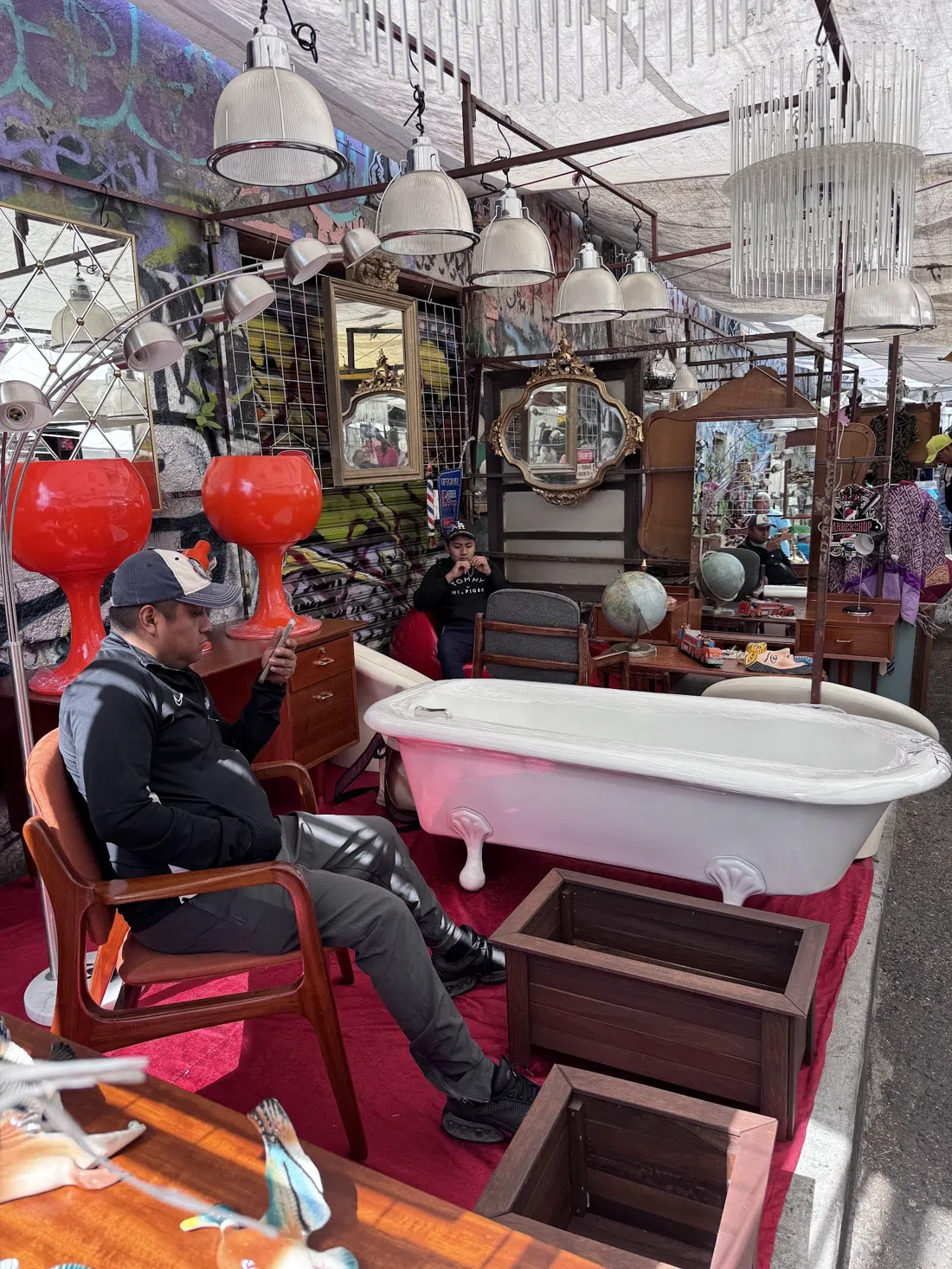
The market is sprawling and open-air, which makes it genuinely easy on groups — the wide streets absorb foot traffic without anyone feeling herded — but keep your party tight anyway and mind your bags in the denser stretches. Several local guides run small tours that start at the Boxeador monument, a useful anchor point if you're coordinating more than four or five people, since Lagunilla has no single entrance and it's easy to lose each other in the crowd. Go before 10am: the dealers with the best colonial pieces sell their strongest stock to other dealers and serious collectors within the first hour, and by early afternoon what's left skews toward tourist-priced trinkets and repeat junk.
One honest note, because it comes up constantly: vendors at Lagunilla, and further along the trading chain at Tepito, will occasionally claim a piece is a genuine pre-Hispanic relic. Treat that claim as marketing, not provenance. Authentic pre-Columbian artifacts cannot legally be sold or exported from Mexico, full stop — anything offered for sale on a folding table is, by definition, not that.
The Polished Counterpart: Zona Rosa's Arcades
If Sunday doesn't work for your itinerary, or you'd rather browse antiques under a roof than dig through a crowd, Plaza del Ángel Antiques Center (Zona Rosa) is the fallback worth knowing about. It's open all seven days, which makes it the default for visitors stuck with a mid-week schedule, and its indoor arcade of permanent galleries means gallery-level pricing for furniture and fine pieces — expect to pay considerably more than Lagunilla street prices for comparable quality, in exchange for provenance paperwork and shopkeepers used to browsing crowds rather than street-market haggling. Saturdays bring open-air stalls into the plaza itself, which run cheaper than the indoor galleries and are worth timing a visit around if budget matters.
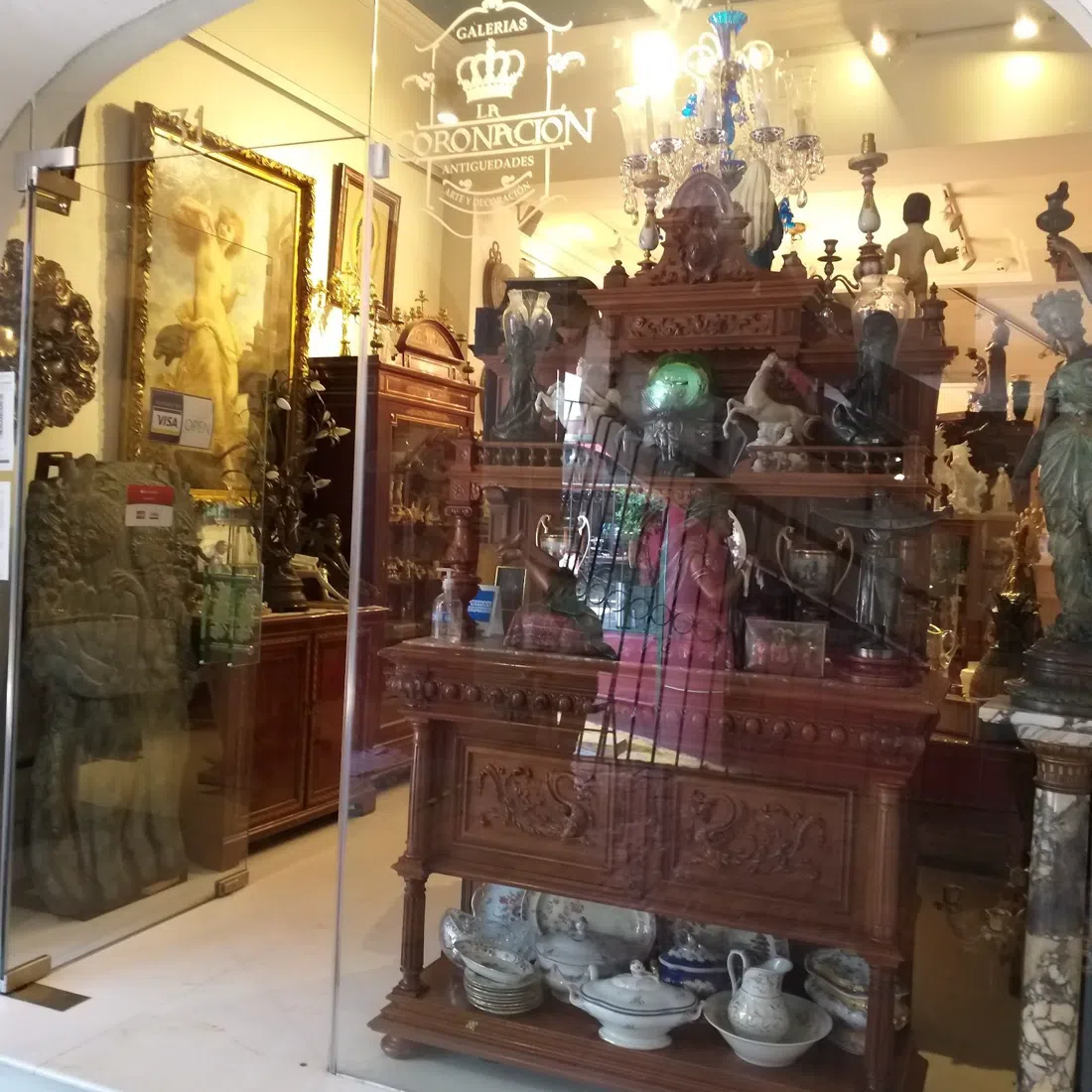
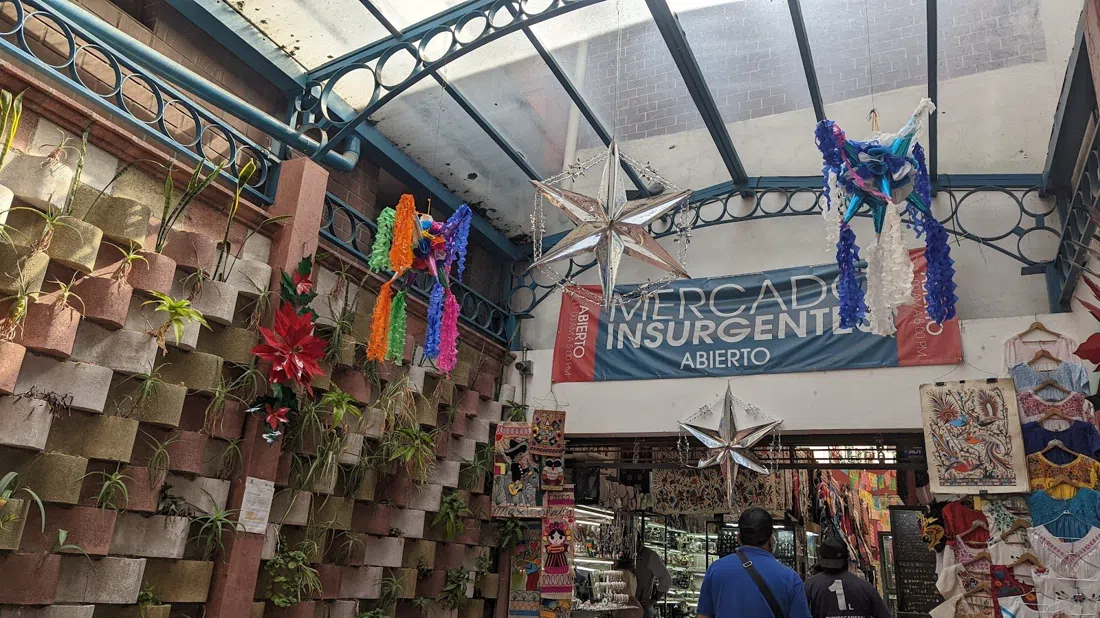
A few minutes' walk away, Mercado Insurgentes de Artesanías y Platería (Zona Rosa) rounds out the same outing for readers who also want silver and folk crafts alongside antiques — a block-long indoor arcade with standard Zona Rosa tourist footfall, easy on groups, and a natural pairing with a Plaza del Ángel stop on the same afternoon.
Where Lagunilla's Best Finds End Up
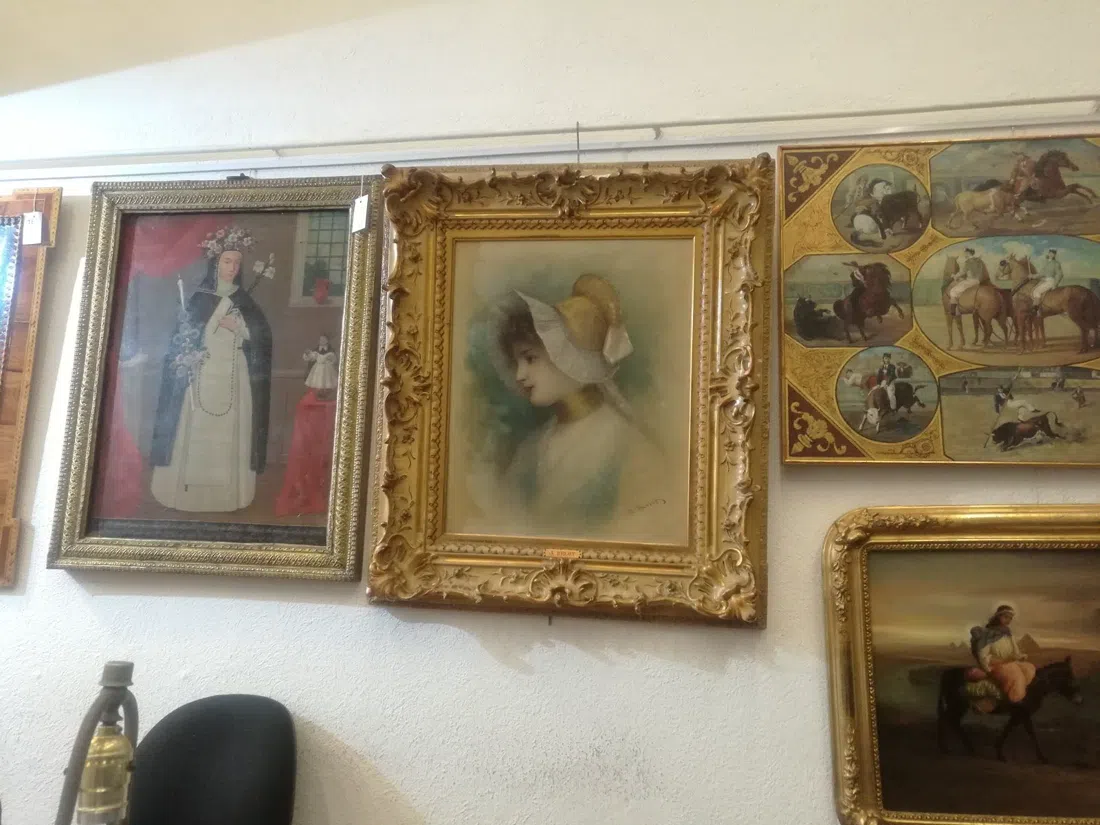
For a sense of where the top tier of Mexico City's antiques trade actually lands, it's worth a stop at Morton Subastas (near Polanco), the country's leading fine-art and antiques auction house. Viewing rooms are open weekdays and free to the public, no bidding required — you can walk through and see, at close range, the colonial furniture, paintings and decorative pieces that eventually clear at prices Lagunilla's Sunday tables never touch. It isn't a shopping stop in the same sense as the rest of this list — expect auction-house pricing if you do bid — but for a reader trying to understand what quality looks like before wading into Lagunilla, an hour here first is genuinely useful calibration. Group visits should be arranged with the house in advance rather than dropped in on.
Beyond the Crowds: Portales, Doctores and the Edge of Tepito
Lagunilla is famous, which means it's also the most tourist-priced of Mexico City's antiques markets. Three smaller tianguis, all quieter and none of them dressed up for visitors, are where the city's own dealers still source stock.
Tianguis de Antigüedades de Portales (Portales) is grittier and far less touristed than Lagunilla, and prices reflect it — this is the cheapest of the antique markets on this list, running at local, non-touristy rates rather than anything calibrated for foreign visitors. The street is narrow and fills with vendor tables, so if you're bringing a group, split it over six to eight people rather than moving as one large pack.
A short distance from Roma, Tianguis de Antigüedades, Colonia Doctores (Doctores) offers a quieter second Sunday-antiques fix with noticeably lighter tourist crowding than Lagunilla — a compact plaza that's easy to browse together in small groups. It's actually strongest on Saturday, when more vendors turn up than on Sunday, so plan accordingly if this is your target rather than a Lagunilla add-on.
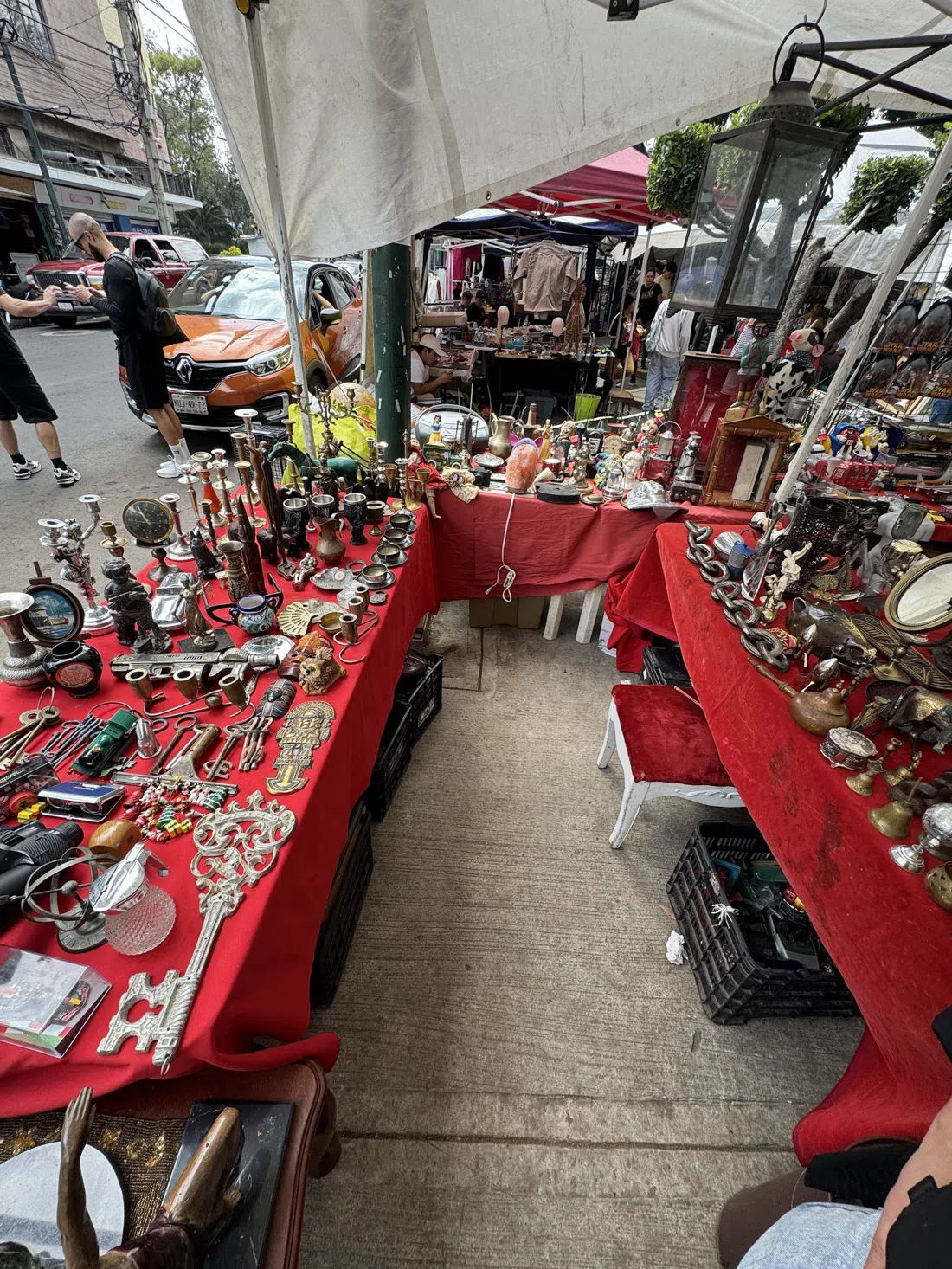
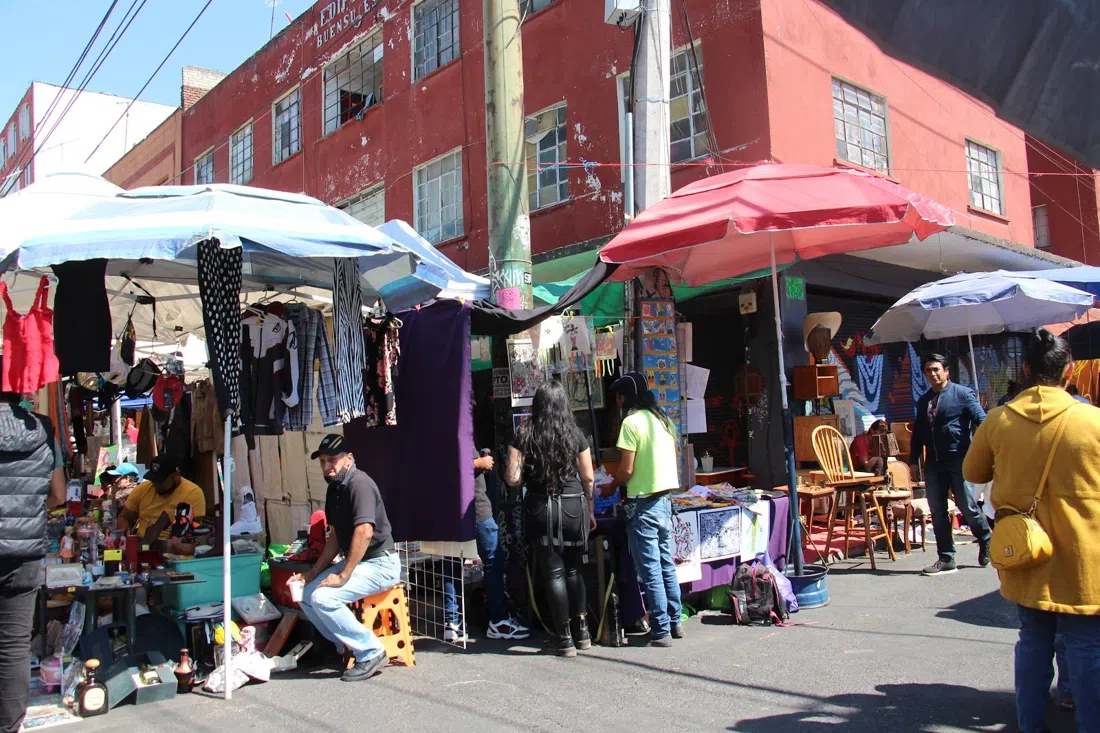
The Tianguis de Antigüedades de la Ciudadela / Tepito satellite dealers (around the Ciudadela, spilling into Tepito) are included here for completeness of the trading ecosystem rather than as a casual recommendation. This is a working-class trading scene adjoining Tepito, one of the city's higher-crime districts, and it should be treated accordingly: daylight visits only, small and alert groups, and ideally a local guide rather than going solo. It's genuinely where a lot of stock moves before it resurfaces, cleaned up, at Lagunilla or Plaza del Ángel — but it is not a leisurely Sunday-morning stroll.
Saturday Alternatives: San Ángel and Coyoacán
Antique-hunting in Mexico City doesn't have to mean Sunday. Bazar Sábado (San Ángel) runs, as the name says, only on Saturdays, and it's more curated fine-art-and-craft bazaar than raw antique-digging — juried stalls, higher-end pricing than a street flea market. But the plaza's satellite vendors and the surrounding San Ángel streets are where genuine antique furniture and colonial pieces turn up, so the bazaar itself is really the anchor for a wider browse. It handles groups well, but arrive early: the plaza fills with weekend day-trippers by midday, and both browsing and parking get considerably harder after that.
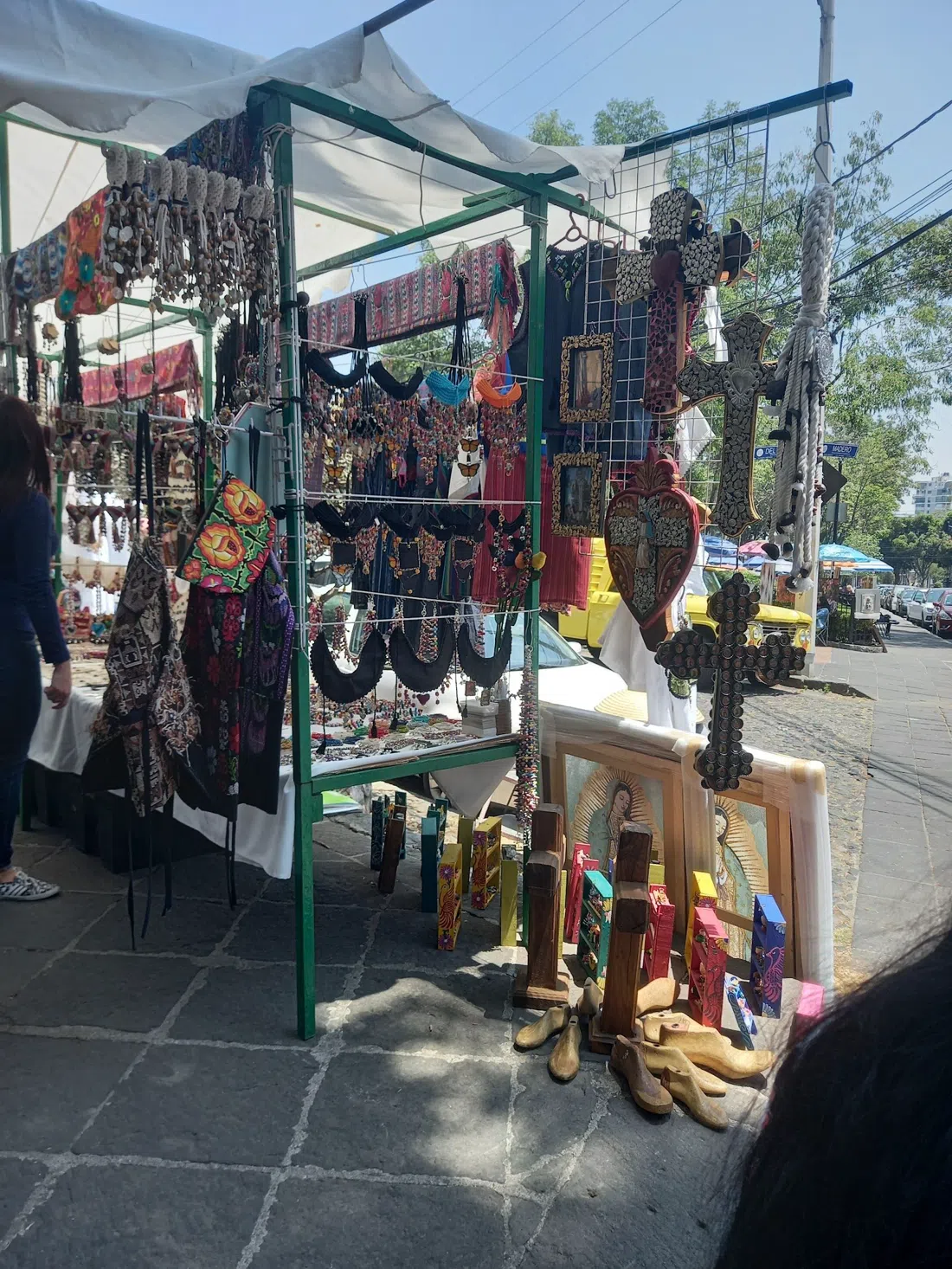
Down the road in Mercado de Artesanías de Coyoacán / Jardín Centenario (Coyoacán), the weekend market around the plaza is less about serious antique-hunting than atmosphere — one of the city's most visited and photogenic squares, with a wide plaza and market aisles that handle large groups easily. But the weekend flea stalls ringing the plaza do turn up genuine vintage finds, and it's a natural stop to fold into the same weekend as Bazar Sábado, given the two areas sit close together.
Not Antiques, But Worth the Detour
Two more markets round out the picture, neither of them strictly antiques, both genuinely connected to what Lagunilla is chasing.
Tianguis Cultural del Chopo (Colonia Guerrero, near Buenavista) draws a different crowd than the antique dealers — a proudly alt/goth-punk subculture trading vinyl, punk memorabilia and countercultural collectibles — but it runs on the same Saturday-market DNA, has operated since 1980, and is now protected as intangible cultural heritage. It's friendly to outsiders despite the look of the crowd, and worth the detour for readers who collect records rather than furniture.
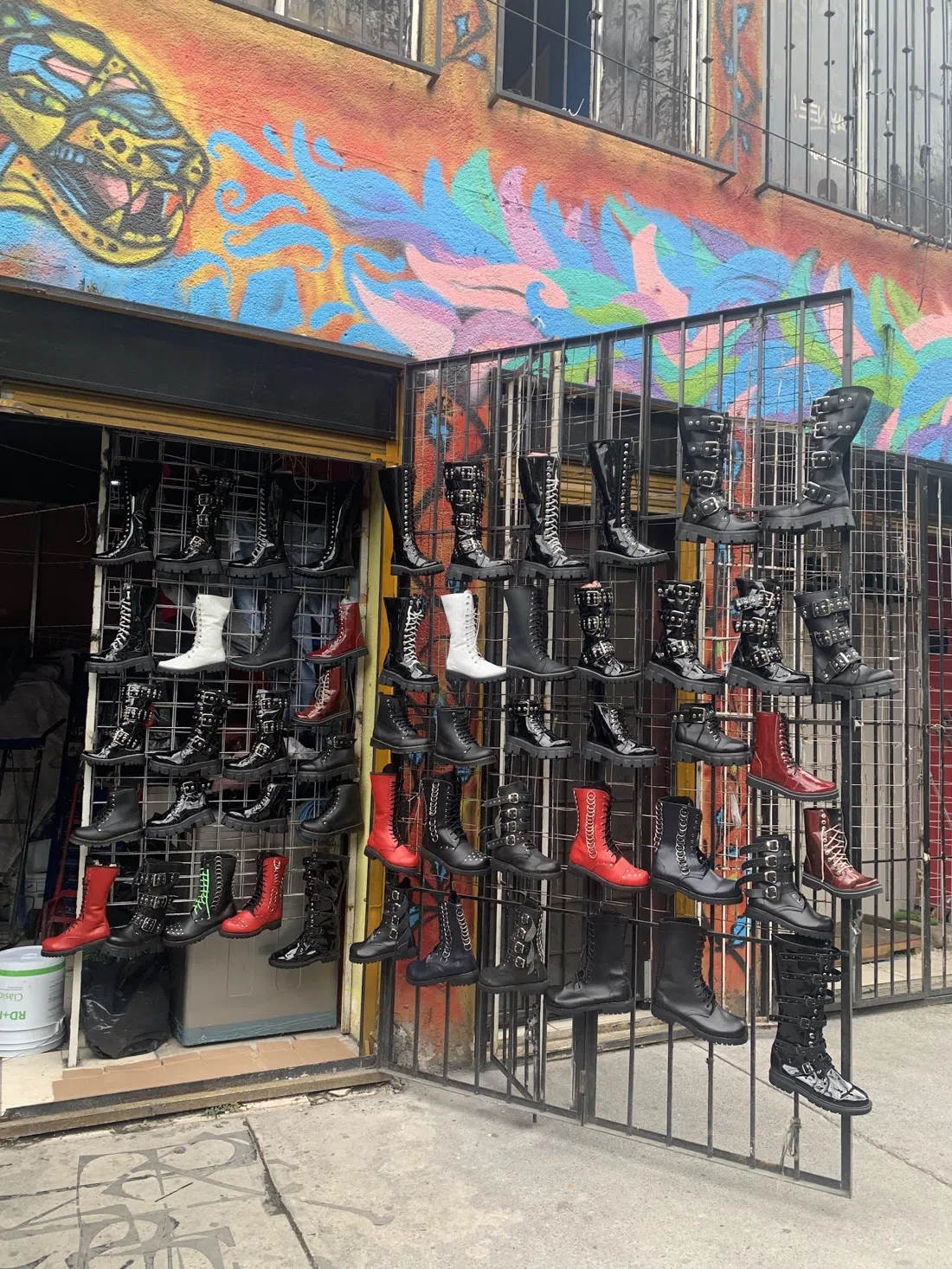
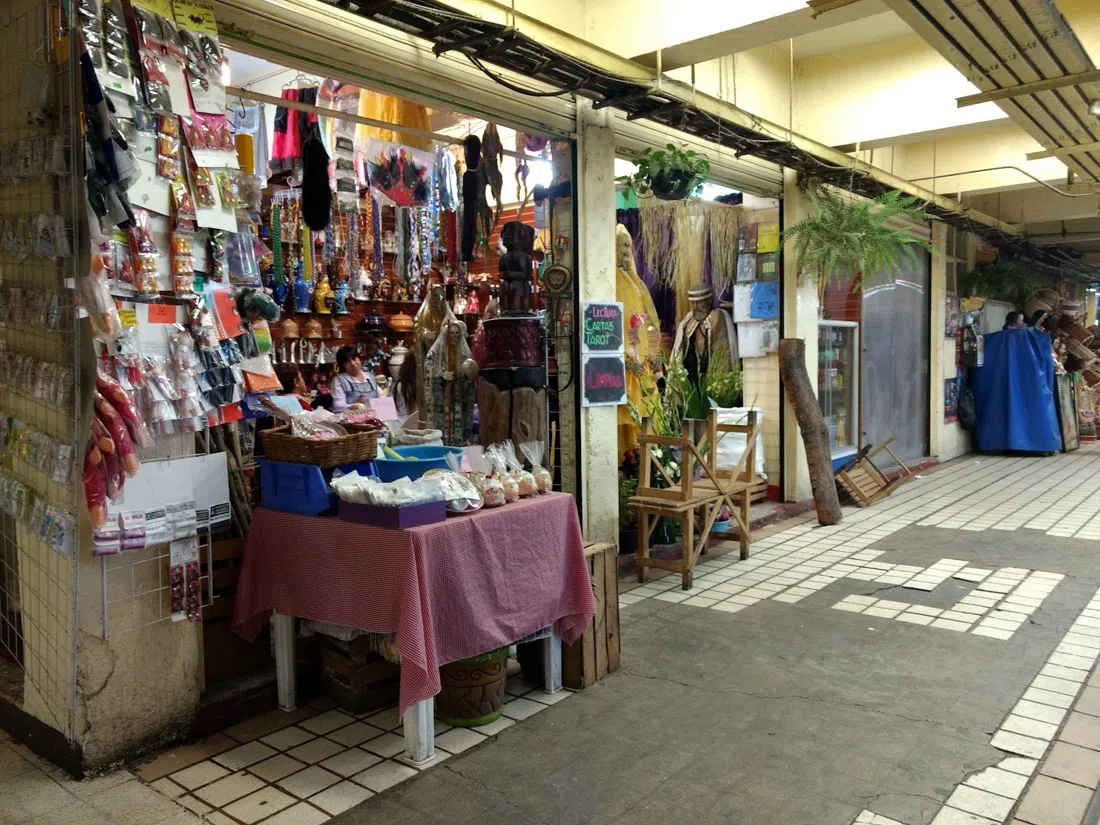
Mercado Sonora (near La Merced) isn't an antiques market at all — it's a working mystic and traditional market — but it's the closest living relative of the pre-Hispanic-relic mystique Lagunilla trades on: genuine ritual and folk goods, sold unpolished, to a mostly local clientele. It takes groups easily inside its large market hall, though it's worth remembering this is a working market first, so keep groups considerate of vendors and shoppers going about ordinary business.
Getting There, Cash and Timing
Transport. Lagunilla sits within walking distance of Metro Garibaldi/Lagunilla on Line B; from the Centro Histórico it's an easy 15–20 minute walk if you'd rather see the streets change character on the way in. Plaza del Ángel and Mercado Insurgentes are both Zona Rosa Metro-adjacent. San Ángel and Coyoacán are best reached by taxi or ride-hail on a Saturday, since Bazar Sábado's crowds make street parking genuinely difficult by late morning.
Cash. Every market on this list runs cash-first, and most stalls run cash-only — bring pesos in small and mid-size bills, since dealers bargaining over a few hundred pesos rarely carry change for a large note. Plaza del Ángel's indoor galleries are the exception, where cards are commonly accepted for higher-value pieces.
Timing. Sunday morning, before 10am, is the single best window of the week across this entire list — it's when Lagunilla's best colonial pieces are still on the tables and before the crowds thicken. Saturday is the second-best day citywide, covering Bazar Sábado, Doctores' stronger vendor turnout, El Chopo and Coyoacán's weekend stalls all at once.
Budget. Expect a genuine range: a few pesos buys a trinket at Lagunilla or Portales, while real colonial furniture at Lagunilla, Plaza del Ángel or through Morton Subastas runs into the thousands. Portales and Colonia Doctores are the two most reliably affordable stops for readers on a tighter budget; Plaza del Ángel and Morton Subastas sit at the top end.
For the wider trip, the full Mexico City guide covers where to base yourself and how to sequence the rest of the city around a Sunday morning at Lagunilla, and Mexico City hotel search is the place to start if you want to be within walking distance of the Centro Histórico on a Sunday morning rather than crossing town for it.