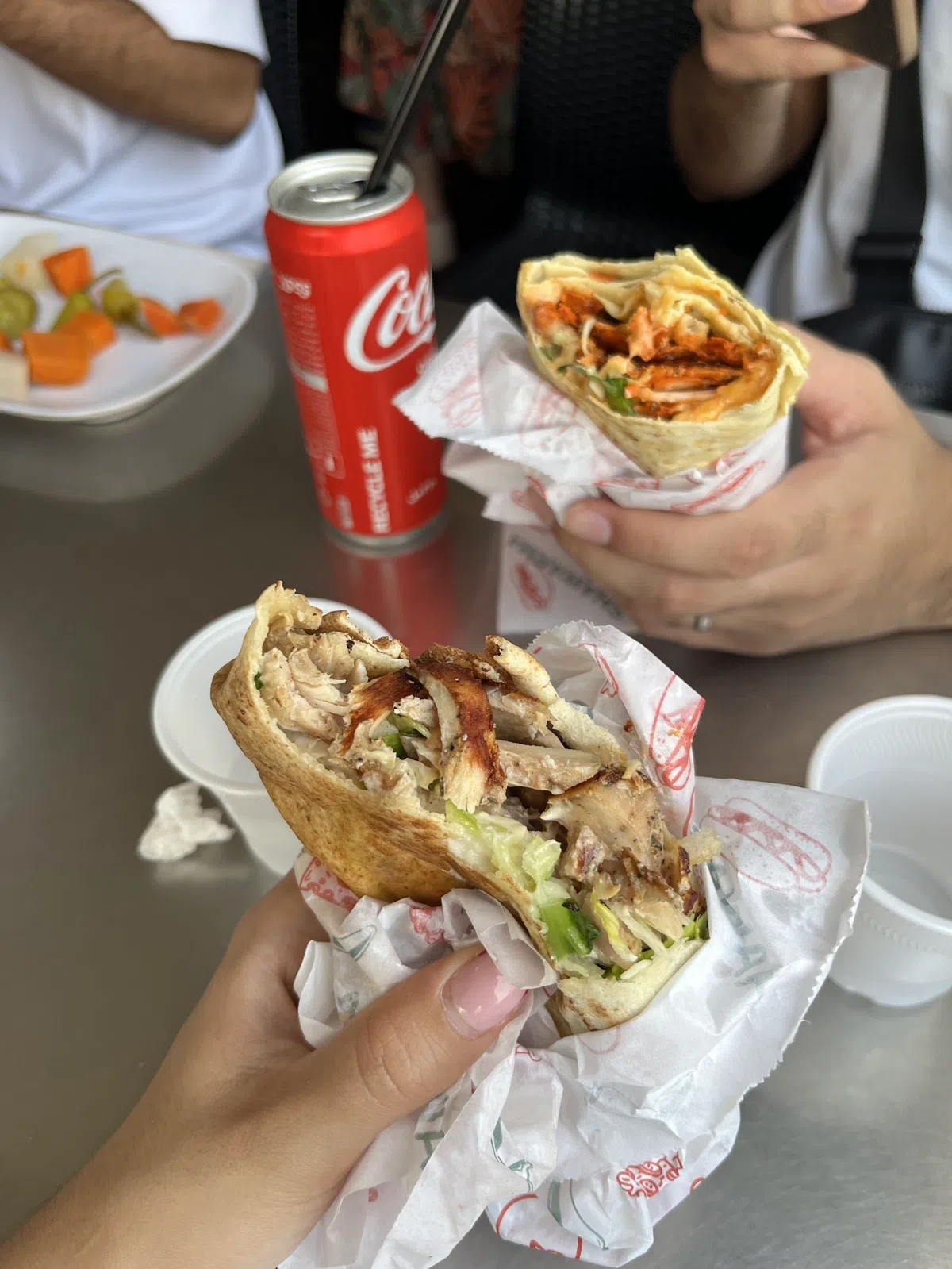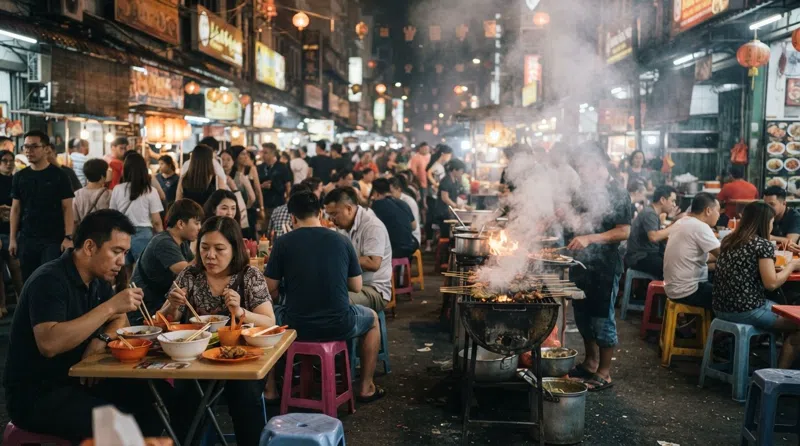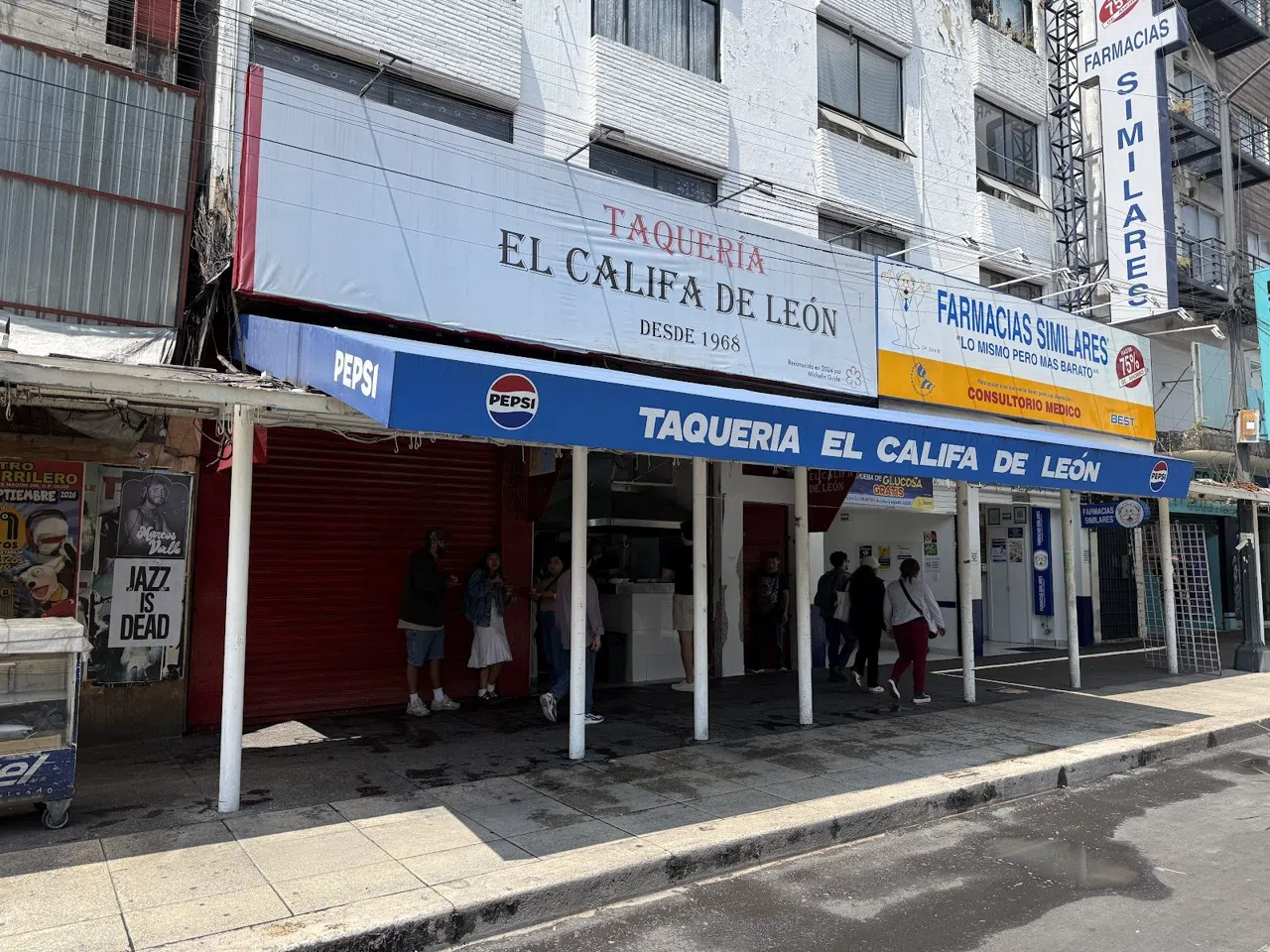

At two in the morning in a stretch of Colonia Del Valle that looks, by daylight, like nothing more than a car-repair shop, a trompo of marinated pork turns under a gas flame while men in work boots order al pastor between shifts. This is not a themed pop-up or a tourist stunt. It is Mexico City's taco economy doing what it does most nights of the year: feeding a city that rarely stops working, on a system of carts, counters and folding tables that runs almost entirely on cash, trust, and a griddle that never fully cools.
That economy has layers most visitors never separate out. There is the taquería that invented al pastor and never left its corner. There is the one that lost a Michelin star this year to a newer, pricier address a few blocks over. There is the auto shop that becomes a restaurant at sundown, and the 24-hour counters that treat 4am like any other hour. None of them are interchangeable, and none of them suit every kind of trip — a couple hunting one perfect taco has different needs than six friends trying to eat together without a reservation. What follows is a route through that economy, grouped by what each stop is actually for.
Where Al Pastor Was Born
Al pastor — pork marinated in dried chiles and pineapple, shaved off a vertical trompo the way Lebanese immigrants to Mexico once carved shawarma — has two competing birthplaces, and both are still serving.
El Tizoncito (Condesa) is the more famous claim: this corner is widely credited as the birthplace of taco al pastor in 1966, and 2026 marks sixty years on the same spot. It has proper sit-down tables alongside its street counter, which makes it the rare al-pastor original that can comfortably absorb a small-to-medium group, especially later in the evening when the trompo is at its best. Tacos run about MXN 20-30 each, and the spectacle of the spinning meat itself is worth the wait for a table.
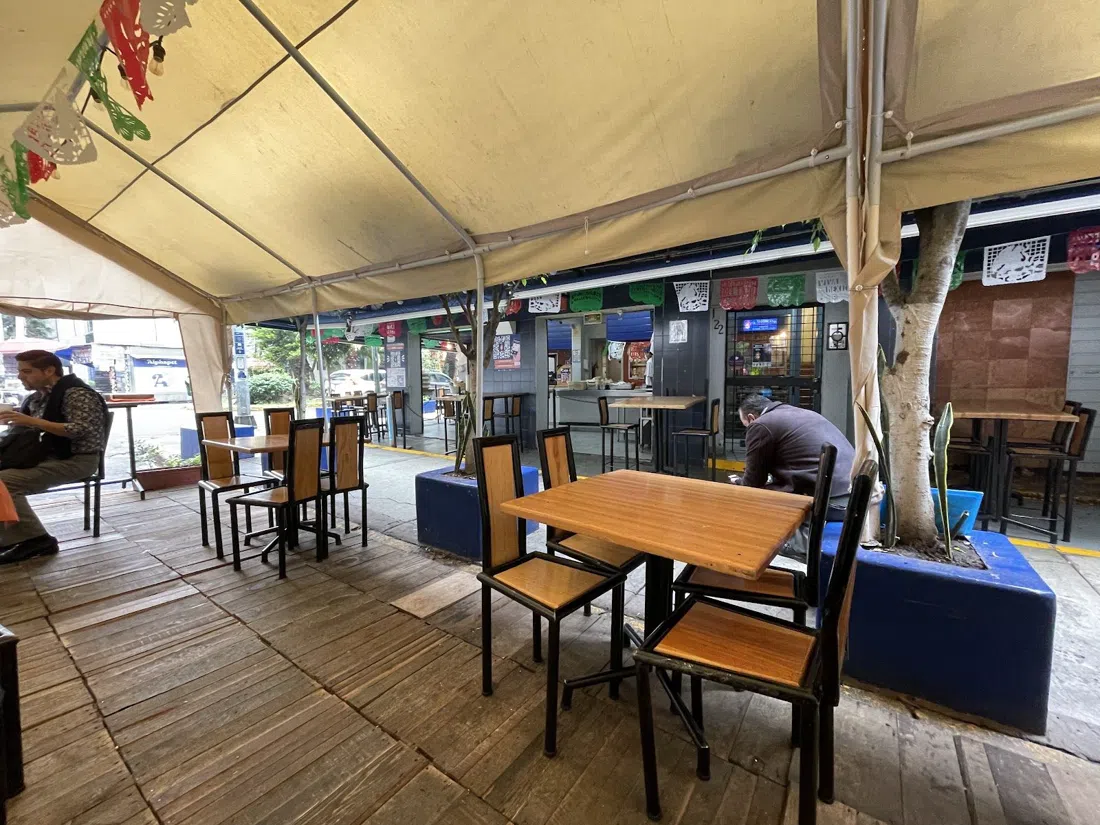
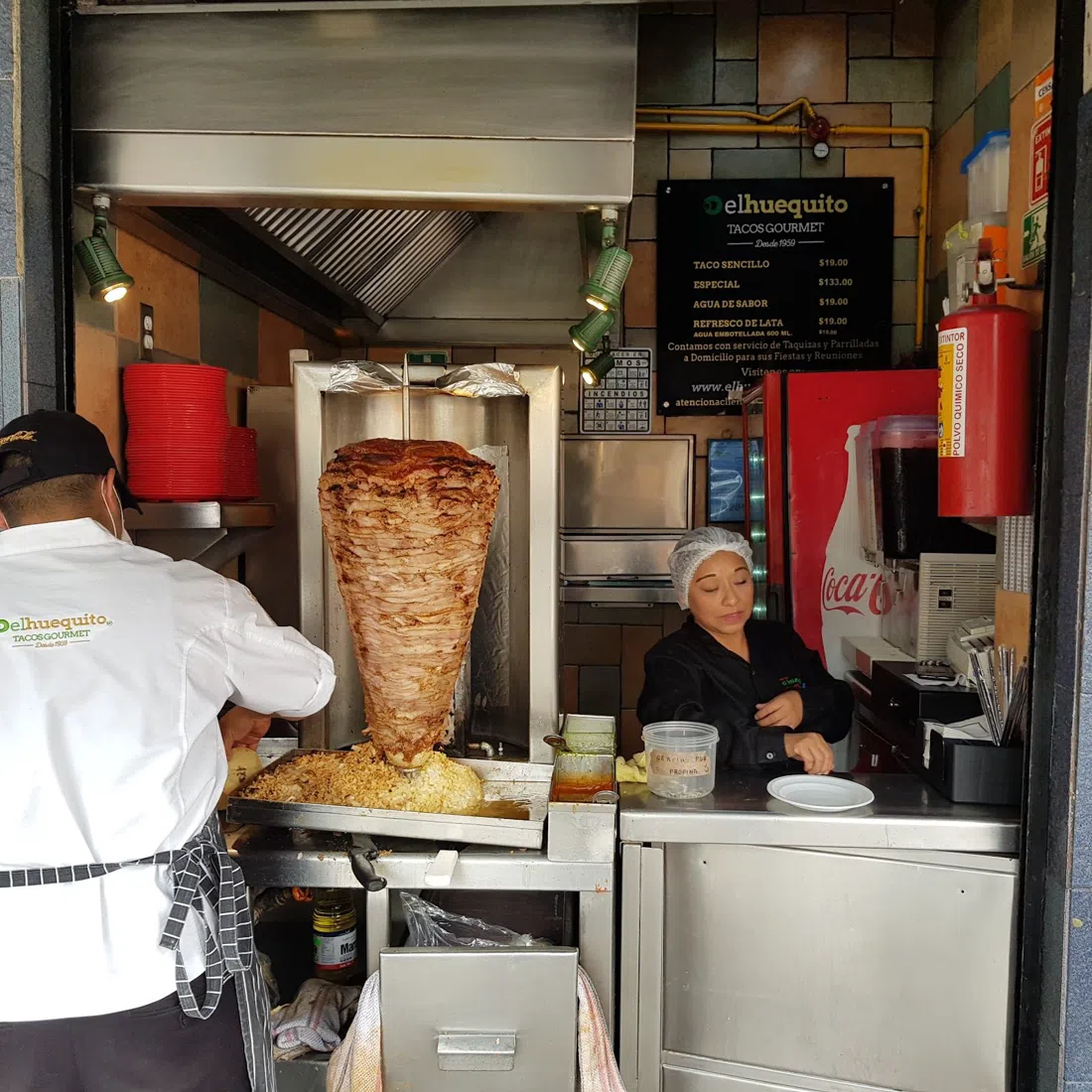
El Huequito (Centro) makes the older and, some argue, stronger claim — it's one of the two taquerías credited with inventing al pastor back in the 1950s, and it's named for the hueco, the literal hole in the wall it still occupies. The original location is tight: standing room only, better suited to a couple or a pair of friends than a crowd. If you're travelling with more people, one of El Huequito's sit-down branches elsewhere in the city will serve you better than trying to squeeze a group into the original. Tacos are MXN 20-25, cash only, and the pastor here tastes like it hasn't changed in seventy years — which is the point.
The Street Earns a Michelin Star
For most of the taco economy's history, Michelin ignored it entirely. That changed in 2024, and it changed again, more dramatically, in 2026.
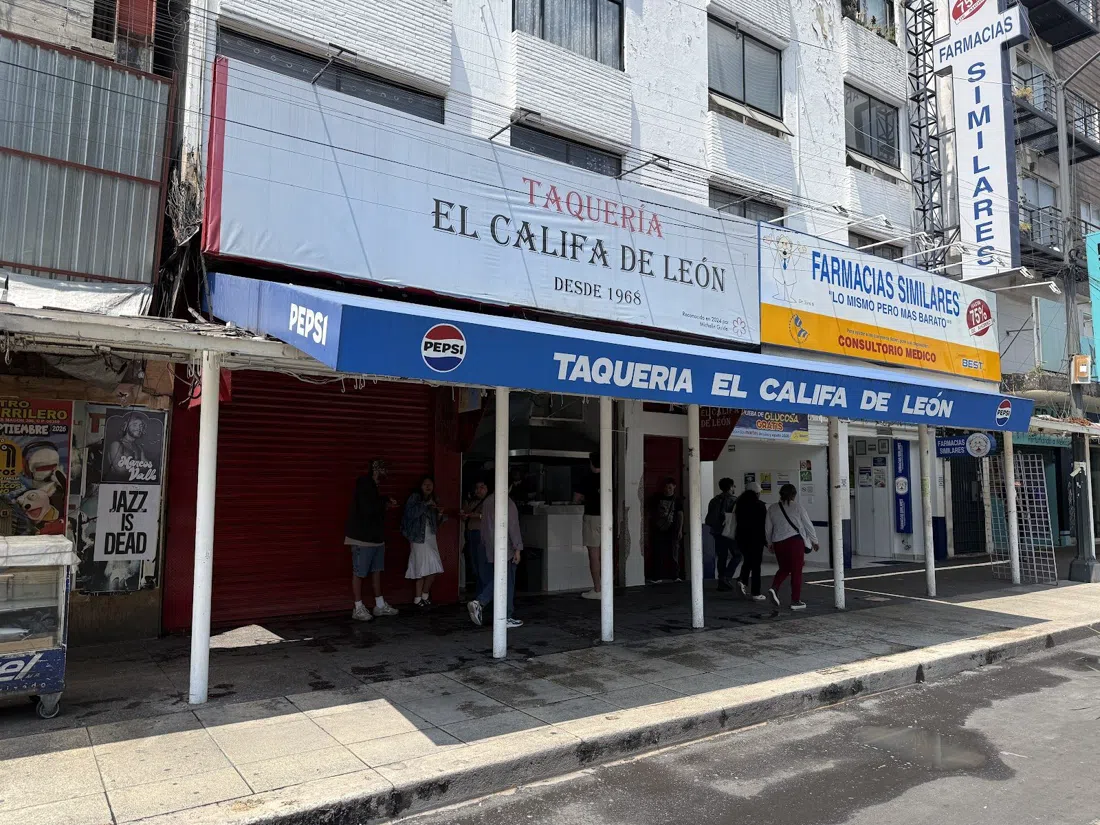
El Califa de León (Roma Norte) was the taco stand that broke through first, earning Michelin recognition in 2024 and putting street tacos on a map that had previously belonged to tasting menus. It lost its star in 2026 to a newer address, but it remains a Michelin "recommended" listing and the food hasn't changed at all — it's still just two things on the menu, bistec and tripa, cooked with the same discipline that got it noticed in the first place. There's no seating: this is stand-and-eat on the curb, fine for two or three people who don't mind eating on their feet, not workable for a big table. Tacos run MXN 30-40, cash.
La Once Mil (also Roma Norte) is the address that took El Califa's star in 2026 — chef César de la Parra's taquería, and proof that the taco economy now runs all the way up to genuine fine dining. This is a splurge, not a street snack: tacos start around MXN 135 and a full sitting can run past MXN 1,000 a person. It takes walk-ins at communal-style counters rather than reservations, so groups should expect a wait at peak hours, but it does handle small parties well once seated. Go here when you want to taste what happens when taquería technique meets a chef's ambition, not when you're hungry and in a hurry.
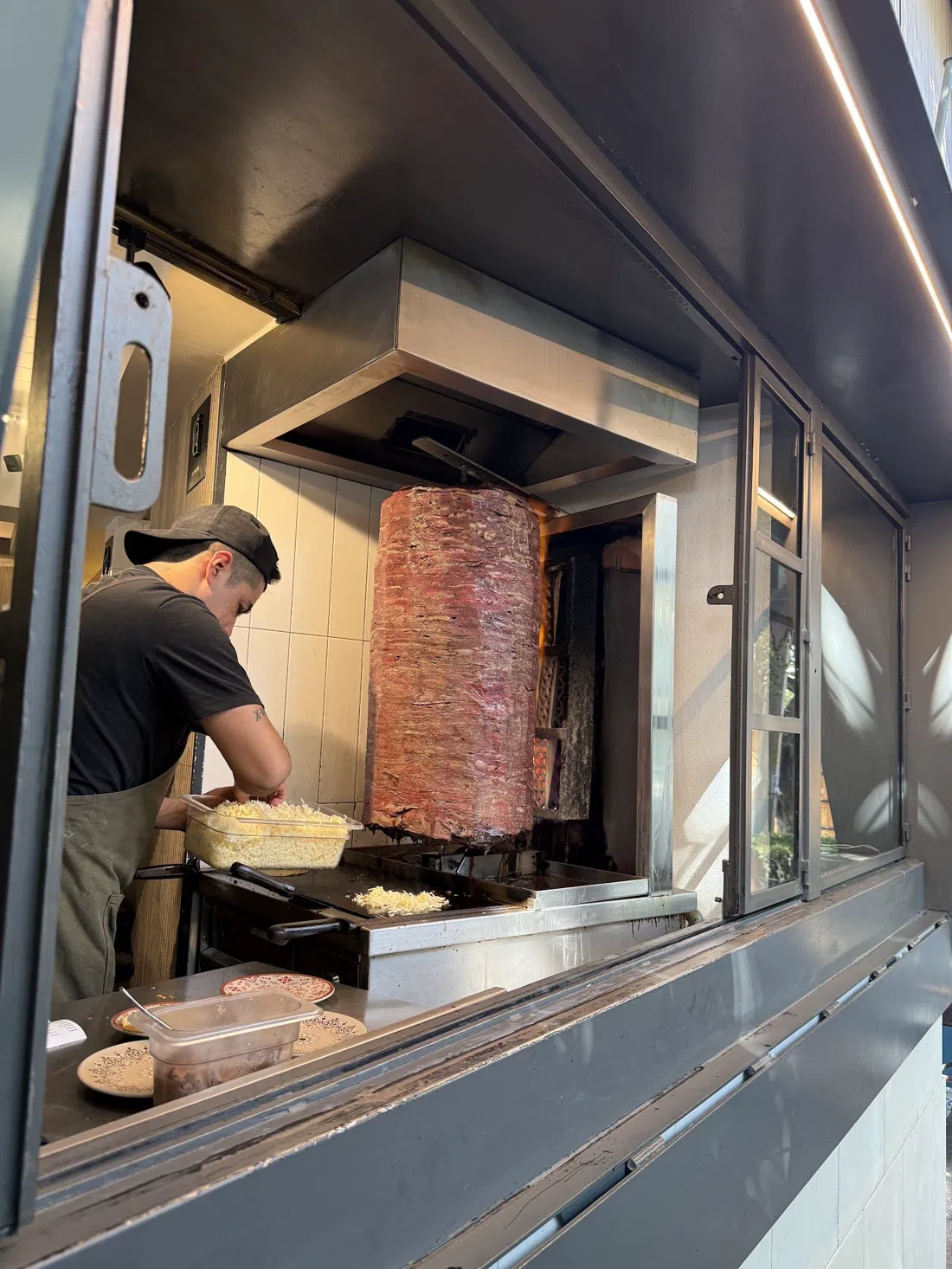
The two stops sit two blocks and about MXN 100 a taco apart, and visiting both back to back is the fastest way to understand how wide the taco economy's range actually is.
The Night Shift
A meaningful share of Mexico City's best tacos are, structurally, a nocturnal business — built around suadero and pastor that need hours of rendering, and a clientele that keeps different hours than a typical restaurant.
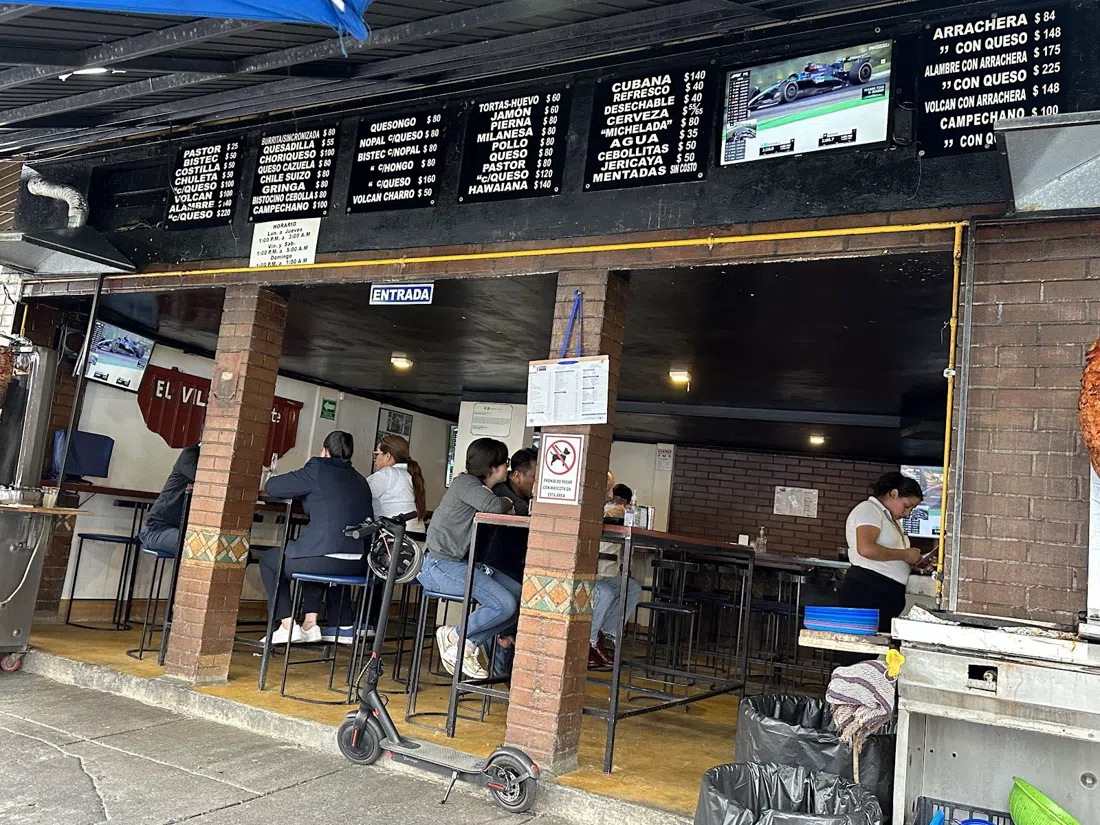
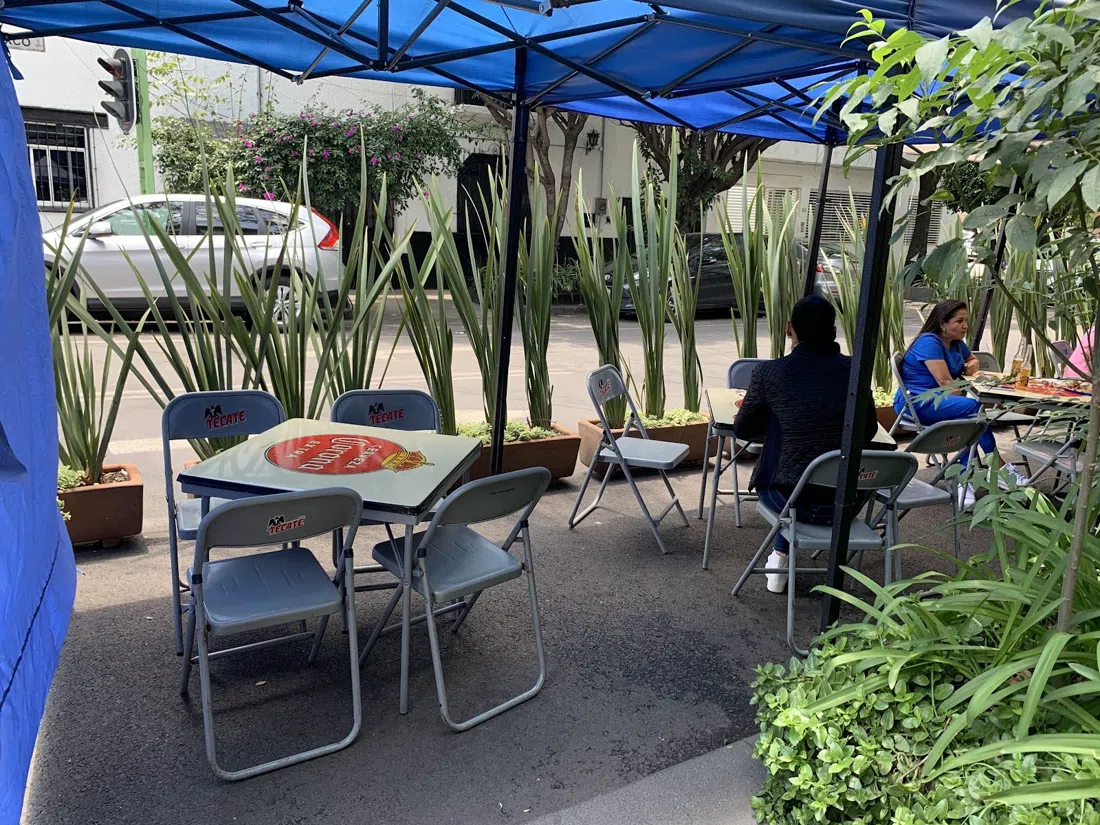
El Vilsito (Del Valle) is the purest expression of this: an auto repair shop by day that rolls out plastic tables across its garage forecourt by night and starts grilling al pastor. It's a real, still-running gimmick — it's shown up on Bourdain, Somebody Feed Phil, and Eva Longoria's food show — but it's also genuinely one of the better group options on this list, since the outdoor forecourt seating handles a crowd more easily than most street counters. Tacos are MXN 20-25.
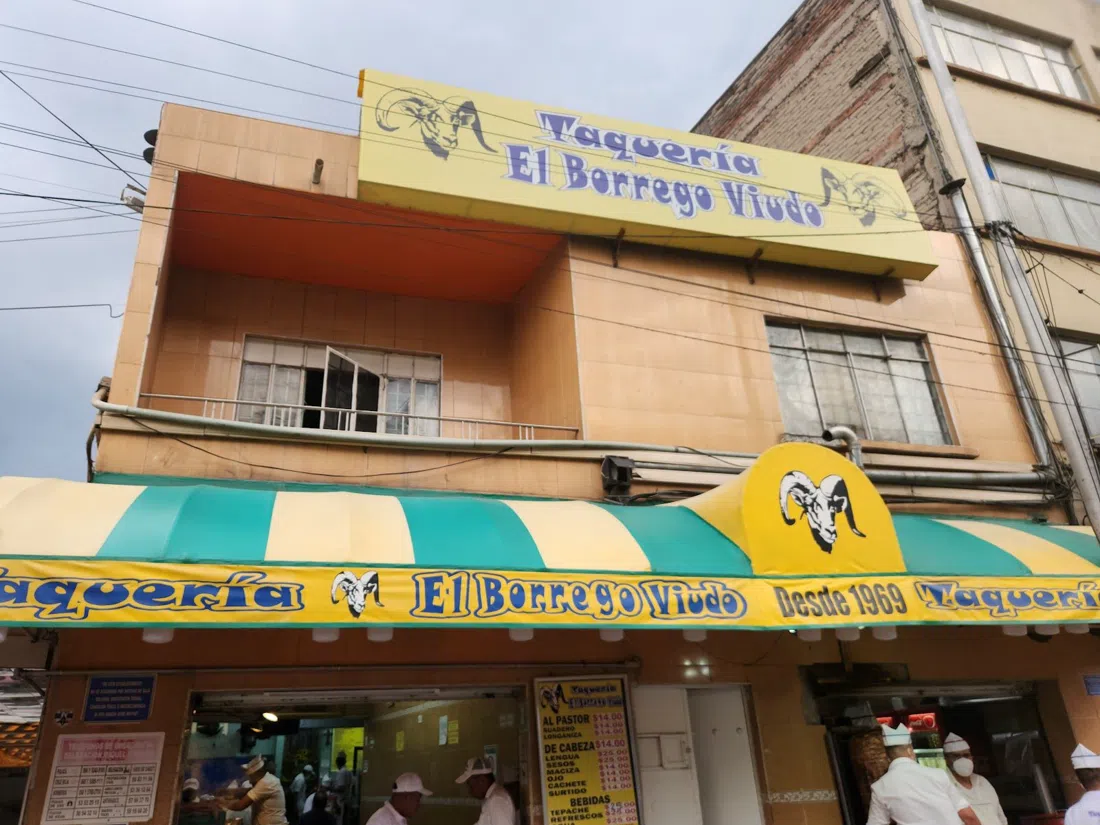
El Borrego Viudo is open 24 hours, full stop, which is the point for anyone trying to understand this city's round-the-clock rhythm rather than just eat well. Counter and curb seating turns tables quickly, making it a solid late-night, after-bars stop for a small group. Beyond the safe choices of suadero and al pastor, it also serves more adventurous cuts — brain, eye — for anyone who wants to eat the way regulars do. Tacos are MXN 20-25.
Tacos El Paisa is a current Michelin Guide street-food pick, and a taquería that regulars insist you should not visit early: go after 8pm, when the suadero has had hours to render properly. There's no seating at all, just standing on the corner, which suits a small group fine but rules out anything larger. Tacos are cheap even by this list's standards, MXN 15-20.
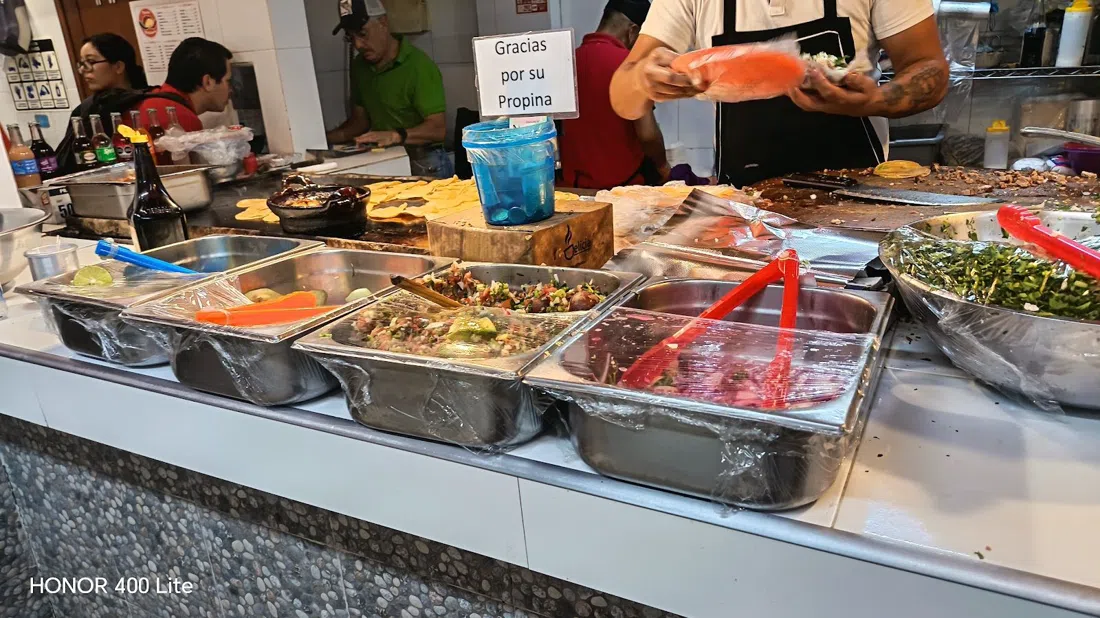
Taquería Los Cocuyos (Centro Histórico) has been running around the clock since the 1980s and is the definitive stop for menudencias — the offal cuts — in the historic center. It shows up on nearly every serious CDMX taco list for good reason. It's standing-room-only street counter, workable for a small group happy to eat on their feet, and one of the few places on this list where 3am doesn't feel like a strange time to be eating tacos.
Beyond Pastor and Suadero
The taco economy isn't only red meat, and a route through Mexico City's taquerías is incomplete without at least one detour from pastor.
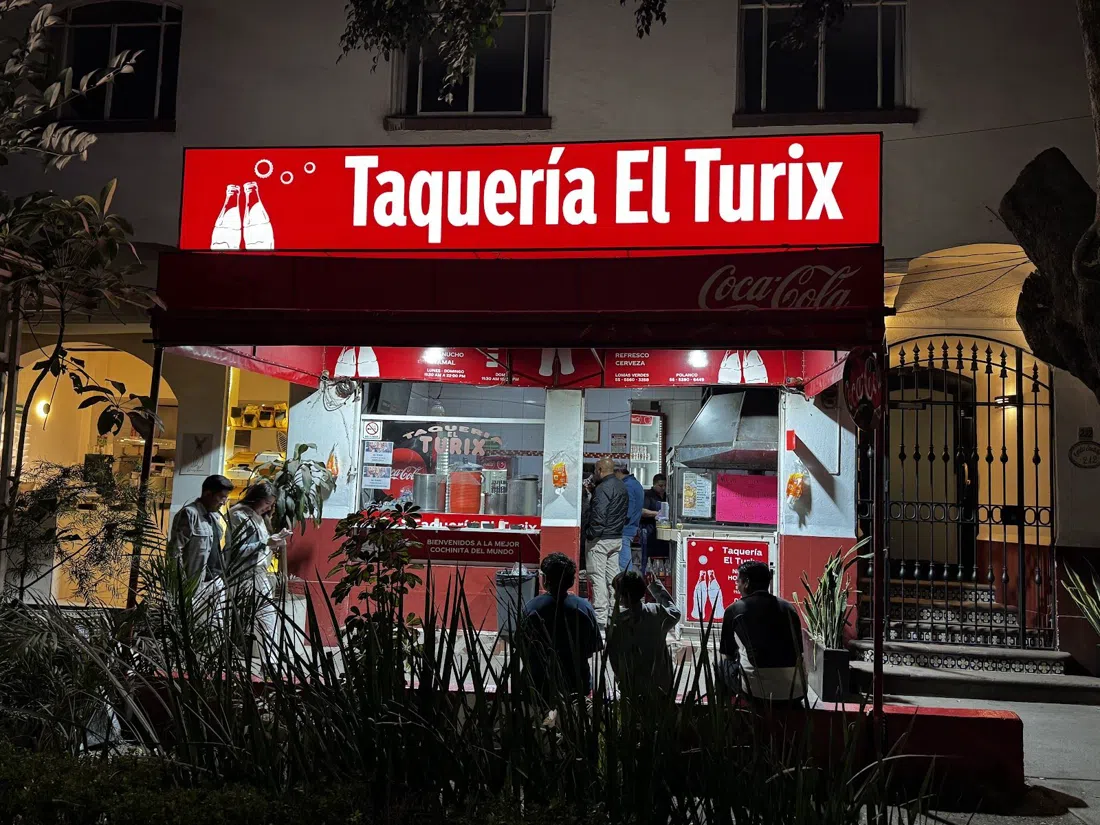
El Turix (Condesa) serves Yucatán-style tacos and panuchos, and most CDMX regulars will point you here for the best cochinita pibil outside the Yucatán peninsula itself. There's no real seating — this is curb-sitting, best suited to a pair or a small group willing to picnic on the sidewalk — and it regularly sells out, so go early rather than late. Tacos and panuchos run MXN 25-35.
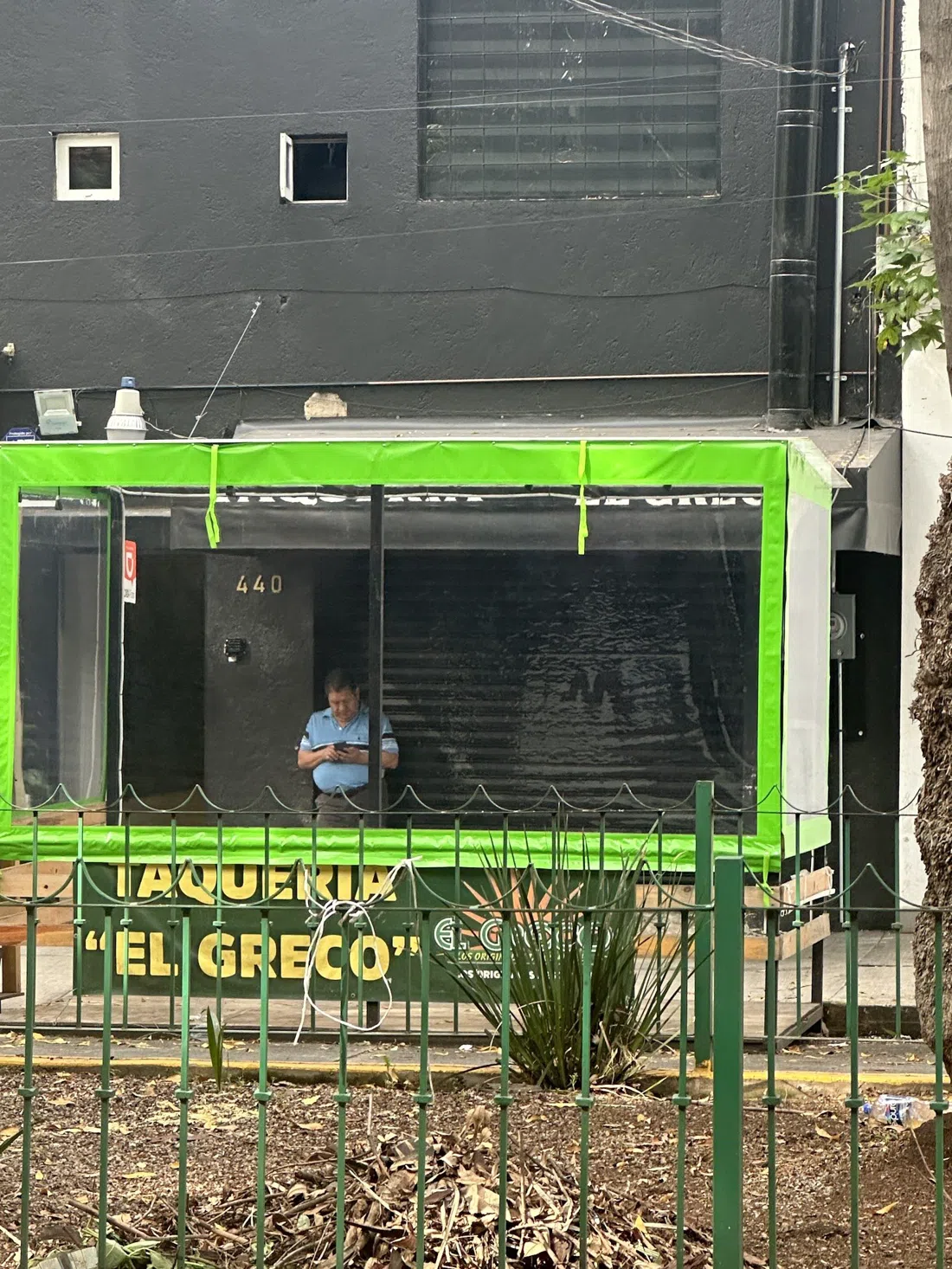
Taquería El Greco (Hipódromo) has held the same corner for nearly fifty years, serving tacos árabes — the Lebanese-Mexican dish that is the direct ancestor of al pastor, made with pork or lamb wrapped in pita-like bread rather than a corn tortilla. It's a different branch of the same taco-economy story told at El Tizoncito and El Huequito, tracing the dish back one generation further. A handful of small tables plus the street counter make it workable for a small group. Tacos are MXN 25-35.
El Pescadito, with locations scattered through Roma and Condesa, is the counterpoint to everything else on this list: a Baja-style seafood taco stand, proving the taco economy runs on shrimp and fish as much as it runs on pork and beef. Everything is fried to order, the value is strong, and the street counter with its small standing area suits small groups fine, though there's no reservation system. Tacos run MXN 30-50.
The Easy Landing for First-Timers
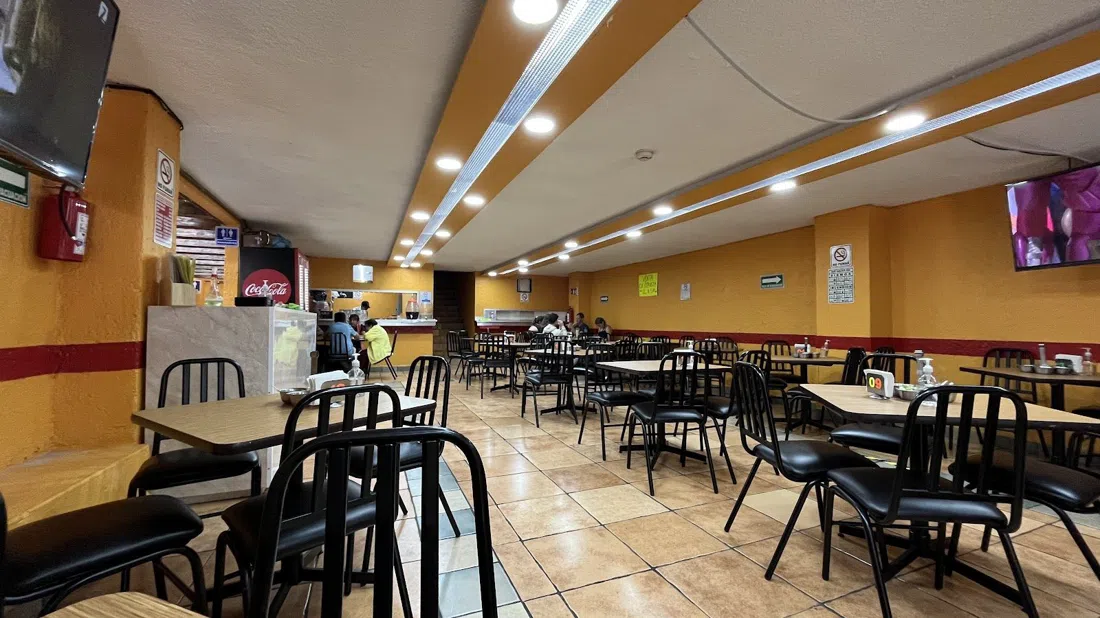
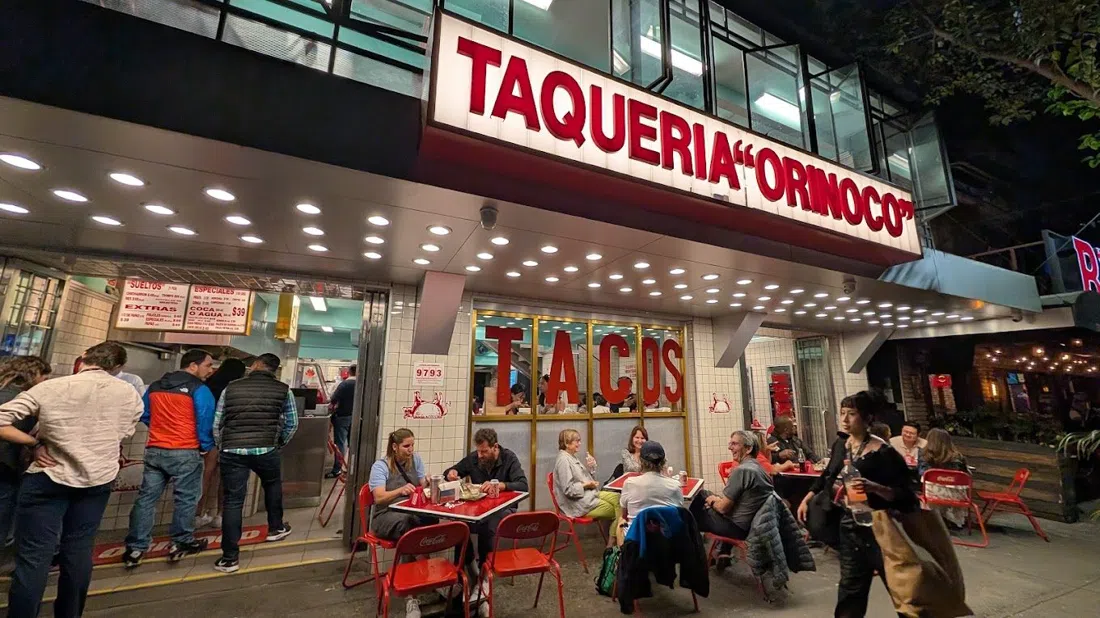
Taquería Orinoco, with several locations across the city, is the one entry here built for comfort rather than grit. It has real indoor seating, turns tables at a reasonable pace, and runs an English-friendly menu — making it by far the easiest stop on this list for a group of four to six with no reservation and no patience for standing on a curb. It's also consistently ranked among the city's best taquerías on its own merits, not just as a beginner's on-ramp. Tacos run MXN 30-45. If the rest of this list feels intimidating, start here, then work outward.
Getting There, Paying, and When to Go
Cash is not optional at most of these addresses — El Califa de León, El Huequito's original, El Vilsito, Tacos El Paisa, Taquería Los Cocuyos, El Turix and El Borrego Viudo all expect pesos, and several have no card reader at all. Carry small bills; nobody at a street counter wants to break a 500-peso note for a MXN 25 taco. La Once Mil, at the fine-dining end of this list, is the exception where a card and a reservation-adjacent mindset make sense.
Timing matters more than most guides admit. Suadero specialists like Tacos El Paisa are genuinely better after 8pm, once the meat has had hours to render. Yucatán specialists like El Turix are the opposite — go early, before the cochinita pibil sells out. The round-the-clock spots (El Borrego Viudo, Taquería Los Cocuyos, and El Vilsito on weekend nights) are built for the after-midnight crowd and can feel oddly quiet at lunchtime.
Getting between neighborhoods on this list — Roma Norte, Condesa, Centro Histórico, Del Valle, Hipódromo, Nápoles — is easiest by app-based taxi or the Metrobús; distances are short but Mexico City traffic makes walking between distant stops slower than it looks on a map. Budget roughly MXN 150-300 per person for a proper street-taco crawl of four or five stops, and closer to MXN 1,000+ per person if La Once Mil is on the itinerary. For a base that puts Roma Norte, Condesa and Centro Histórico all within a short ride, start with a Mexico City hotel search, and for the wider context of where these neighborhoods sit relative to each other, the Mexico City guide is the place to plan the rest of the trip around this one.
What ties all of these places together isn't a shared price point or a shared neighborhood — it's that every one of them is still, in 2026, run more or less the way it always has been: a griddle, a trompo or a fryer, a family or a crew running it, and a queue that forms because the food is good, not because a guidebook said so. The Michelin stars are new. The economy underneath them is not.